
How Long Does It Take to Replace a Roof? 2026 Homeowner Timeline Guide

admin

Most residential roof replacements take 1–3 days of on-site work for a standard asphalt-shingle home. The complete process from the initial inspection to finished installation can take 3–6 weeks, depending on contractor availability, materials, permits, weather, roof complexity, and hidden damage.

Roofing Relief Pros helps homeowners understand the expected schedule before work begins. While the installation itself may take only a few days, inspection, material ordering, scheduling, and permitting can extend the overall project timeline.

This guide covers the roof replacement process, typical installation times by roof size and material, common causes of delays, and how to prepare your home.

How Long Does It Take to Replace a Roof?

Most standard asphalt-shingle roofs take 1–3 days to replace on-site. Larger or more complex roofs and specialty materials can require additional time. Typical installation ranges include:

Roofing Material Typical Installation Time
Asphalt shingles 1–3 days
Metal roofing 2–4 days
Tile roofing 3–5 days
Slate roofing 4–7 days
Residential flat roofing 2–4 days, depending on the system

GAF states that an average asphalt-shingle roof can often be completed in 1–2 days, while steep slopes, complex designs, difficult access, weather, and unexpected repairs can extend the schedule. The installation period should not be confused with the full project timeline. A homeowner may wait several weeks between requesting an estimate and the actual installation date.

Roof Replacement Process: Estimate to Completion

A complete roof replacement typically moves through six stages: inspection, contract, materials and permits, preparation, installation, and final inspection.

Inspection and Estimate

The contractor first inspects the existing roof, measures the property, identifies visible damage, and determines the recommended scope of work. The estimate should identify the roofing material, tear-off requirements, flashing, ventilation, cleanup, warranties, and how unexpected decking repairs will be handled.

Contractor Selection and Contract

After reviewing estimates, the homeowner selects a contractor and signs an agreement. Before work begins, confirm the scope, materials, estimated schedule, payment terms, warranties, and responsibilities for unforeseen repairs.

Permits and Material Ordering

Permit requirements depend on the local jurisdiction and project. The contractor also confirms material availability and schedules delivery. Specialty materials or products that are not in stock can extend the waiting period.

Roof Preparation and Tear-Off

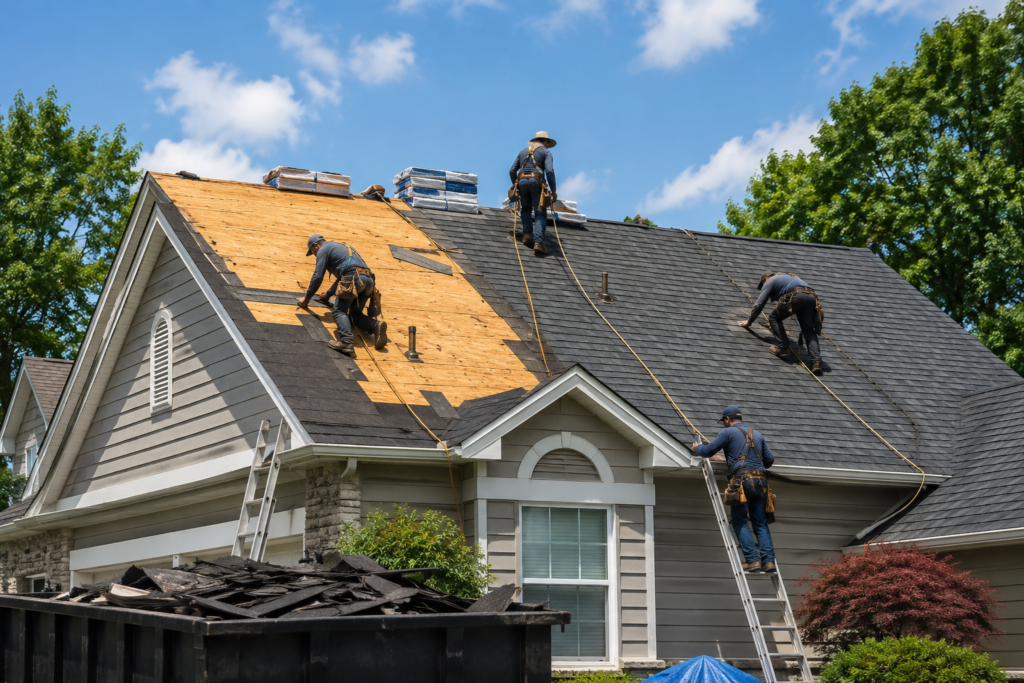
The crew protects the property before removing the existing roofing system. After tear-off, the exposed roof deck is inspected for deterioration. Damaged decking must be repaired before the new roofing system is installed.

New Roof Installation

The crew installs the required underlayment, flashing, roofing materials, ventilation components, and other system components according to the manufacturer’s requirements. For a straightforward asphalt-shingle roof, most of this work can be completed within the 1–3 day installation window.

Final Inspection and Cleanup

The final stage includes checking the completed roof, finishing remaining details, removing debris, and cleaning the property. The homeowner should receive applicable warranty documentation and have an opportunity to review the completed work with the contractor.

For a more detailed explanation of each stage, see the Roof Replacement Process guide.

Roof Replacement Timeline by Home Size

Roof size affects installation time, but roof design and accessibility can be equally important. For a straightforward asphalt-shingle roof, typical planning ranges are:

Home Size Typical Installation Time
Under 1,500 sq. ft. Approximately 1 day
1,500–2,500 sq. ft. Approximately 1–2 days
2,500–4,000 sq. ft. Approximately 2–3 days
4,000+ sq. ft. Approximately 3–5 days

These figures describe active installation rather than the full project schedule.

A smaller home with several roof sections, steep slopes, dormers, skylights, or complicated valleys can take longer than a larger home with a simple roof design.

GAF identifies roof complexity, pitch, access, and unexpected structural repairs as factors that can extend installation time.

Need to plan the financial side of the project as well? See the Roof Replacement Cost Guide for the factors that affect pricing.

Key Factors Impacting the Timeline

Seven factors can significantly change how long a roof replacement takes.

Roof Size and Complexity

Larger roofs require more material handling and installation time. Multiple slopes, valleys, dormers, skylights, and penetrations also increase the amount of detailed work.

Roofing Material

Asphalt shingles generally install faster than specialty materials. Metal, tile, and slate require different installation methods and can extend the project.

Weather

Rain and unsafe wind conditions can stop exterior roofing work. Extreme temperatures can also affect working conditions and installation requirements. Weather is one of the most common reasons an otherwise scheduled project takes longer than expected.

Existing Roofing Layers

Removing multiple roofing layers increases tear-off and disposal work. Local building requirements determine whether an existing roof can remain or must be removed.

Hidden Decking Damage

Roof decking may look acceptable before tear-off but reveal rot or moisture damage once the existing roofing is removed. Replacing damaged decking adds work and can extend the schedule.

Access to the Property

Limited driveway access, landscaping, fences, neighboring structures, or restricted staging areas can slow material handling and debris removal.

Contractor Availability

Roofing demand can increase during peak seasons or after major storms. The installation may still take only a few days, but the wait for an available crew can be considerably longer.

Roofing Relief Pros can provide a project-specific timeline after evaluating the roof’s size, condition, material, and access.

What Happens Each Day During Roof Replacement?

A standard asphalt-shingle replacement commonly follows a 1–3 day installation sequence.

Day 1: Tear-Off and Preparation

The crew protects the property, stages materials, removes the existing roofing, and inspects the exposed deck. If damaged decking is discovered, the affected sections are repaired before installation continues. Underlayment and other required components may also be installed during this stage.

Day 2: Roofing Installation

The crew installs the new roofing system, including shingles, flashing, valleys, penetrations, and ventilation components. A straightforward roof may be substantially completed by the end of Day 2.

Day 3: Finishing and Cleanup

A third day may be required for larger or more complicated roofs. Remaining roofing work, ridge components, flashing, ventilation details, cleanup, and final inspection are completed before the project is closed out.

How to Prepare Your Home Before Roof Replacement

Preparing the property before installation can reduce disruption and help the crew work efficiently.

Before the crew arrives:

  • Move vehicles away from the house and driveway.
  • Secure pets away from the work area.
  • Move outdoor furniture and fragile items.
  • Remove or secure fragile objects on interior walls.
  • Protect items stored in the attic.
  • Keep children away from the construction area.
  • Provide clear access for roofing materials and equipment.
  • Discuss landscaping protection with the contractor.

Expect significant noise and vibration during tear-off and installation. If you work from home, have young children, or have pets that are sensitive to noise, plan accordingly.

The National Roofing Contractors Association recommends evaluating a contractor’s qualifications, insurance, references, and written agreements before hiring.

Frequently Asked Questions

Can a roof be replaced in one day?

Yes. Some small and straightforward asphalt-shingle roofs can be completed in one day. Larger, steeper, or more complex roofs may require several days.

How long does a normal roof replacement take?

Most standard asphalt-shingle replacements take about 1–3 days of on-site work. The complete project can take approximately 3–6 weeks when inspection, scheduling, materials, permits, and installation are included.

What is the longest part of replacing a roof?

The waiting period before installation can be longer than the installation itself. Contractor availability, permits, material ordering, and weather can add weeks to the overall schedule.

What can delay a roof replacement?

Weather, hidden decking damage, material availability, permits, roof complexity, difficult access, and contractor scheduling are common causes of delays.

Do I need to leave my home during roof replacement?

Usually, no. Homeowners can generally remain at home, but tear-off creates substantial daytime noise and vibration.

How long does it take to install a new roof after tear-off?

A standard asphalt-shingle roof can often be installed within 1–3 days of active work. The exact duration depends on roof size, complexity, material, weather, and repairs.

Read Next

  • Roof Replacement Cost Guide — Understand the factors that influence the cost of replacing a roof.
  • Signs You Need a Roof Replacement — Learn which roofing problems may indicate that replacement is necessary.
  • Roof Replacement Process — Follow the major stages of a roof replacement from inspection through completion.

Get an Accurate Roof Replacement Timeline

Most standard residential roof replacements take 1–3 days of on-site work, but the complete project schedule depends on the property's specific conditions. Roofing Relief Pros can inspect the roof and provide a project-specific estimate covering the recommended scope, materials, and expected installation timeline.

(866) 280-1324

Get a Free Roof Replacement Estimate

Fast response. No spam. No obligation.

Leave a Reply

Your email address will not be published. Required fields are marked *