
- Licensed & Insured
- Free Estimate
Commercial Metal Roofing Services
Loose fasteners, open seams, corrosion, damaged flashing, and leaking roof penetrations can expose commercial buildings to water. Commercial metal roofing provides a durable roofing option for warehouses, retail properties, offices, agricultural buildings, industrial facilities, and other qualifying structures. Roofing Relief Pros helps property owners and facility managers evaluate existing metal roofs and determine whether repair, replacement, or a new metal roofing system fits the building.
- Free estimate
- Standing seam, exposed fastener & structural
- Repair, panel replacement & full replacement
- Licensed & insured crews
Get a Free Commercial Metal Roofing Estimate
Fast response. No spam. No obligation.
What Is Commercial Metal Roofing?
Commercial metal roofing uses formed metal panels to create the primary weather resistant roof surface. Different systems use different seam profiles and attachment methods; some panels install over a solid roof deck, while structural metal panels can span between supporting members when the selected system carries approval for that application. Commercial metal roofs also require coordinated flashing at roof edges, walls, valleys, ridges, penetrations, and mechanical equipment, since panel configuration matters because water must move across the roof without entering seams or transitions. See the full range of commercial roofing services for related work.
Where Is Commercial Metal Roofing Used?
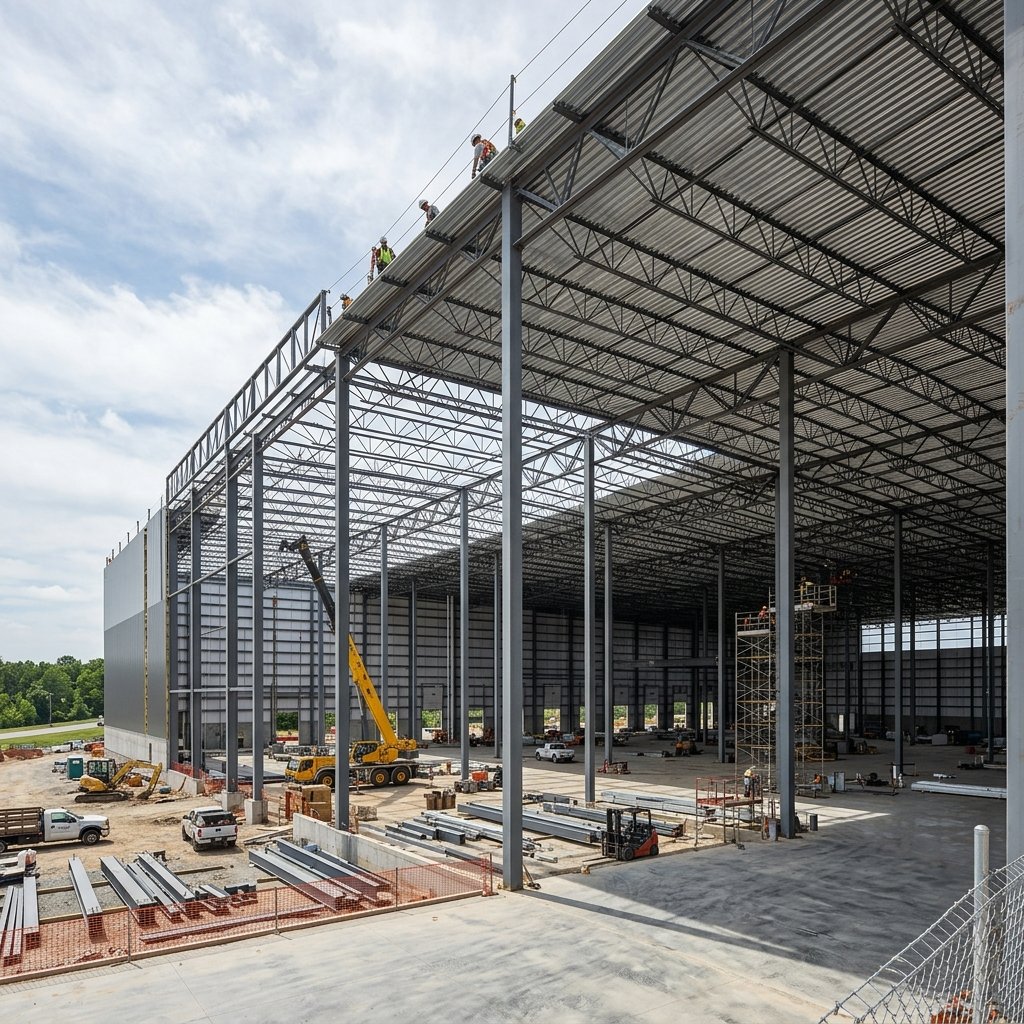
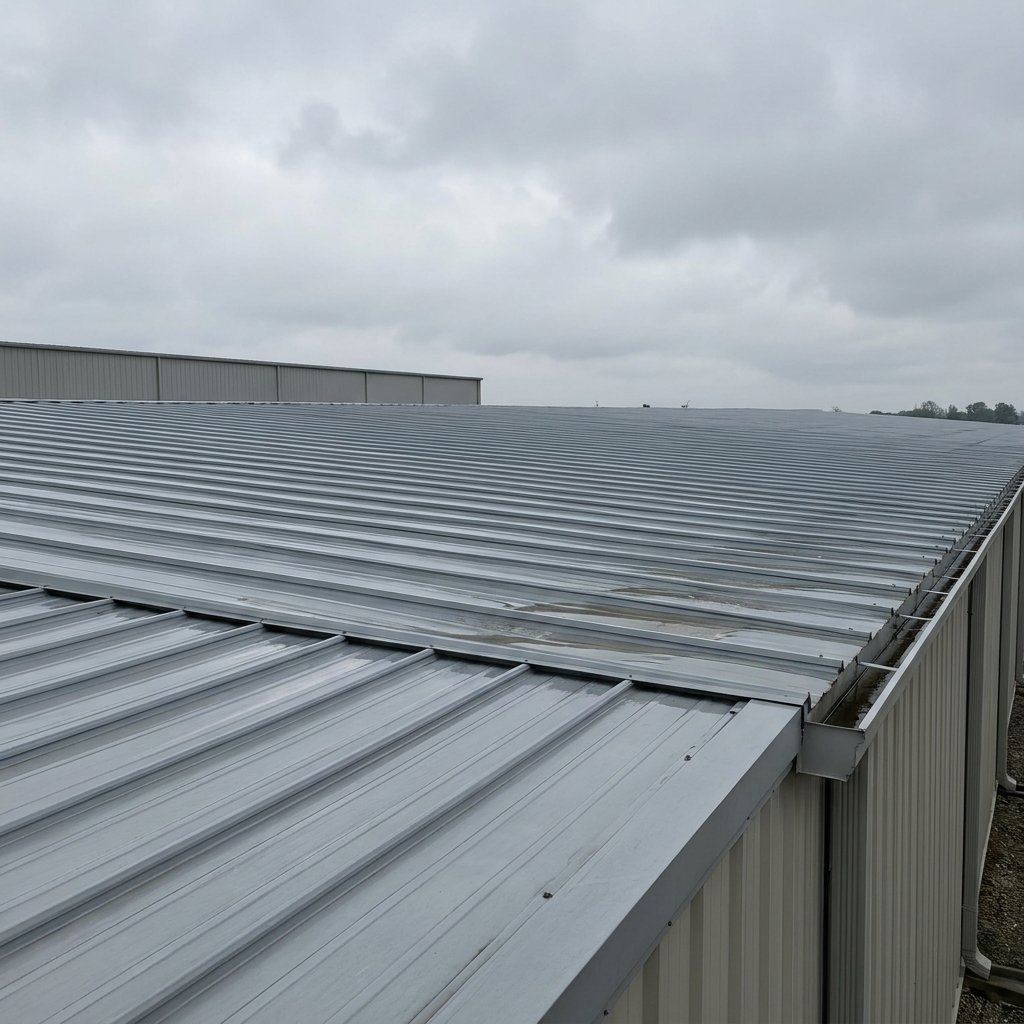
Metal roofing serves a range of commercial building types. Warehouses can use structural metal panels across large roof areas, and retail properties can use architectural standing seam systems where roof surfaces remain visible from surrounding areas. Manufacturing and industrial buildings can require metal roof systems that accommodate large roof dimensions and multiple penetrations, while offices, commercial facilities, storage buildings, and agricultural structures can also use metal roofing when building design supports the selected system. A 10,000 square foot retail property and a 100,000 square foot warehouse can both use metal roofing, but panel type, attachment, drainage, penetrations, and structural conditions can differ substantially.
Types of Commercial Metal Roofing
Standing seam and exposed fastener systems represent two common categories. Structural and architectural applications create another important distinction.
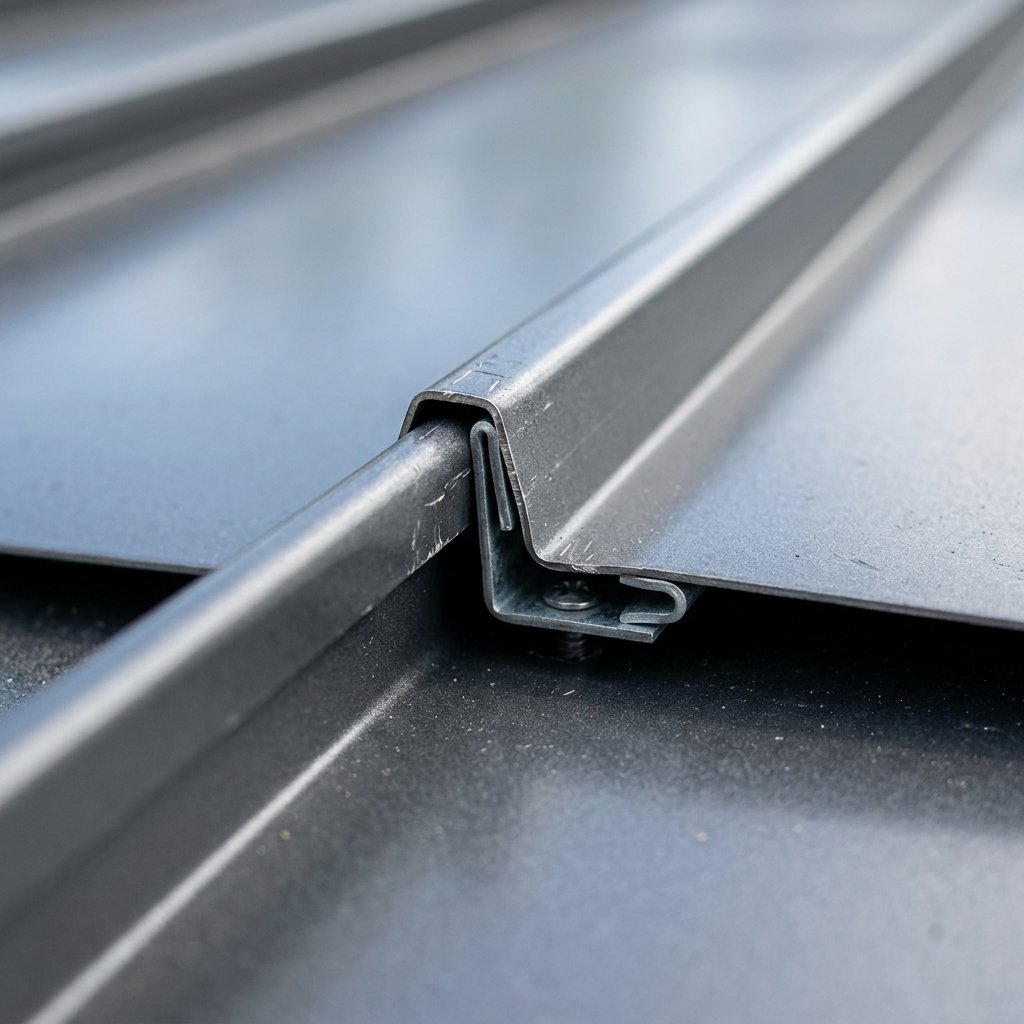
Standing Seam Metal Roofing
Uses raised seams between adjoining metal panels, commonly with concealed clips or fastening flanges that reduce exposed fasteners across the main roof surface. Common panel widths fall approximately between 12 and 24 inches, seam heights range approximately 1.5 to 3 inches, and commercial products can use 22 or 24 gauge steel in qualifying applications.
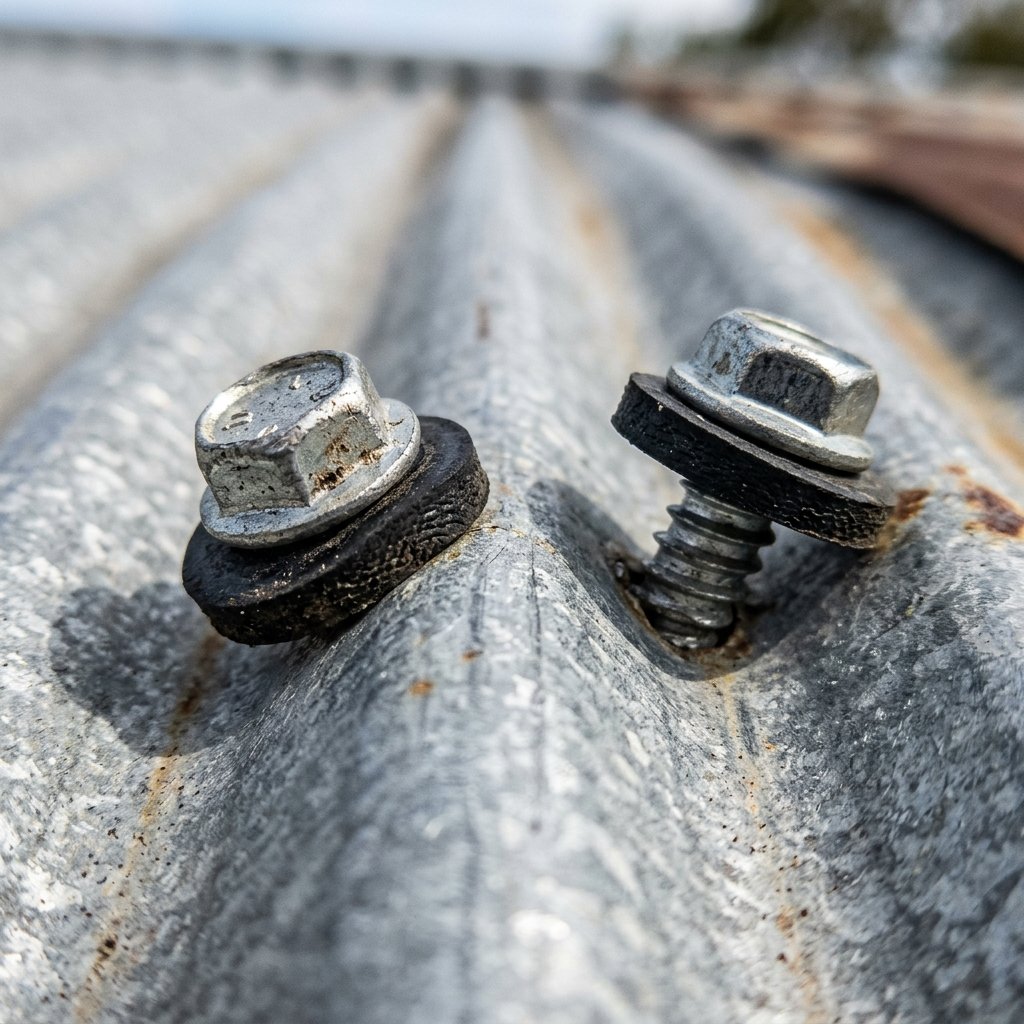
Exposed Fastener Metal Roofing
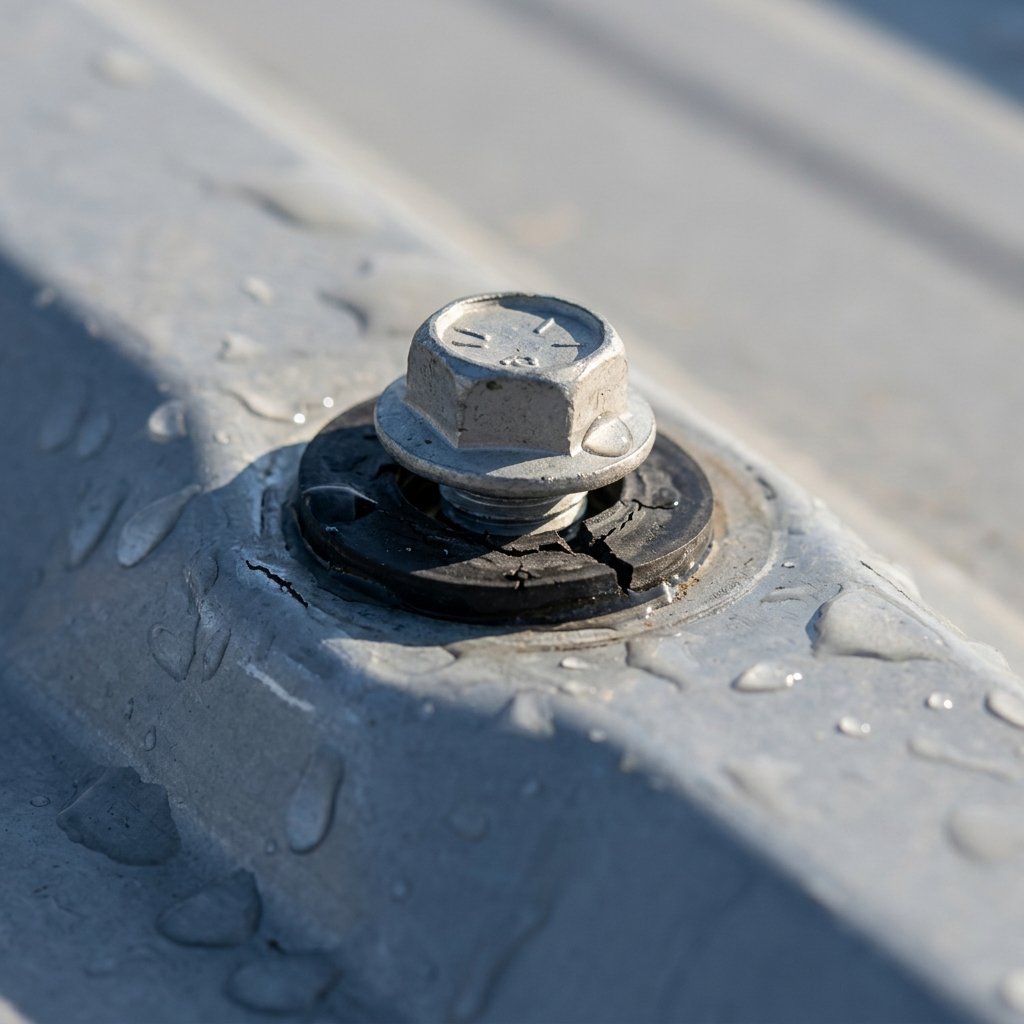
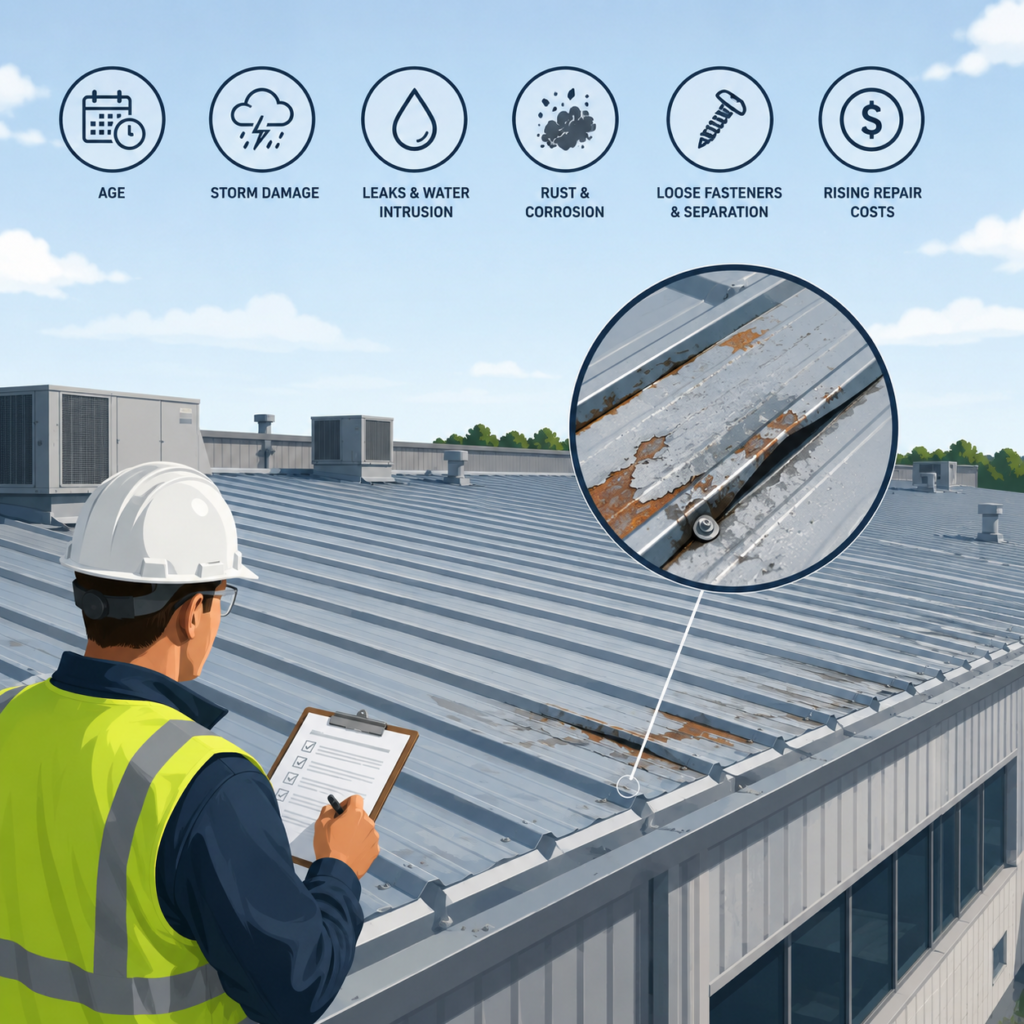
Uses screws that pass through the metal panel into the supporting material, with the fastener head remaining visible and a sealing washer beneath it protecting the penetration. Backed out fasteners, damaged washers, missing screws, and incorrectly driven fasteners can create localized leak paths.
Structural Metal Roofing
Panels can span between supporting structural members when the selected system meets applicable requirements, performing both a weather protection function and a structural spanning function. Large warehouses and industrial buildings commonly provide conditions where structural systems fit the building design.
Commercial Metal Roof Slope
Metal roof slope affects drainage and system selection, and different metal panel systems carry different minimum slope requirements. Building codes permit certain standing seam metal roof systems at slopes as low as 1/4 unit vertical in 12 units horizontal when the specific system meets applicable requirements, while lapped, nonsoldered metal roof systems without applied lap sealant generally require a steeper slope than qualifying standing seam systems. A low slope commercial building therefore cannot use every available metal roofing profile, and the contractor should verify roof slope and selected panel requirements before specifying the roofing system.
Metal Panel Gauge and Profile Selection
Metal gauge describes material thickness, but gauge alone does not determine roof performance. Lower steel gauge numbers generally indicate thicker metal; for example, 22 gauge steel is thicker than 24 gauge steel. Panel profile also changes structural characteristics, since rib geometry, seam height, panel width, clip design, and support spacing all contribute to the complete system. A 24 gauge standing seam panel can serve one commercial application while another project requires a different thickness or profile based on engineering requirements, so panel selection should follow project specifications rather than a general assumption that one gauge fits every commercial roof.
Thermal Movement in Commercial Metal Roofs
Metal expands and contracts as temperature changes, and large commercial roof surfaces can experience movement across long panel runs. Standing seam systems can use clips and seam configurations that allow controlled movement while maintaining attachment, and restricting movement at the wrong locations can place stress on panels, seams, fasteners, and flashing. Penetrations also require compatible detailing because a fixed curb or pipe can interact with moving metal panels, so the contractor should follow the movement provisions built into the selected metal roofing system rather than fastening every panel location rigidly.
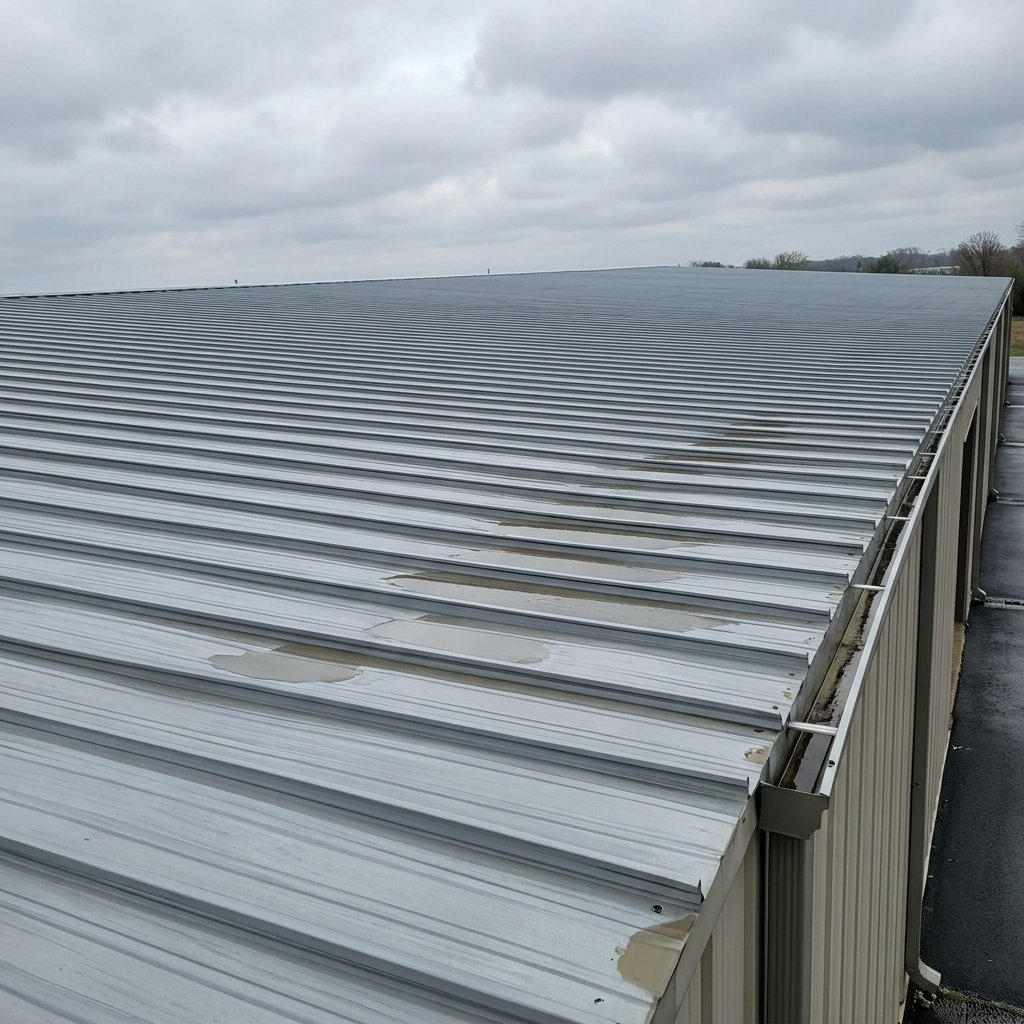
Common Commercial Metal Roof Problems
Metal roofing can develop localized or widespread problems depending on panel type, age, exposure, installation, and maintenance history.
Loose or Backed Out Fasteners
Exposed fasteners can loosen or move over time, and a backed out screw can reduce compression on the sealing washer and create a possible water entry point. Repair requires evaluation of both the fastener and the receiving substrate.
Damaged Fastener Washers
A cracked, deteriorated, displaced, or incorrectly compressed washer can reduce water protection around the penetration. Large commercial roofs can contain thousands of exposed fasteners, so inspection should identify patterns rather than checking only the fastener nearest an interior leak.
Open Seams
Movement, damage, incorrect installation, or failed seam components can create openings. Standing seam problems require repair methods compatible with the specific seam profile, while exposed fastener panel laps require different treatment.
Corrosion
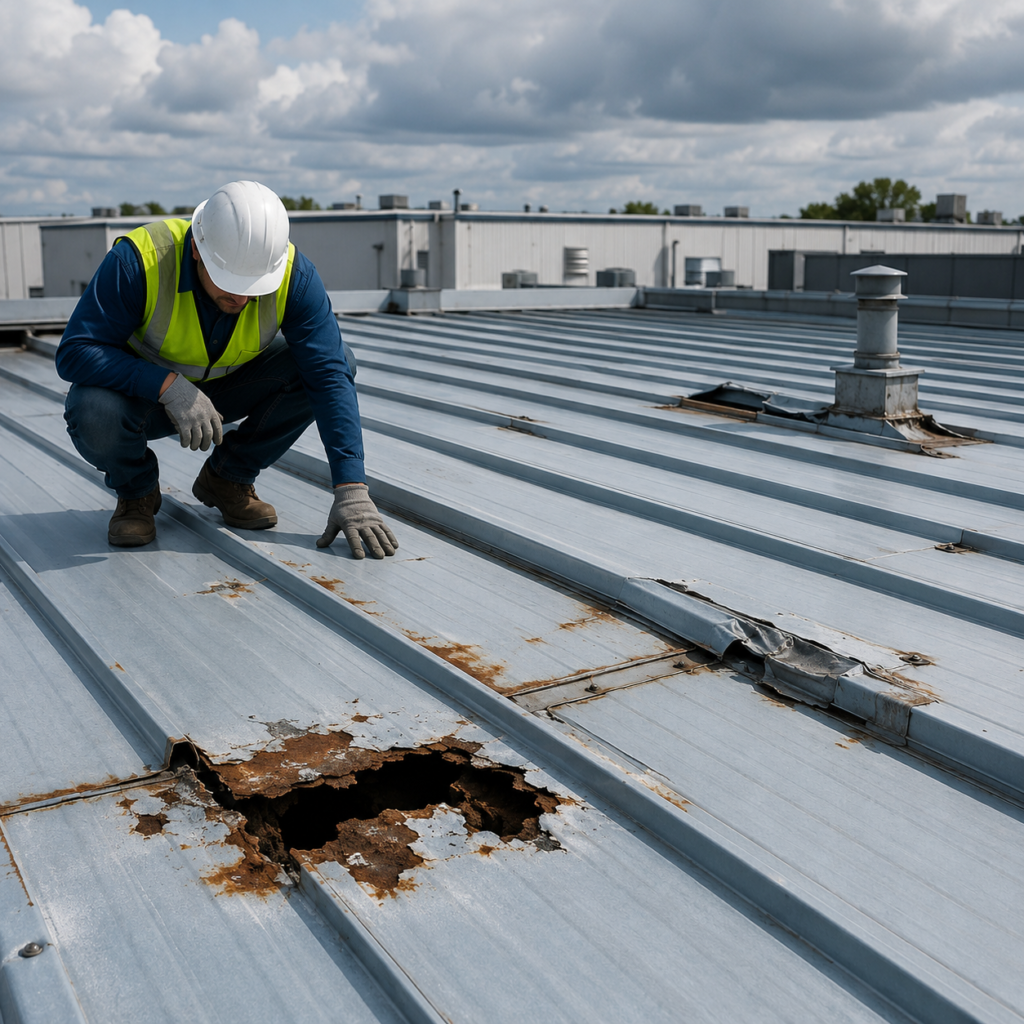
Can begin at scratches, cut edges, failed coatings, incompatible materials, or areas exposed to persistent moisture. Small localized corrosion requires a different response from section loss affecting multiple panels.
Damaged Flashing
Walls, curbs, pipes, ridges, valleys, and roof edges require metal flashing that matches the roof profile. Incorrect or deteriorated flashing can create leaks while the surrounding field panels remain serviceable.
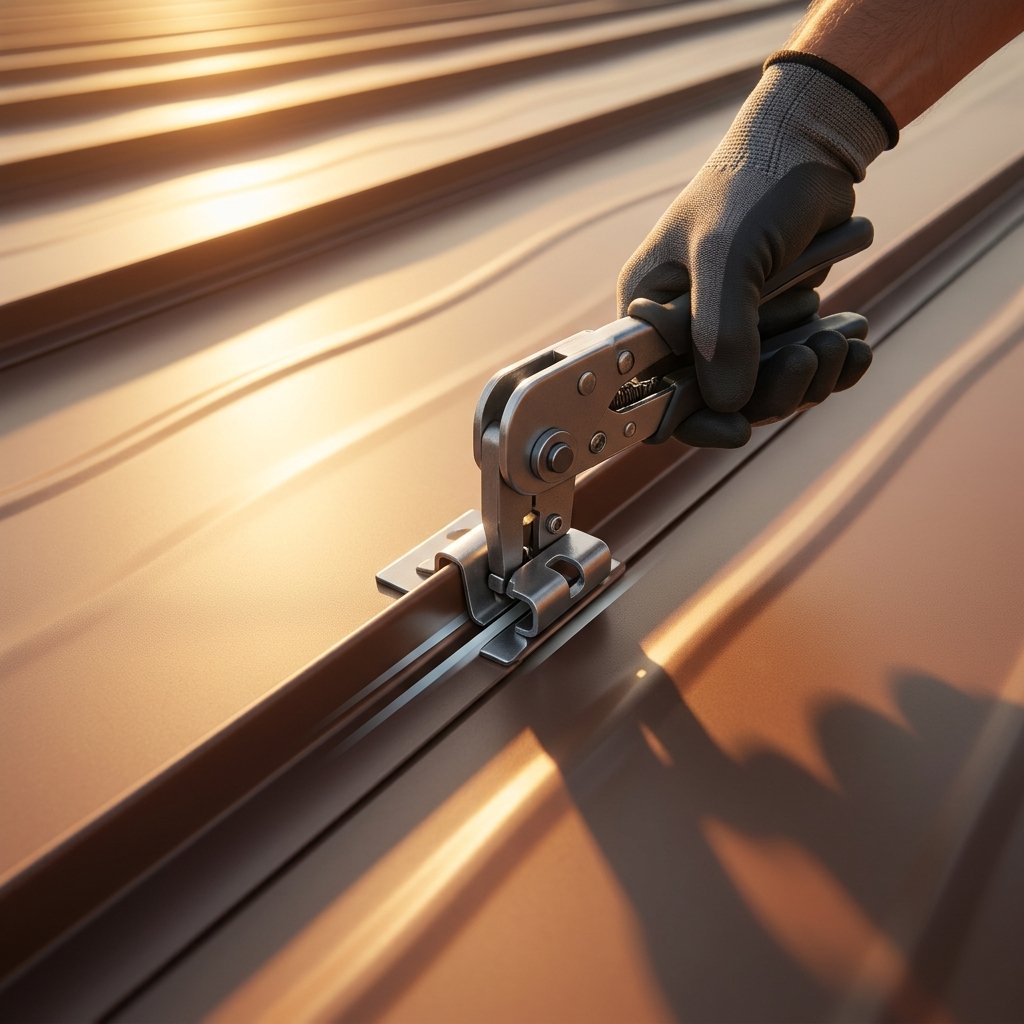
Commercial Metal Roof Leaks
A metal roof leak does not automatically mean the complete roof has failed. Water can enter through one loose fastener, open seam, damaged flashing location, penetration, or panel defect, and interior water can also travel along structural components before reaching an occupied area, so the visible ceiling stain may appear away from the exterior entry point. The contractor should inspect panel seams, fasteners, flashing, penetrations, roof edges, and surrounding surfaces before defining the repair. One isolated leak can support targeted repair, while recurring leaks across multiple roof areas require broader evaluation.
Commercial Metal Roof Flashing and Penetrations
Commercial roofs often contain HVAC equipment, exhaust systems, plumbing vents, pipes, skylights, and electrical penetrations, and each penetration interrupts the metal panel surface. Flashing must direct runoff around the penetration while maintaining compatibility with the selected panel profile, and standing seam systems can also require detailing that accommodates panel movement. Large rooftop equipment creates wider obstructions than individual pipes, and water approaching an equipment curb must move around the curb without entering panel transitions. See roof flashing repair for more on flashing and penetration repairs.
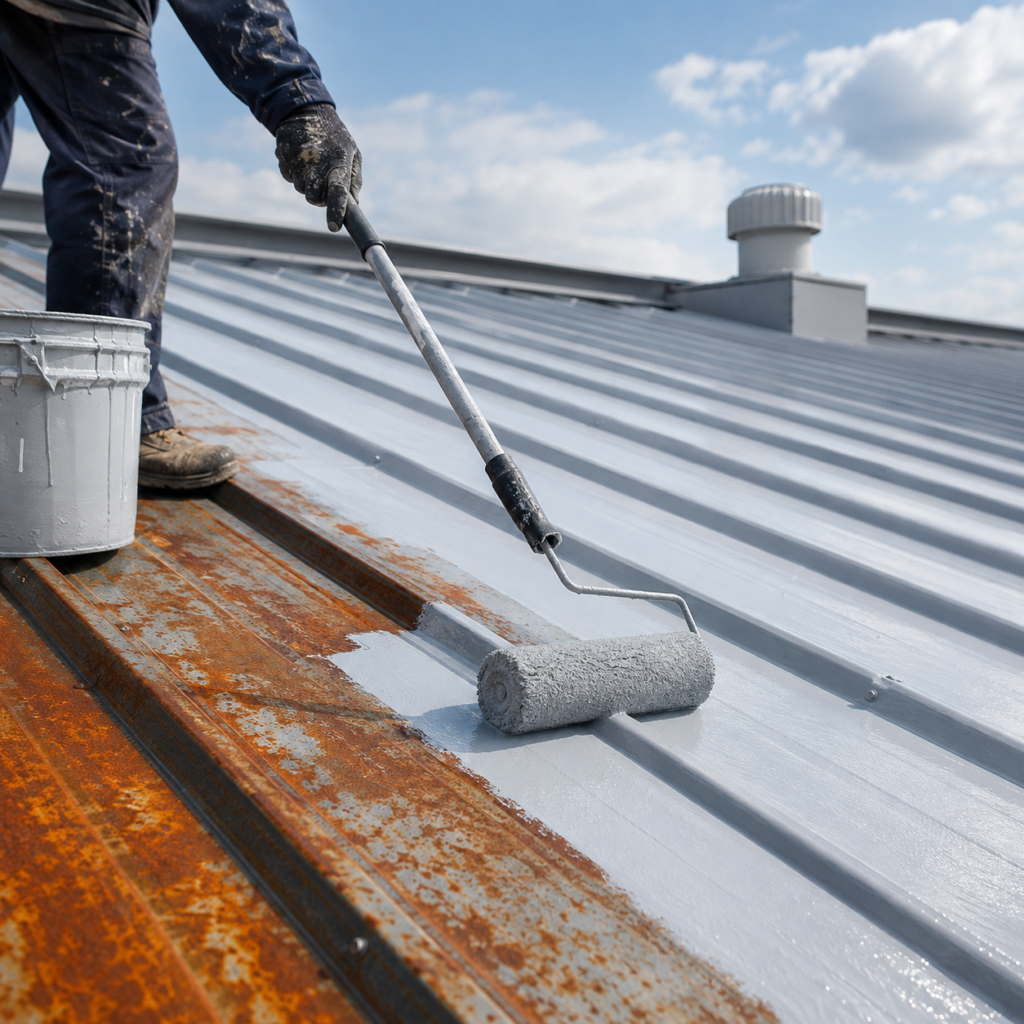
Corrosion and Metal Roof Coatings
Protective finishes help isolate metal from environmental exposure, but scratches, cut edges, standing moisture, chemical exposure, and coating deterioration can expose metal surfaces to corrosion. Localized surface corrosion does not automatically require complete roof replacement, and the contractor should determine whether deterioration remains superficial or has reduced the panel section. A coating cannot restore metal that has already lost the structural section required by the roof system, so panels with holes, extensive section loss, or failed seams can require replacement rather than surface treatment.
When Does a Commercial Metal Roof Need Repair?
Repair can make sense when defects remain localized and surrounding panels continue to perform correctly. Examples include several loose fasteners, one damaged flashing transition, an isolated puncture, or limited seam damage. A contractor should inspect nearby panels because the visible defect may represent one part of a larger condition; for example, ten loose fasteners in one localized roof area can support targeted correction when thousands of surrounding attachment points remain serviceable. See commercial roof repair for repair specific information.
When Does a Commercial Metal Roof Need Replacement?
Replacement becomes more relevant when deterioration affects broad roof areas. Extensive corrosion, recurring leaks across several locations, widespread seam problems, damaged panels, and repeated fastener failures can indicate a larger system problem, and replacement can also become necessary when previous alterations create numerous incompatible repairs across the roof. A commercial roof containing one corroded panel does not automatically require complete replacement, but a roof containing corrosion and panel failure across multiple roof planes requires a different assessment. Property owners facing widespread deterioration can review commercial roof replacement or metal roof replacement for additional planning information.
Commercial Metal Roofing Service Process
Roof Assessment
The contractor identifies metal roof type, panel profile, slope, fasteners, seams, flashing, penetrations, and visible damage.
Problem Identification
Inspection determines whether the building has isolated leaks, panel damage, corrosion, attachment problems, or widespread deterioration.
Service Recommendation
The contractor defines repair, partial panel replacement, or complete replacement according to documented conditions.
Material Selection
The project team identifies compatible panels, fasteners, clips, flashing, and other required components.
Roofing Work
The roofing crew completes the specified panel, seam, fastener, flashing, or replacement work.
Final Inspection
The contractor checks completed areas, seams, penetrations, roof edges, drainage paths, and work areas.
Planning Metal Roofing Work Around Commercial Operations
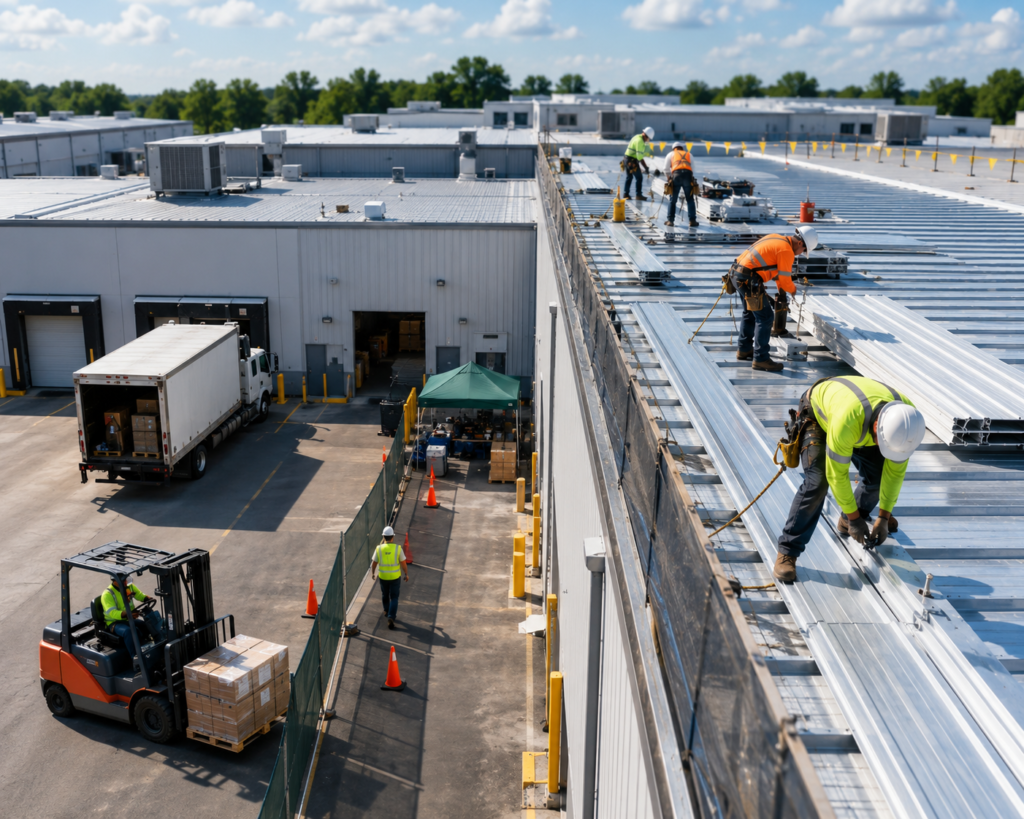
Commercial roof work can affect building access and daily operations. Metal panels can require larger staging areas than smaller roofing materials, and long standing seam panels can also require planned delivery and lifting procedures. Warehouses need loading dock access, retail properties need customer routes and parking, and manufacturing facilities can require coordination around production areas and rooftop exhaust equipment. Roofing crews should establish material staging, waste handling, roof access, and restricted areas before work begins, and mechanical equipment also requires consideration when metal roofing work affects HVAC curbs or service access.
Real World Commercial Metal Roofing Example
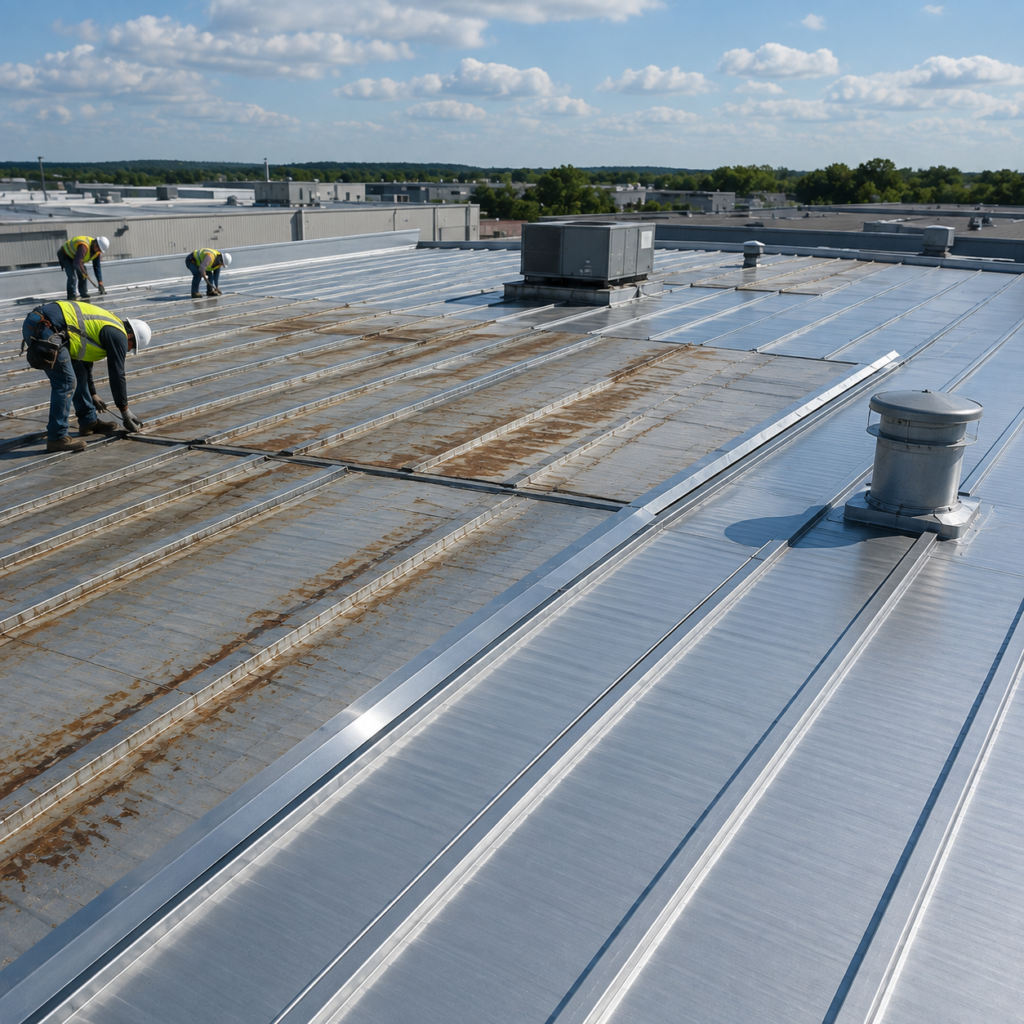
Consider a 24,000 square foot warehouse in Washington with an older exposed fastener metal roof. Inspection identifies backed out fasteners across two roof sections, deteriorated sealing washers, corrosion near three exhaust penetrations, and recurring leaks along one sidewall transition. Most central roof panels remain serviceable, but six panels near the exhaust area show corrosion beyond a practical surface repair.
The roofing crew replaces the six deteriorated panels, corrects the exhaust flashing, repairs the sidewall transition, and replaces failed fasteners within the defined work areas. Inspection confirms that surrounding panels remain serviceable, so targeted repair and panel replacement address the documented problems without replacing the complete 24,000 square foot roof.
What Affects a Commercial Metal Roofing Project?
Roof area affects panel quantity, attachment components, flashing, equipment, access, and labor requirements. One roofing square equals 100 square feet, so a 300 square commercial roof contains approximately 30,000 square feet of roofing surface. Panel length can affect delivery and handling, since long panels require enough space for unloading and movement to the roof. See the roof replacement timeline guide for project planning, or explore commercial flat roofing as an alternative low slope system.
- Roof slope, panel profile, metal thickness, and support conditions
- Penetrations, flashing, building height, and access
- Corrosion, existing materials, and business operations
- Material availability: matching an older panel profile can require additional evaluation when the original product is no longer available
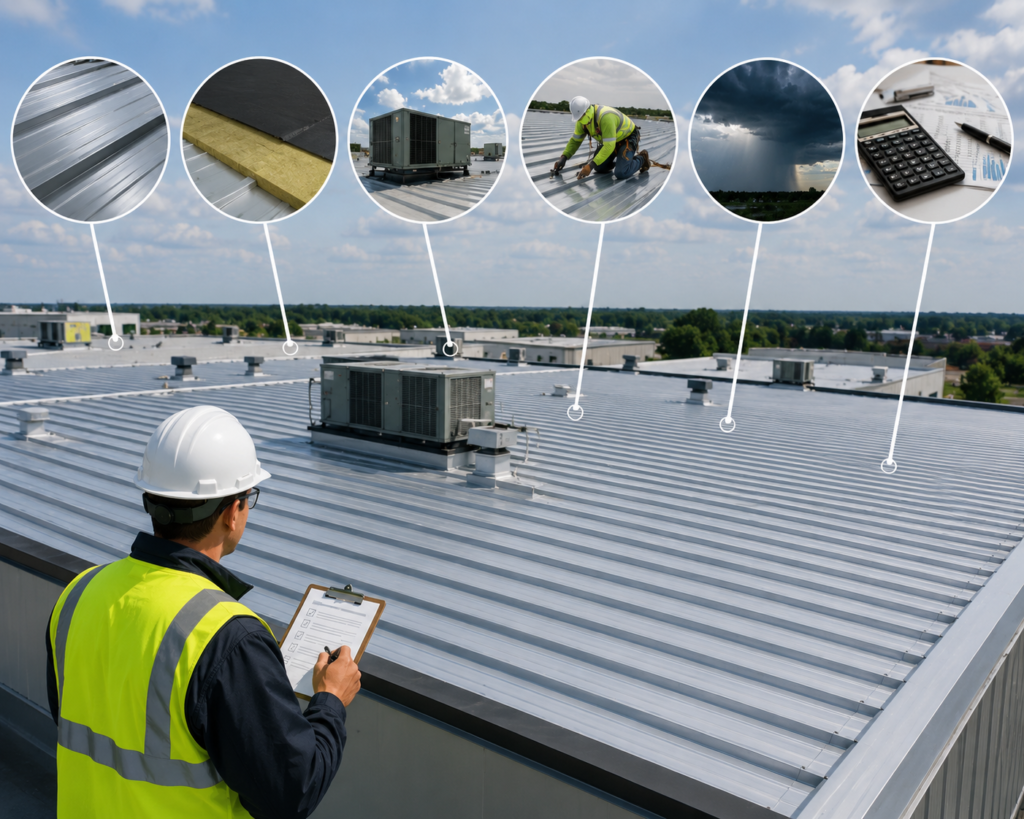
Commercial Metal Roof Repair Versus Replacement
Roof Repair
Localized repair works best when the remaining roofing system continues to perform. One flashing defect, several loose fasteners, or limited panel damage can support targeted work.
Roof Replacement
Becomes more appropriate when problems repeat across large sections or when existing materials can no longer support reliable repair. Older metal roof profiles can create replacement challenges when the original panel configuration is no longer manufactured.
A documented roof inspection and maintenance assessment helps property managers compare targeted repair with a broader replacement project.
Frequently Asked Questions About Commercial Metal Roofing
What types of metal roofing work for commercial buildings?
Standing seam, exposed fastener, and structural metal panel systems can serve commercial buildings. Roof slope, structural support, building geometry, panel specifications, and project requirements determine the suitable system.
What is the difference between standing seam and exposed fastener roofing?
Standing seam systems commonly conceal primary panel attachment beneath seams or within panel details. Exposed fastener systems use screws through the visible panel surface with sealing washers around the penetrations.
Can a commercial metal roof be repaired?
Yes. Localized loose fasteners, flashing defects, isolated corrosion, punctures, and limited panel damage can support repair when surrounding roofing remains serviceable.
Can individual commercial metal roof panels be replaced?
Individual panels can sometimes be replaced when compatible materials remain available and the existing system allows practical removal. Panel profile, seam configuration, attachment, and surrounding roof condition determine feasibility.
Does rust mean a commercial metal roof needs replacement?
Not automatically. Localized surface corrosion can support targeted treatment or repair. Extensive corrosion, holes, section loss, and deterioration across multiple panels can require panel or roof replacement.
Why do exposed metal roof fasteners become a problem?
Fasteners can loosen, back out, or develop damaged sealing washers. Each affected fastener can create a possible water entry point, so inspection should evaluate attachment patterns rather than one visible screw.
When should a commercial metal roof be replaced?
Replacement becomes more relevant when corrosion, panel deterioration, seam problems, or recurring leaks affect broad roof areas. Inspection should confirm the extent of deterioration before a complete replacement recommendation.
Schedule Commercial Metal Roofing With Roofing Relief Pros
Loose fasteners, open seams, corrosion, damaged panels, and failed flashing can allow water into commercial buildings while otherwise serviceable roof sections remain intact. Roofing Relief Pros helps property owners and facility managers evaluate commercial metal roofs and determine whether targeted repair, panel replacement, or complete roof replacement fits documented conditions.
- Free estimate
- Standing seam, exposed fastener & structural
- Business operations coordination
- Licensed & insured crews
Get a Free Commercial Metal Roofing Estimate
Fast response. No spam. No obligation.