
- Licensed & Insured
- Free Estimate
Shingle Roof Replacement Services
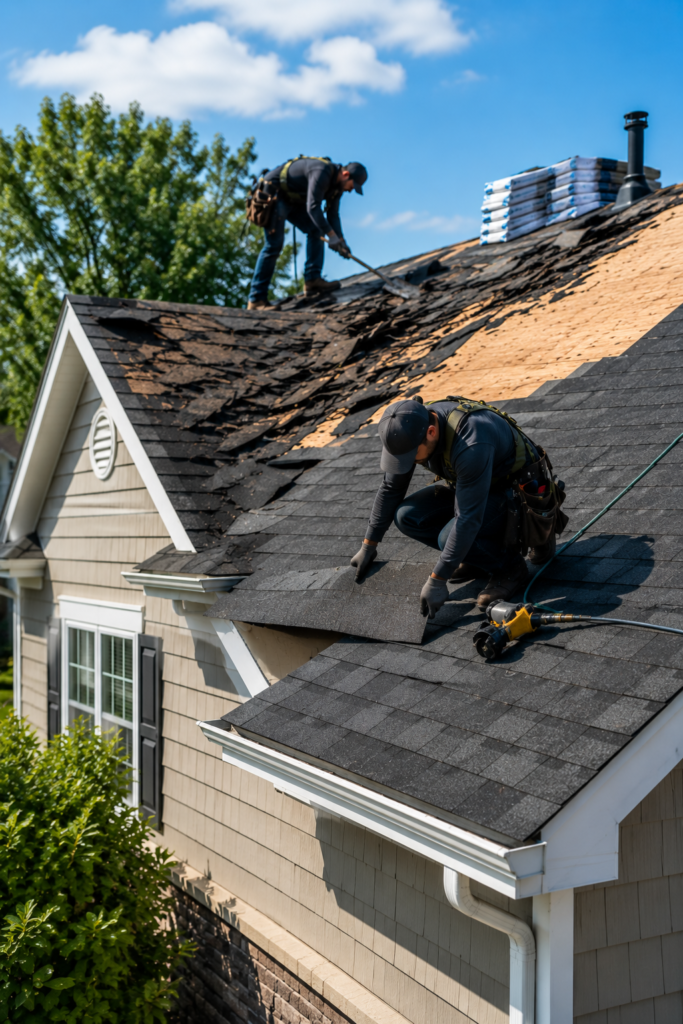
Missing shingles, recurring leaks, cracked shingle tabs, and widespread surface deterioration can allow water to reach the underlayment and roof deck. Shingle roof replacement removes deteriorated asphalt roofing and installs a new roofing assembly over a suitable roof deck. Roofing Relief Pros helps homeowners plan replacement based on shingle condition, roof slope, decking, flashing, ventilation, and local weather exposure.
- Free estimate
- Deck & flashing inspected before install
- Three tab & architectural shingles
- Licensed & insured crews
Get a Free Shingle Roof Replacement Estimate
Fast response. No spam. No obligation.
What Is Shingle Roof Replacement?
Shingle roof replacement removes an existing asphalt roof covering and installs new roofing materials over a prepared deck. The roofing crew also evaluates components beneath and around the shingles before completing the new roof, addressing the complete roofing assembly rather than only the visible shingle surface. Asphalt shingles generally work on steep slope roofs; NRCA recommends a 4:12 minimum slope, although some manufacturers and building requirements allow installation down to 2:12 when additional application requirements apply.
- NRCA asphalt shingle quality guidance addresses six key installation areas
- Substrate: the roof deck that provides the fastening surface
- Underlayment: the secondary water shedding layer beneath the shingles
- Drip edge: protects roof edges and directs runoff away from fascia
- Fasteners: correct nail type, placement, and pattern
- Shingles and flashing: the finished covering and its water management details
When Does an Asphalt Shingle Roof Need Replacement?
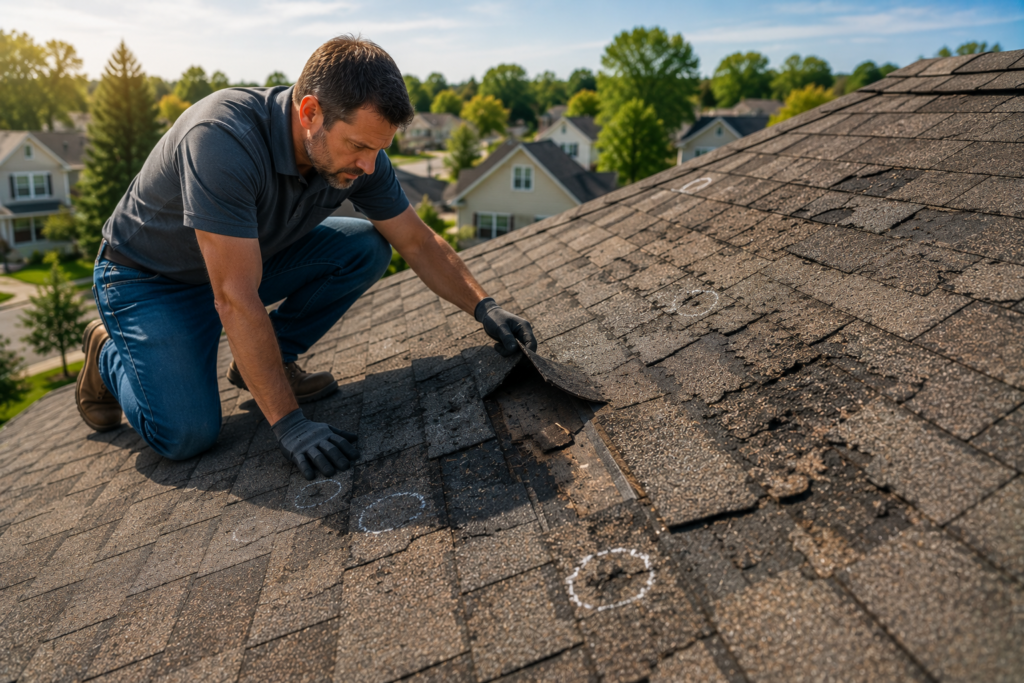
Widespread cracking, missing shingles, exposed asphalt, repeated leaks, and deterioration across multiple roof planes can indicate the need for replacement. Missing shingles interrupt the overlapping drainage surface, cracked shingles can expose underlying materials to rain, and widespread granule loss can leave the asphalt layer with less surface protection. Wind and storm damage can accelerate all of these problems at once; see the storm damage roof replacement guide for a closer look at that scenario. Roof age alone does not determine replacement. A roofing contractor should evaluate shingle condition, flashing, roof decking, ventilation, previous repairs, and leak history before recommending replacement.
Shingle Roof Inspection Before Replacement
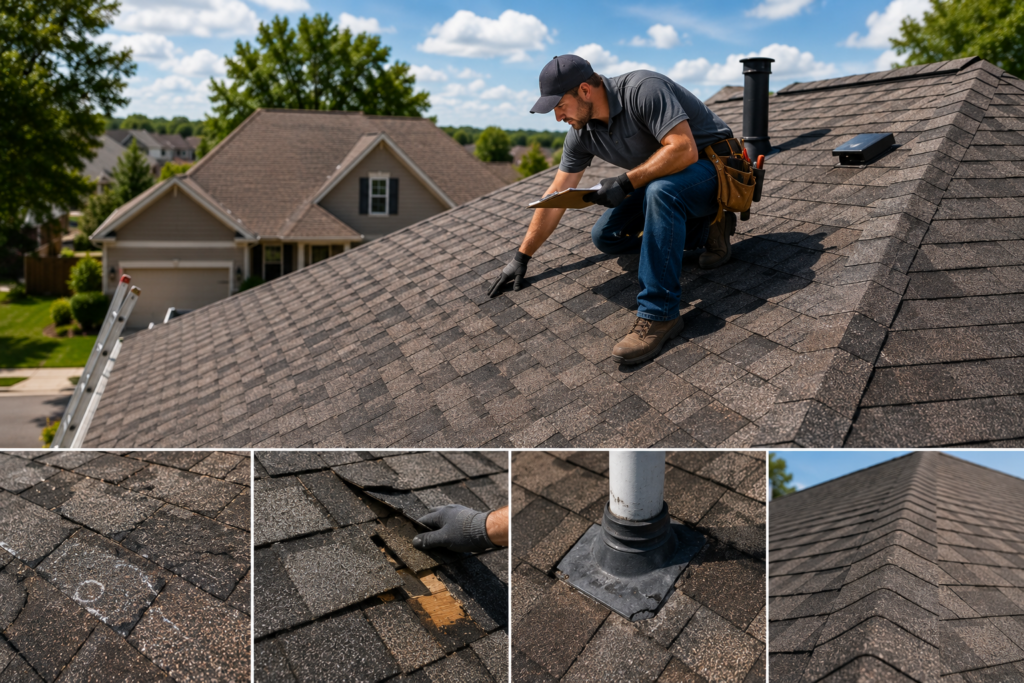
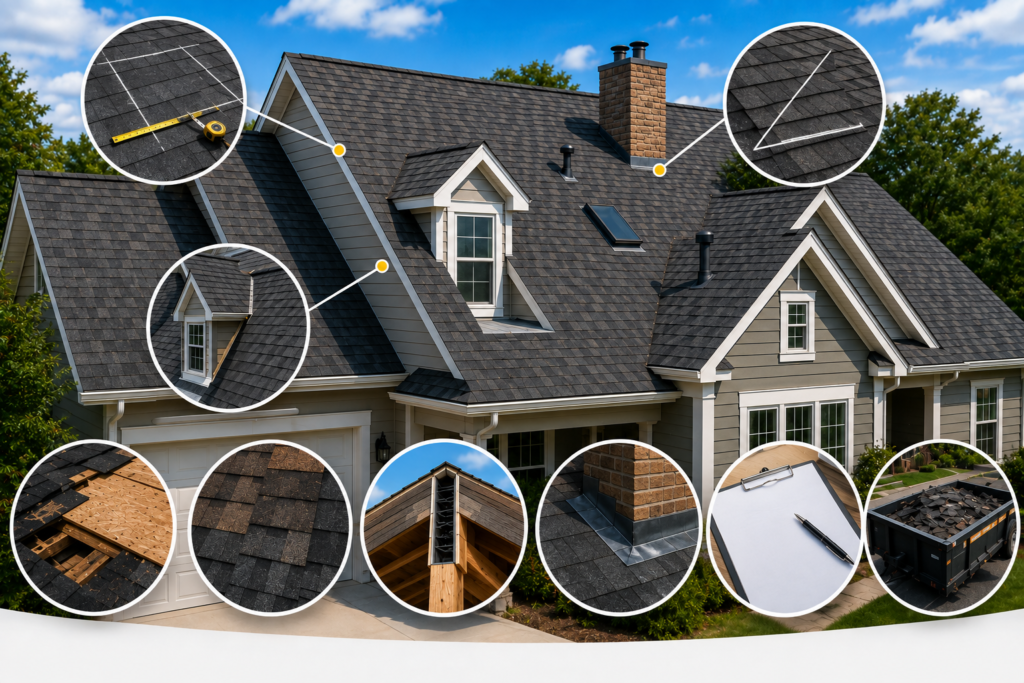
A roof inspection defines the replacement scope before work begins. The contractor examines shingles, valleys, flashing, eaves, penetrations, ridge areas, ventilation openings, and visible decking. Roofers measure roof area in squares, where one roofing square equals 100 square feet of roof surface, so a 25 square roof contains approximately 2,500 square feet of measured roofing area. Roof geometry also affects the project: valleys, dormers, chimneys, skylights, and plumbing vents create additional locations where the roofing crew must cut shingles and integrate flashing. An attic inspection can identify moisture staining, damaged sheathing, blocked ventilation, and previous leak paths that remain hidden from an exterior inspection.
Shingle Removal and Roof Deck Inspection
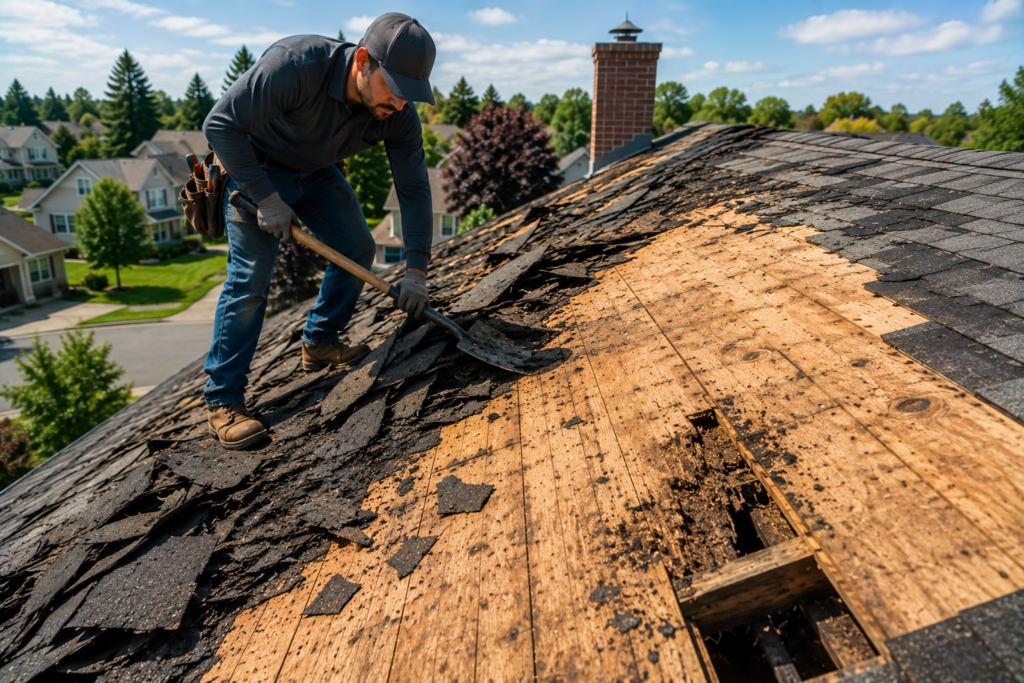
Shingle removal exposes the roof deck and allows direct inspection of concealed conditions. The roofing crew removes old shingles, ridge materials, loose underlayment, and related materials included within the project scope, which can reveal rotten sheathing, old flashing problems, or previous installation defects. NRCA recommends removal of existing roof coverings when multiple roofing layers already cover the deck.
Plywood and oriented strand board commonly form residential roof decks. The roofing crew examines exposed decking for rot, delamination, moisture damage, broken panels, and unsupported sections, since damaged sheathing requires correction before underlayment and shingles cover the roof. A stable roof deck provides the foundation for underlayment, fasteners, flashing, and the finished shingle covering.
Underlayment, Water Protection, and Flashing
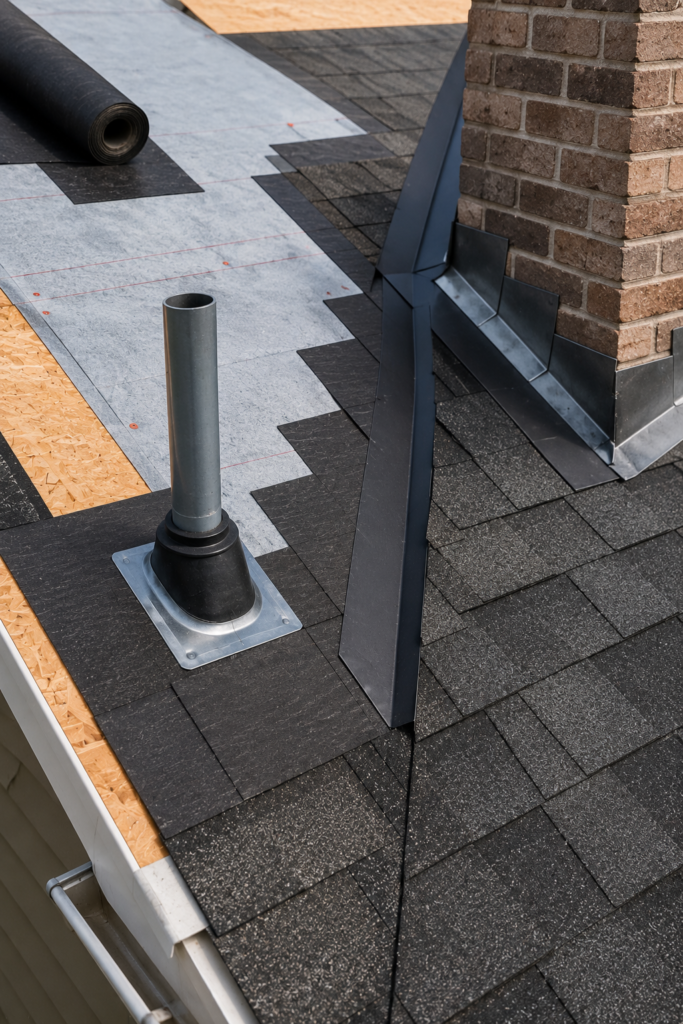
Underlayment creates a secondary water shedding layer between the roof deck and asphalt shingles. Eaves, valleys, and roof penetrations receive concentrated water exposure, and cold climate properties can also experience ice dams near roof edges. Flashing directs water around roof transitions and penetrations; new shingles cannot correct damaged or incorrectly installed flashing.
- NRCA recommends two underlayment layers on roofs between approximately 14 and 18 degrees of slope
- NRCA recommends ice dam protection at eaves where average January temperature is 30 degrees F or lower, extending at least 24 inches inside the exterior wall line
- Step flashing protects roof to wall intersections
- Pipe flashing seals plumbing vents, chimney flashing manages water around masonry, and valley systems control runoff where two roof planes meet
- NRCA recommends considering a cricket behind chimneys and other rectangular penetrations measuring 24 inches or wider
Choosing Replacement Asphalt Shingles
Asphalt shingles differ in construction, appearance, fastening requirements, and published performance specifications. Homeowners should compare actual manufacturer specifications rather than broad marketing categories.
Three Tab Asphalt Shingles
A flat profile with evenly spaced cutouts creates a uniform pattern across the roof. Product specifications differ between manufacturers, and the roofing contractor should follow the selected shingle published fastening pattern, exposure, starter course, and wind related installation requirements.
Architectural Asphalt Shingles
Laminated construction creates a dimensional roof surface. Individual product lines can differ in thickness, wind classification, warranty terms, and installation requirements, so fastener quantity and placement should follow instructions for the exact selected product.
Fastening and Perimeter Details
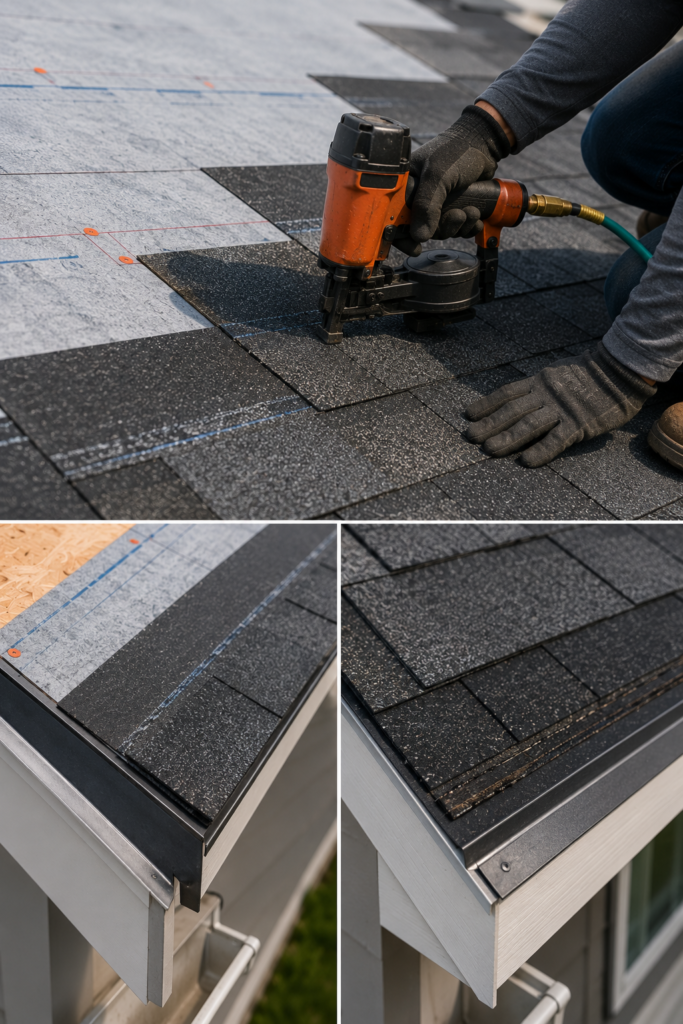
Roofing nails secure shingles to the deck while factory applied sealant strips help adjoining courses resist lifting after bonding. NRCA recommends galvanized steel or equivalent corrosion resistant roofing nails, with manufacturer instructions determining nail quantity, position, and fastening pattern. Overdriven nails can damage the shingle surface, underdriven nails can prevent shingles from lying correctly, and nails positioned outside the designated fastening area can reduce attachment performance. Cold temperatures can also delay factory seal strip bonding, so the roofing contractor should follow manufacturer requirements for cold weather or high wind conditions.
Drip edge protects roof deck edges and directs runoff away from fascia and perimeter materials. The roofing crew integrates drip edge with underlayment and shingles to maintain a continuous drainage path, and starter shingles create the first sealed shingle course along roof edges. Existing drip edge should receive inspection during replacement rather than automatically remaining beneath the new roof.
Attic Ventilation During Shingle Replacement
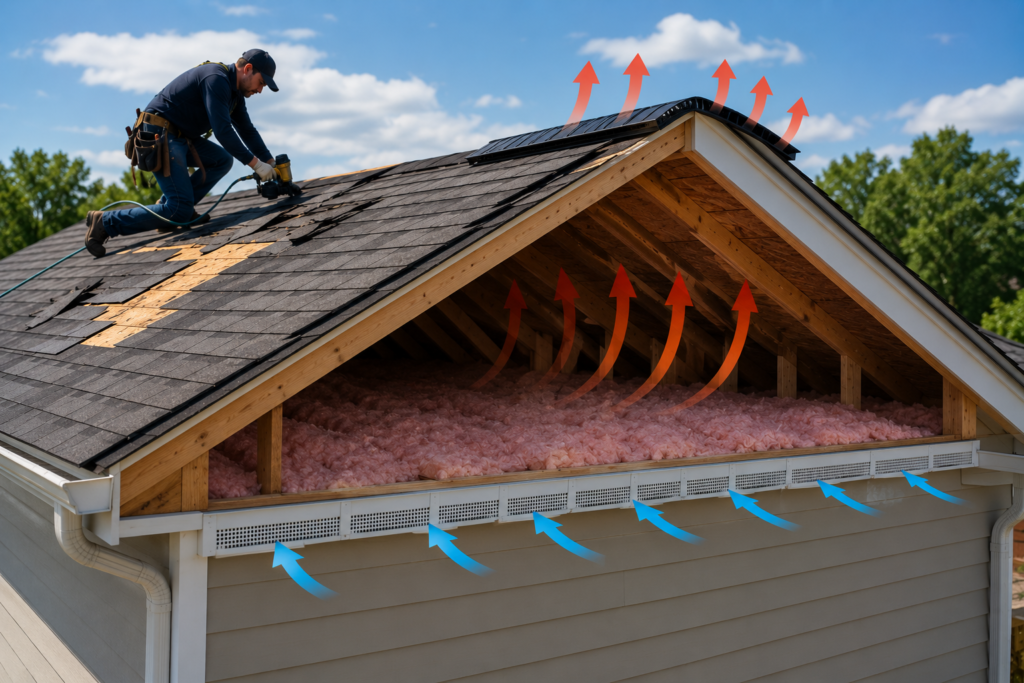
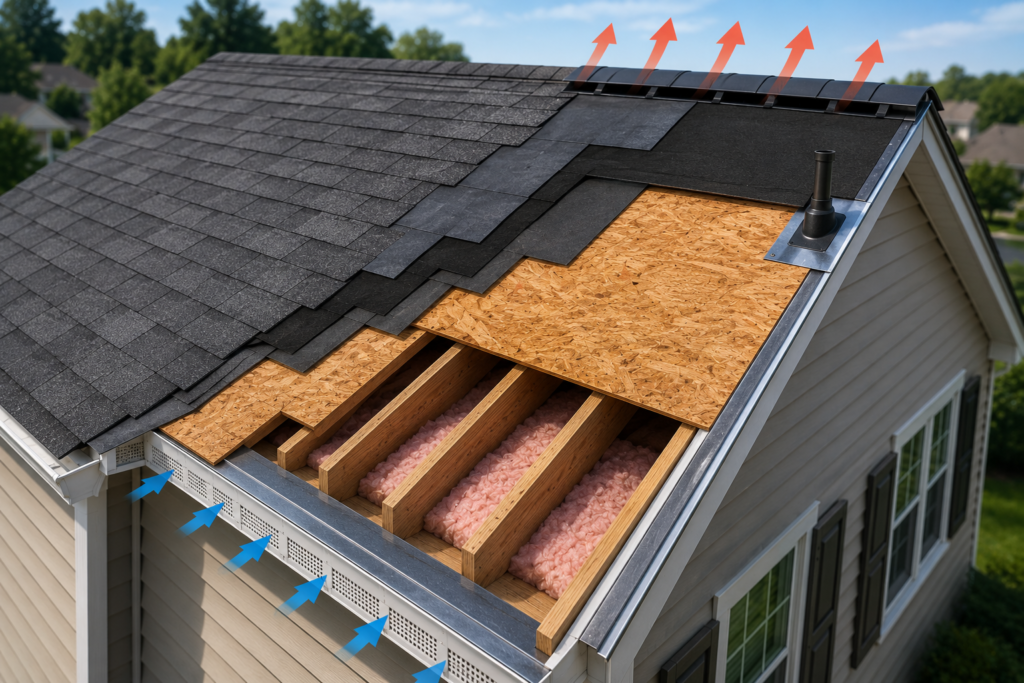
Shingle replacement provides an opportunity to evaluate attic intake and exhaust ventilation. A balanced system typically introduces air through lower intake vents and releases attic air through upper exhaust vents, and NRCA recommends approximately 50 percent of ventilation area near the ridge for a balanced configuration. A general ventilation guideline uses 1 square foot of net free ventilation area for every 150 square feet of attic floor area, although qualifying assemblies can use different ratios. The contractor should evaluate soffit vents, ridge vents, insulation clearance, and existing exhaust vents before modifying the ventilation configuration.
Shingle Roof Replacement Process
Roof Measurement and Condition Assessment
The contractor measures roof planes and identifies valleys, ridges, penetrations, flashing, and ventilation components.
Existing Shingle Removal
The roofing crew removes the existing shingles and materials included within the replacement scope.
Deck Inspection and Repairs
The crew examines exposed decking and replaces deteriorated sections that cannot provide a suitable fastening surface.
Underlayment and Water Protection
The crew installs specified underlayment and water protection materials according to roof slope and climate requirements.
Drip Edge and Flashing Work
The crew completes roof perimeter details and flashing around valleys, walls, chimneys, and penetrations.
Asphalt Shingle Installation
The crew installs starter materials and shingles according to manufacturer exposure and fastening requirements.
Ridge and Ventilation Completion
The crew installs ridge materials and completes compatible ventilation components.
Final Inspection and Cleanup
The contractor checks shingles, flashing, penetrations, roof edges, ventilation components, and the surrounding work area.
Real World Shingle Roof Replacement Example
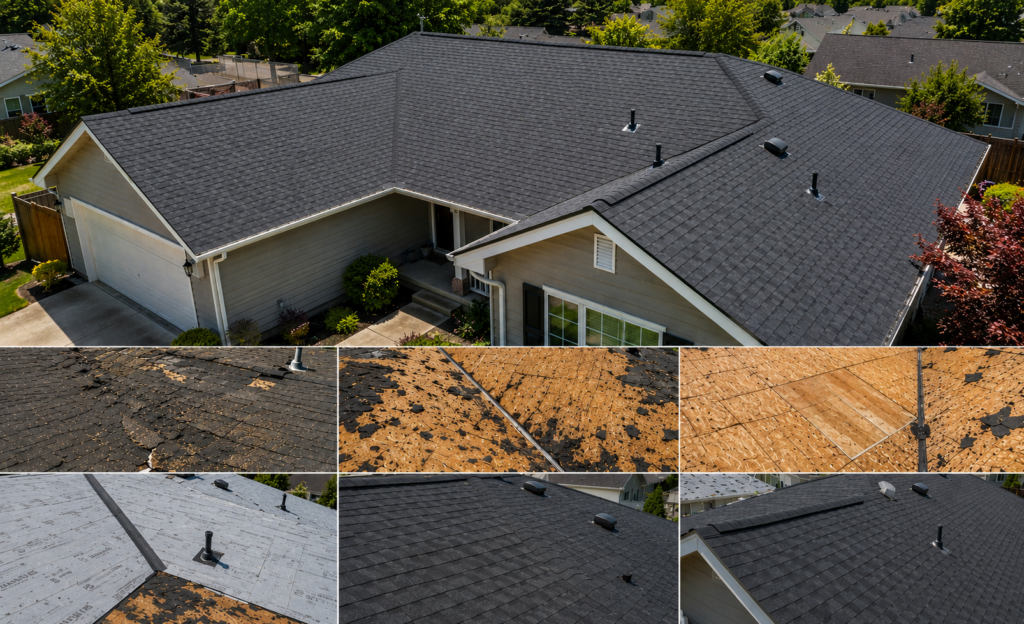
Consider a 2,200 square foot single story Portland home with approximately 2,700 square feet of measured roof surface. Existing asphalt shingles show widespread cracking, while attic staining identifies previous water entry near a valley. Roof removal exposes six deteriorated OSB panels; the roofing crew replaces the six panels, installs specified underlayment, corrects valley and plumbing vent flashing, and adds new drip edge. The crew then installs architectural asphalt shingles, compatible starter shingles, ridge materials, and the specified ventilation components. The project demonstrates why complete replacement addresses materials beneath the shingles instead of simply covering visible deterioration.
What Affects a Shingle Roof Replacement Project?
Several factors combine to set the scope of a shingle roof replacement project. Homeowners planning a replacement can review the roof replacement cost guide for additional budgeting information.
- Roof area: one roofing square covers 100 square feet and sets the base quantity of shingles, underlayment, starter material, and ridge components
- Roof pitch: a 4:12 roof rises 4 inches for every 12 inches of horizontal run, while an 8:12 roof rises 8 inches over the same distance
- Roof geometry: valleys, dormers, skylights, chimneys, and plumbing vents each create additional flashing transitions and material cuts
- Deck repairs, shingle selection, ventilation changes, flashing work, permits, disposal requirements, and property access
Shingle Roof Repair Versus Replacement
Roof Repair
Localized damage can support roof repair when surrounding shingles and roofing components remain serviceable. Examples include several missing shingles, one damaged pipe boot, or one isolated flashing problem.
Roof Replacement
Replacement becomes more relevant when cracking, missing shingles, leaks, or deterioration affects multiple roof areas. Widespread deck damage can also increase the scope beyond localized repair.
A roofing inspection should identify the failure source before the homeowner chooses between roof repair and complete replacement.
Why Complete Shingle Replacement Requires More Than New Shingles
Asphalt shingles form one layer of the complete roofing assembly. Roof decking provides structural support, underlayment adds secondary water protection, flashing controls water at transitions, drip edge protects perimeter details, fasteners secure shingles to the deck, and ventilation manages airflow through applicable attic assemblies. NRCA asphalt shingle quality guidance evaluates the substrate, underlayment, drip edge, fasteners, shingles, and flashing as separate installation areas, and a replacement project should correct identified problems within these components before the roofing crew completes the new shingle surface.
Frequently Asked Questions About Shingle Roof Replacement
When should asphalt shingles be replaced?
Widespread cracking, missing shingles, repeated leaks, exposed asphalt, or deterioration across several roof areas can indicate replacement. A roofing inspection should evaluate shingles, decking, flashing, and previous leak locations before making the decision.
Can new shingles go over old shingles?
Some local requirements and roof conditions permit a roof recover, but additional layers can prevent direct deck inspection. Complete removal allows the roofing crew to inspect sheathing, flashing, and concealed moisture damage.
Does roof decking always need replacement?
No. Sound decking can remain when the material provides a suitable fastening surface and meets project requirements. The roofing crew replaces sections affected by rot, delamination, breakage, or other conditions that prevent proper installation.
What underlayment goes beneath asphalt shingles?
Asphalt saturated felt and qualifying synthetic underlayments represent common options. Roof slope, local climate, shingle manufacturer requirements, and applicable building requirements determine the appropriate material.
What roof slope works for asphalt shingles?
NRCA generally recommends asphalt shingles on slopes of 4:12 or greater. Some manufacturers and building requirements permit applications down to 2:12 when the roofing assembly includes additional protection.
Should flashing be replaced during shingle replacement?
The roofing contractor should inspect flashing around valleys, chimneys, walls, skylights, and plumbing vents. Damaged, deteriorated, or incompatible flashing requires correction before surrounding shingles cover the transition.
How long does shingle roof replacement take?
Roof size alone cannot determine the schedule. Roof pitch, valleys, penetrations, deck repairs, weather, material selection, property access, crew size, and inspection requirements affect project duration.
Schedule Shingle Roof Replacement With Roofing Relief Pros
Cracked shingles, missing sections, repeated leaks, and deteriorated roof components can allow moisture to move beneath the visible roof covering. Roofing Relief Pros helps homeowners plan shingle roof replacement around roof condition, decking, water protection, flashing, ventilation, and selected asphalt shingle specifications.
- Free estimate
- Deck & flashing inspection before install
- Three tab & architectural shingle options
- Licensed & insured crews
Get a Free Shingle Roof Replacement Estimate
Fast response. No spam. No obligation.