
- Planning Guide
- Free Estimate
Roof Replacement Timeline: How Long Does a New Roof Take?
A leaking or deteriorated roof creates an immediate concern, but homeowners also need to know how long replacement will disrupt normal routines. Material availability, roof size, weather, deck repairs, permits, and roofing material can change the schedule before installation begins. Roofing Relief Pros helps homeowners plan roof replacement around property conditions, roofing material, project scope, and installation requirements.
- Free estimate
- Typical active install: 1 to 3 days
- Inspection through final cleanup
- Licensed & insured crews
Get a Free Roof Replacement Estimate
Fast response. No spam. No obligation.
How Long Does Roof Replacement Take?
Many straightforward residential asphalt shingle replacements can take approximately 1 to 3 working days once installation begins. Larger roofs, steep slopes, extensive deck repairs, complicated roof geometry, specialty materials, and weather can extend active installation. The complete project timeline includes more than installation days: inspection, estimating, material selection, contractor scheduling, permit requirements, material delivery, and final inspection can add time before and after physical roof work. A 2,000 square foot simple gable roof and a 4,000 square foot roof containing valleys, dormers, skylights, and a chimney should not receive the same schedule estimate. See full roof replacement and roof installation service information for related context.
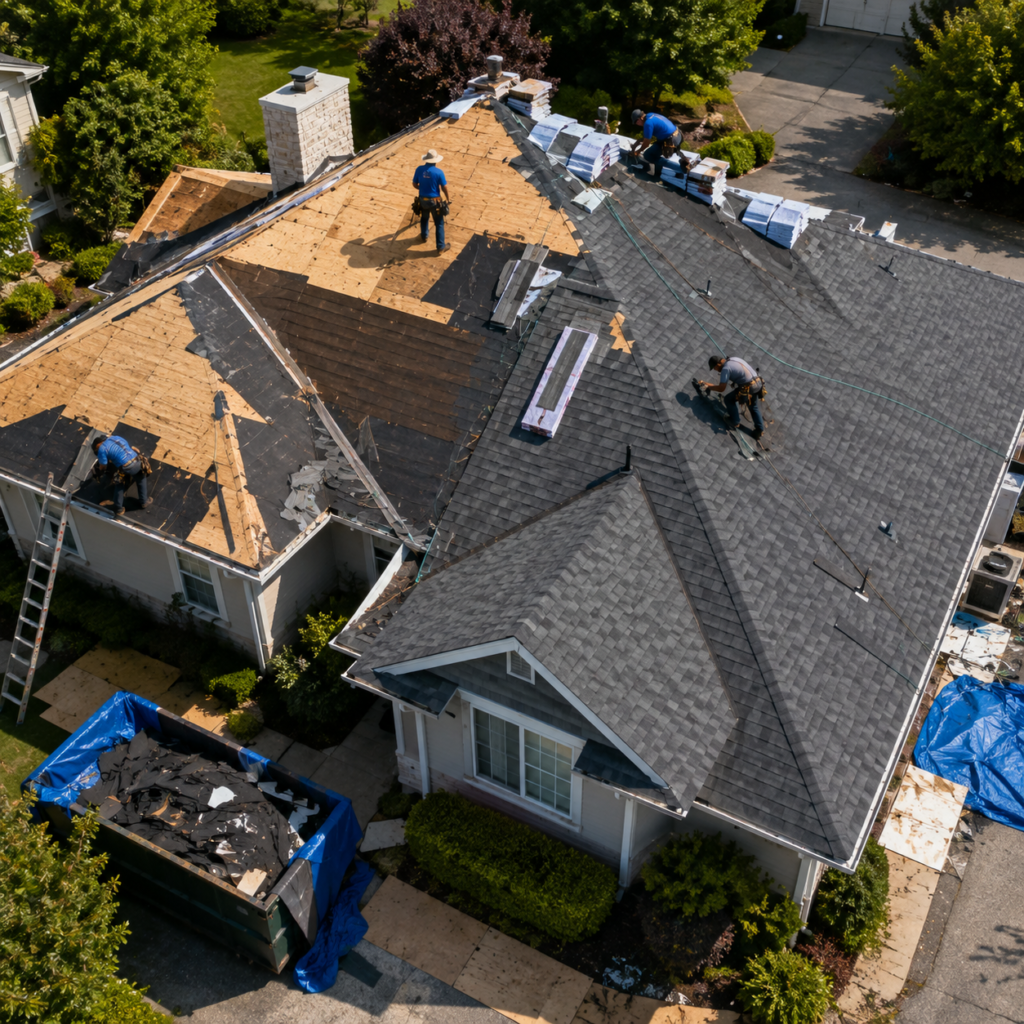
The Roof Replacement Timeline
Roof Inspection and Initial Assessment
The roofing contractor examines roof coverings, flashing, penetrations, valleys, eaves, ridges, ventilation components, and visible signs of deck deterioration. Roofers measure roof surface in squares, with one roofing square equal to 100 square feet. See roof inspection and maintenance for more on this stage.
Estimate and Project Scope
A replacement scope can include existing roof removal, deck inspection, damaged sheathing replacement, underlayment, water protection, drip edge, flashing, roof covering, ridge components, ventilation work, disposal, and cleanup. Homeowners comparing project expenses can review the roof replacement cost guide before approving the final scope.
Roofing Material Selection
Asphalt shingles use overlapping courses and mechanical fasteners. Standing seam metal roofing uses panels, seams, clips or fastening flanges, and specialized trim. Flat roof membranes require different preparation, attachment, seam, and flashing methods. Product availability also matters.
Permits and Preinstallation Requirements
Permit requirements vary by location and project scope. Some jurisdictions require permits for roof replacement, and homeowner association requirements can create another scheduling step before installation begins.
Material Delivery and Site Preparation
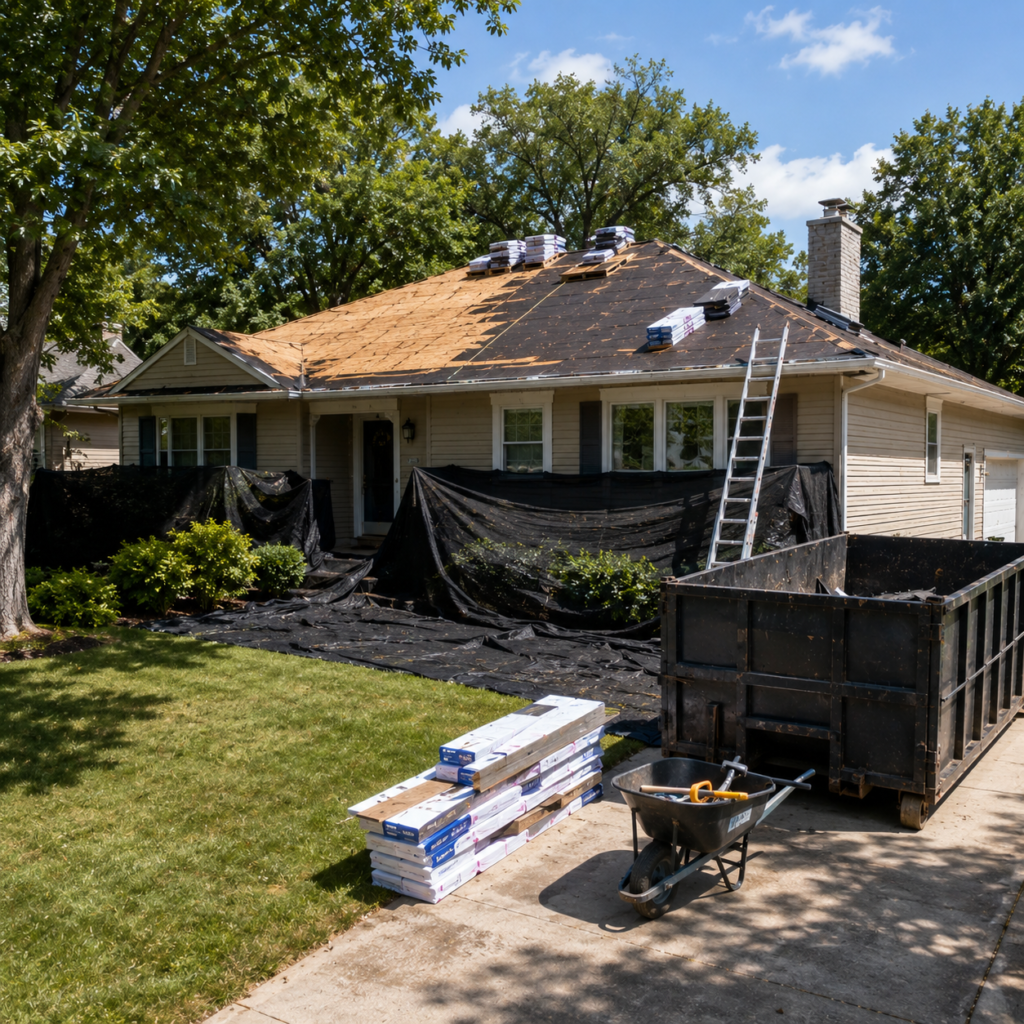
Material delivery normally occurs shortly before installation. Site preparation can include positioning waste containers, protecting landscaping, establishing material staging areas, and planning access around vehicles and exterior structures.
Removing the Existing Roof
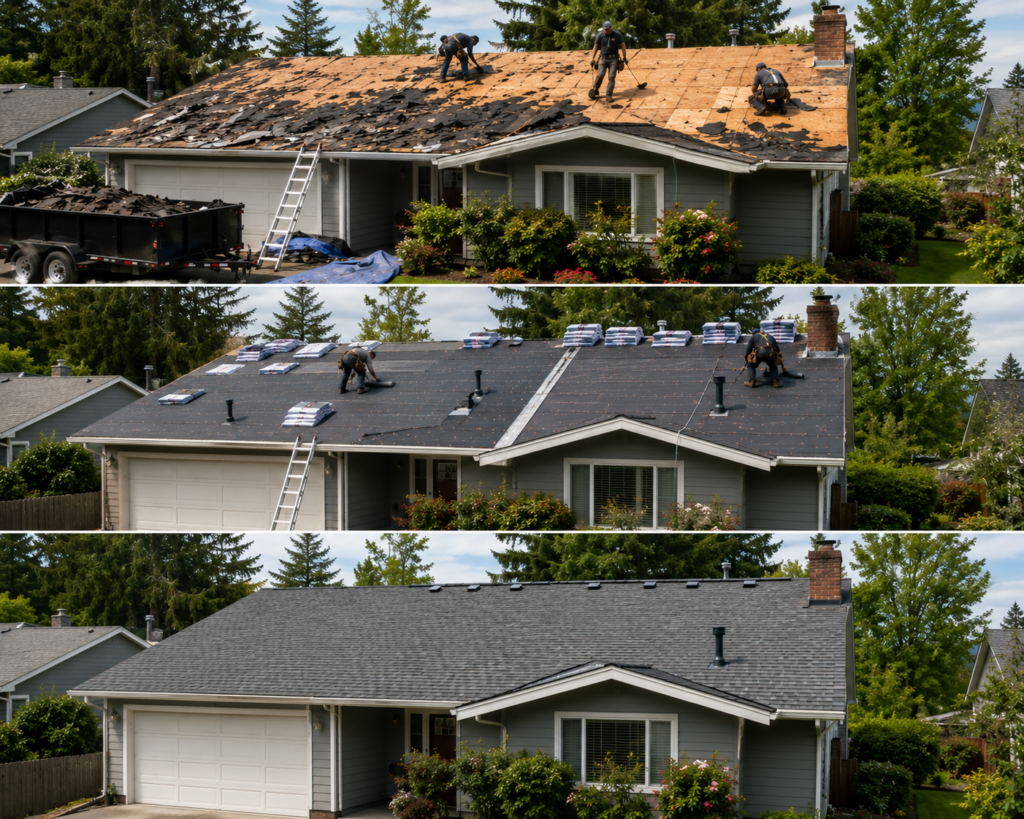
Tear off removes existing roofing materials and exposes the roof deck. Material type and number of existing layers affect removal time, and removal creates the first opportunity for complete visual inspection of the deck surface.
Roof Deck Inspection and Repairs
The roofing crew examines exposed plywood, OSB, or board decking for rot, delamination, moisture damage, broken sections, and unsuitable fastening surfaces. Broader moisture damage can require additional material and labor before installation continues.
Underlayment, Flashing, and Water Protection
Underlayment creates secondary water protection over the roof deck. Flashing controls water around chimneys, plumbing vents, skylights, walls, and roof transitions, and drip edge protects roof perimeter details.
New Roofing Material Installation
Asphalt shingle installation can progress quickly after deck preparation. Metal roofing can require additional measuring, panel positioning, and seam work. Flat roof replacement can involve insulation, cover board, drainage corrections, and membrane placement.
Ridge, Ventilation, and Final Details
The roofing crew completes ridge materials, ventilation components, penetrations, flashing, and roof edge details after the primary roof covering reaches completion. A general vented attic guideline uses 1 square foot of net free ventilation area for every 150 square feet of attic floor area.
Cleanup and Final Inspection
The roofing crew removes discarded roofing materials, packaging, fasteners, and installation debris. Local permit requirements can require an additional municipal inspection before the project receives final approval.
Installation Time by Material Type
Different roofing systems require different installation processes, so no single timeline fits every property.
Asphalt Shingle Roof
Typical active installation range: 1 to 3 working days. Main timeline factors include roof size, pitch, tear off, deck repairs, and valleys.
Metal Roof
Typical active installation range: several working days or longer. Main timeline factors include panel type, roof geometry, fabrication, and flashing.
Flat or Low Slope Roof
Typical active installation range: several working days or longer. Main timeline factors include membrane type, insulation, drainage, and penetrations.
Large or Detailed Residential Roof
Typical active installation range: project specific. Main timeline factors include area, slope, dormers, valleys, chimneys, and access.
These ranges provide planning context rather than guaranteed completion dates. Weather, concealed damage, inspection requirements, material availability, and project specifications can change the actual schedule. See full roof replacement for shingle, metal, and flat roof options.
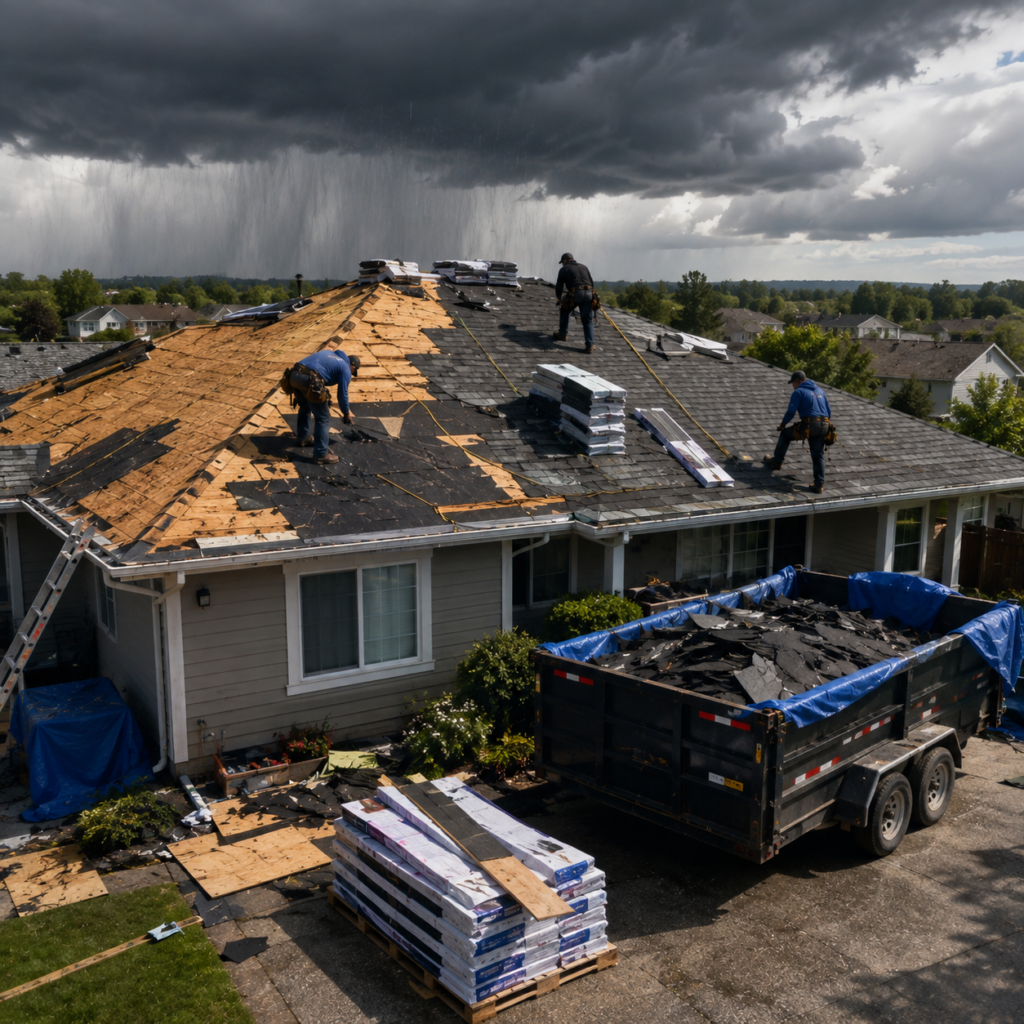
What Can Delay a Roof Replacement?
Several conditions can extend the original roof replacement schedule. A contractor should communicate schedule changes when any of these conditions affect the planned completion date.
- Weather: rain can interrupt tear off and installation, and high winds can affect safe handling of shingles, underlayment, and long metal panels
- Hidden deck damage: existing roofing can conceal rotten or moisture damaged decking, and removal may reveal additional repairs
- Roof size and geometry: a 40 square roof contains approximately 4,000 square feet of roof surface, and valleys, dormers, skylights, and chimneys add cutting and flashing work
- Material availability: special order shingles, metal panels, trim, or roofing components can affect the start date
- Permits and inspections: local permit processing and inspection scheduling can add time outside the direct installation schedule
Can Roof Replacement Be Completed in One Day?
Some small and straightforward asphalt shingle roofs can reach completion in one working day under favorable conditions. A one day project generally requires manageable roof area, simple geometry, minimal deck repairs, suitable weather, available materials, and sufficient crew capacity. Homeowners should not choose a roofing contractor based solely on the promise of one day completion; correct deck preparation, underlayment, flashing, fastening, ventilation details, and final inspection matter more than reducing the schedule by several hours. The contractor should establish a schedule from measured project conditions rather than a universal one day promise.
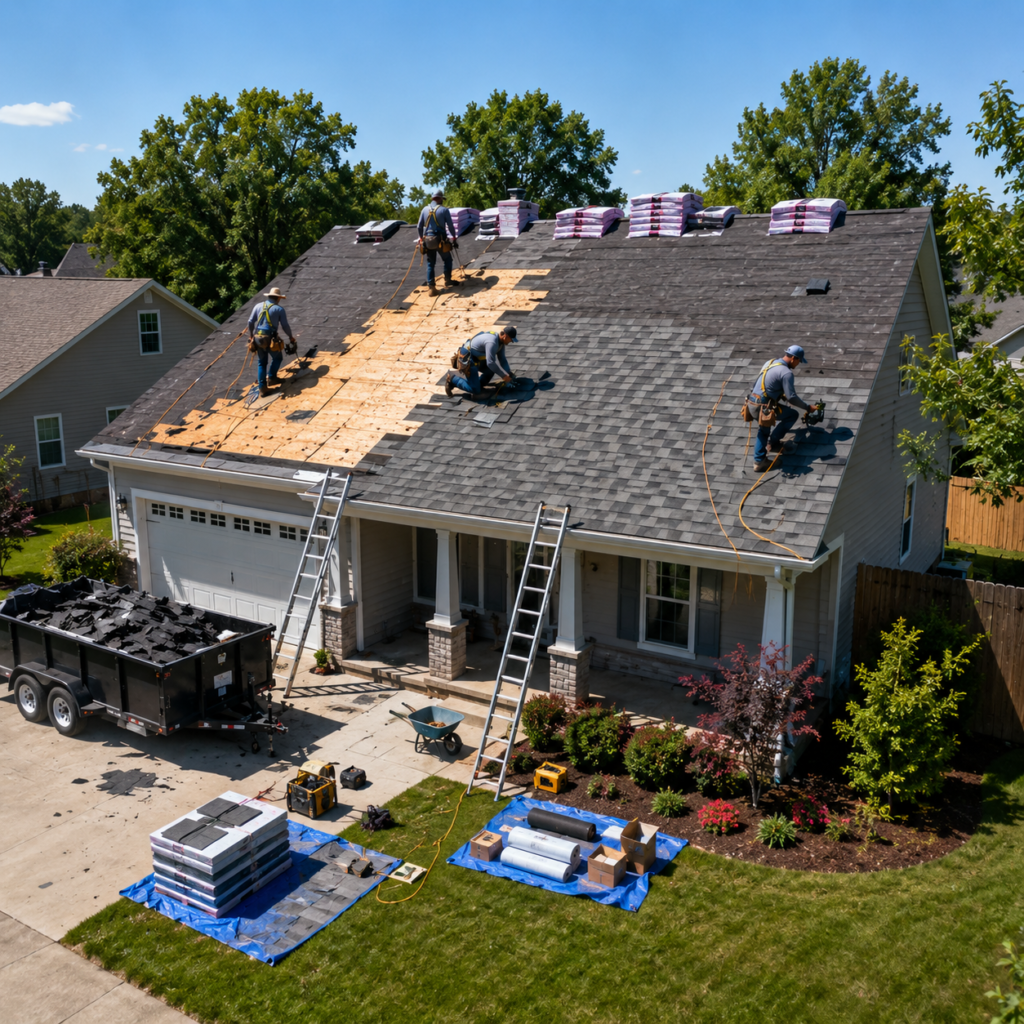
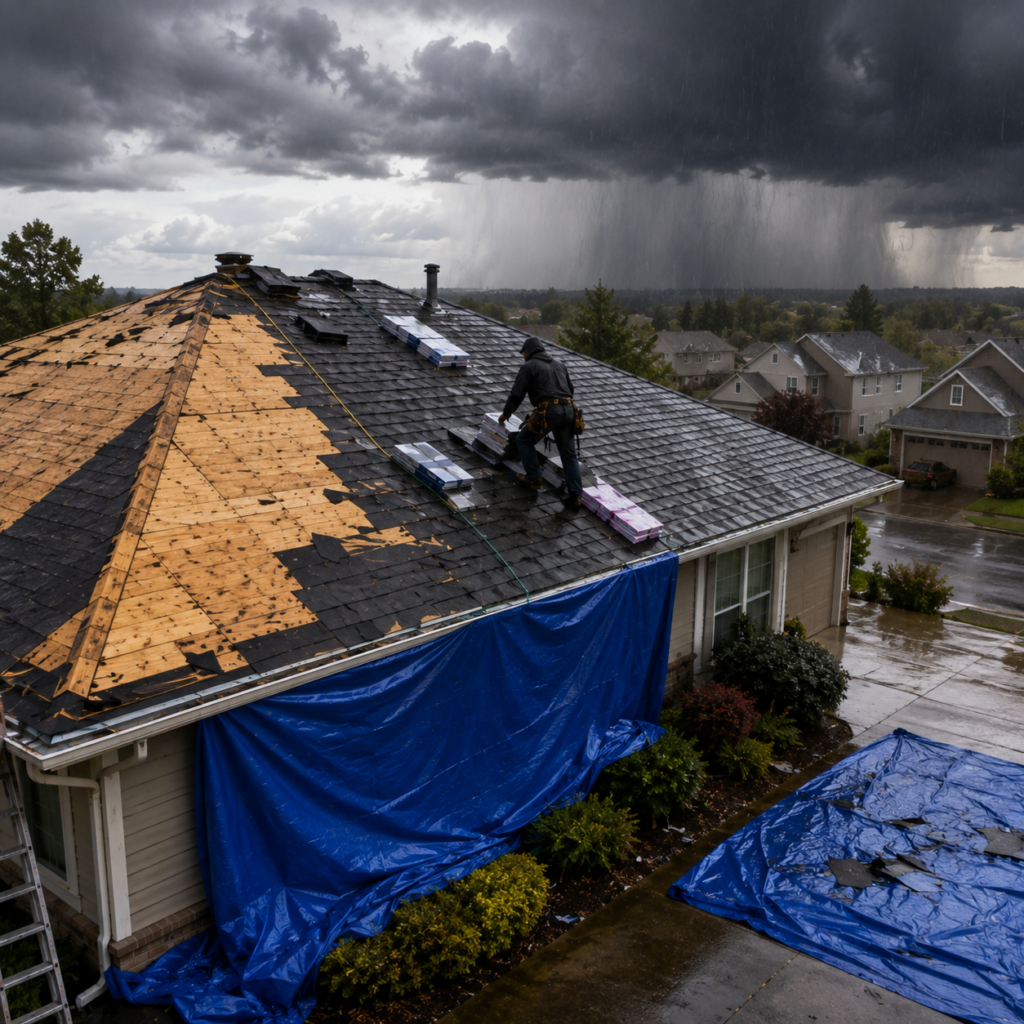
How Weather Affects the Roofing Schedule
Weather can change both the start date and active installation schedule. Rain creates a direct water exposure risk after roof removal, and contractors commonly monitor forecasts and limit tear off to areas that crews can protect during changing weather. Wind affects material handling and worker safety, since large panel surfaces can catch wind. Cold conditions can affect asphalt shingle handling and sealing; NRCA notes that asphalt shingles become more brittle at lower temperatures and factory applied sealant strips can require additional attention during cold weather installation.
Real World Roof Replacement Timeline Example
Consider a 2,200 square foot single story home in Portland with approximately 2,700 square feet of asphalt shingle roof surface. The existing roof contains one layer of deteriorated asphalt shingles, two plumbing vents, one valley, and a ridge ventilation system.
On the first installation day, the roofing crew removes the existing shingles and exposes six deteriorated OSB panels, then replaces the panels and begins underlayment and water protection work. On the second working day, the crew completes underlayment, flashing, drip edge, starter materials, and most field shingles. The crew completes remaining shingles, ridge materials, ventilation details, inspection, and cleanup on the third working day. The example produces a three working day active installation timeline, while inspection, estimating, material ordering, and scheduling occur before the installation period.
How Homeowners Can Prepare for Roof Replacement
Property preparation can help the roofing crew maintain the planned schedule. Clear property access allows crews to move materials and roofing debris without unnecessary delays.
- Move vehicles away from the driveway and material staging areas before work starts
- Move patio furniture, grills, planters, and fragile outdoor items away from roof edges
- Secure fragile items attached to interior walls or shelving before tear off begins, since roof removal creates vibration through framing
- Keep children and pets away from active work and debris areas
Roof Repair Versus Replacement Timeline
Roof Repair
Generally involves a smaller work area than complete replacement. An isolated flashing repair or replacement of several damaged shingles can require less active installation time because the roofing crew does not remove and rebuild the complete roof surface. See roof repair for repair specific information.
Roof Replacement
Requires additional stages, including tear off, deck inspection, underlayment, roof covering installation, ridge work, and final cleanup.
Project duration should not determine the repair versus replacement decision. Roof condition and the extent of deterioration should determine the appropriate service.
Frequently Asked Questions About Roof Replacement Timelines
How long does a typical roof replacement take?
Many straightforward residential asphalt shingle replacements can take approximately 1 to 3 working days of active installation. Roof area, slope, deck repairs, weather, crew size, and roof geometry can extend that timeframe.
Does the roof replacement timeline include the estimate and scheduling period?
No. Active installation represents only part of the complete project timeline. Inspection, estimating, material selection, permit processing where required, material delivery, and contractor scheduling occur before roof work starts.
Can roof replacement take only one day?
A small asphalt shingle roof with simple geometry, sound decking, favorable weather, and an appropriately sized crew can sometimes reach completion in one working day. Larger roofs and projects requiring deck or flashing repairs need additional time.
Does damaged roof decking delay replacement?
Deck damage can extend installation because the roofing crew must correct unsuitable sections before installing the new roof assembly. Replacing two damaged panels requires less additional work than replacing deterioration spread across 20 panels.
Does a metal roof take longer to replace than shingles?
Metal roof replacement can require additional panel measurement, alignment, seam, attachment, flashing, and trim work. Actual duration depends on panel system, roof size, slope, geometry, fabrication requirements, and crew capacity.
Can rain delay roof replacement?
Yes. Rain can interrupt roof removal and installation because exposed decking and roofing materials require protection from moisture. Contractors can adjust tear off areas and scheduling according to forecast conditions.
When can homeowners return to normal use of the property?
Normal exterior access depends on crew activity, debris removal, material staging, and final cleanup. The contractor should identify restricted areas during installation and confirm safe access after cleanup.
Plan a Roof Replacement With Roofing Relief Pros
A roof replacement timeline depends on more than the number of installation days. Inspection, project scope, material selection, scheduling, delivery, tear off, deck repairs, roofing installation, cleanup, and final inspection all contribute to project completion. Roofing Relief Pros helps homeowners plan roof replacement around measured roof conditions, roofing materials, property requirements, and expected installation stages.
- Free estimate
- Clear stage by stage scheduling
- Asphalt, metal & flat roof systems
- Licensed & insured crews
Get a Free Roof Replacement Estimate
Fast response. No spam. No obligation.