
- Licensed & Insured
- Free Estimate
Commercial Flat Roofing Services
Ponding water, open membrane seams, damaged flashing, wet insulation, and recurring leaks can disrupt operations inside a commercial property. Commercial flat roofing provides a membrane based roofing solution for offices, warehouses, retail properties, restaurants, multifamily buildings, and other commercial facilities. Roofing Relief Pros helps property owners and facility managers evaluate roof conditions and determine whether repair, replacement, or a new roofing system fits the property.
- Free estimate
- TPO, PVC, EPDM & modified bitumen
- Repair, replacement & new install
- Licensed & insured crews
Get a Free Commercial Flat Roofing Estimate
Fast response. No spam. No obligation.
What Is Commercial Flat Roofing?
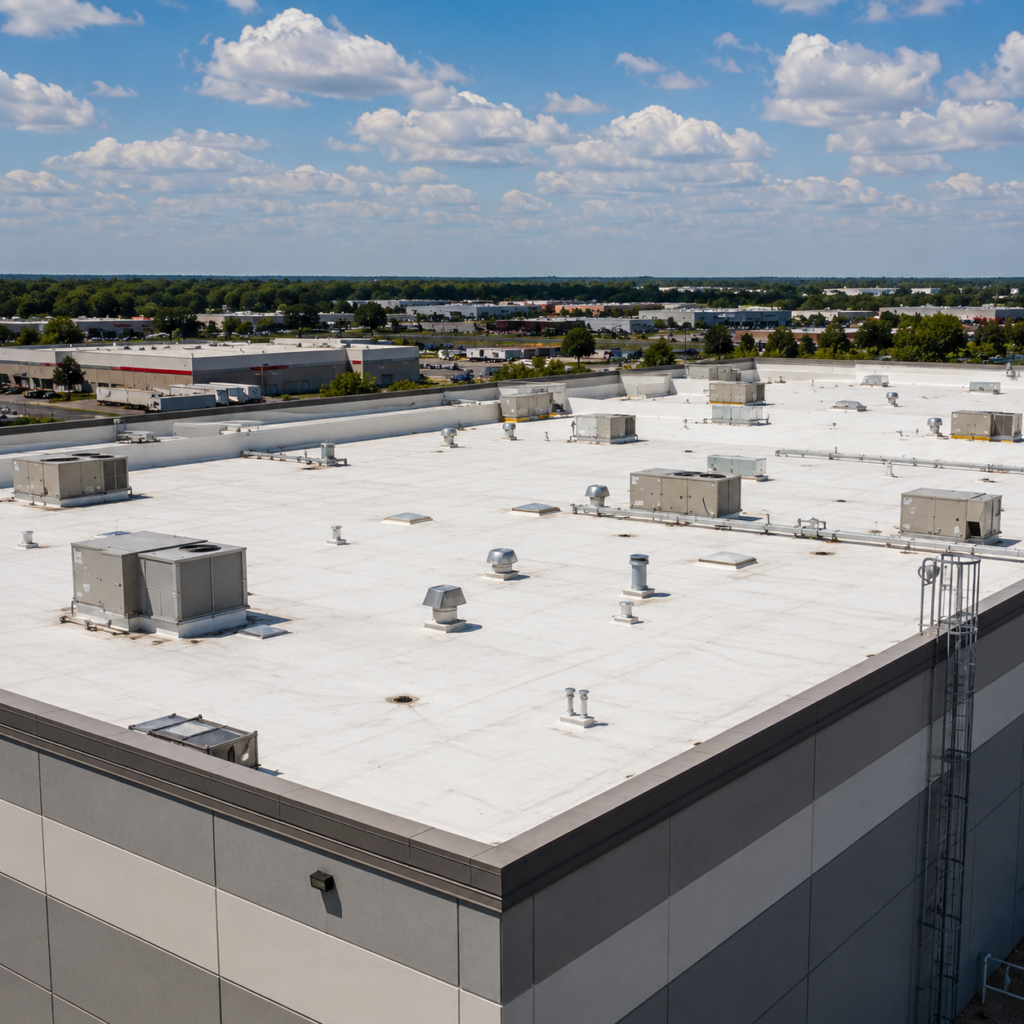
Commercial flat roofing generally describes low slope roofing systems that use continuous membranes to protect large roof surfaces. A flat roof is not necessarily level; low slope roofs require enough drainage to move rainfall toward roof drains, scuppers, or gutters, and most applicable low slope membrane systems use a minimum new construction design slope of 1/4 inch per foot, equal to 2 percent. Commercial flat roofs can cover relatively small retail properties or warehouse buildings measuring tens of thousands of square feet, and the roofing system must also accommodate rooftop equipment, drains, walls, vents, pipes, and other building components. See the full range of commercial roofing services for related work.
Where Is Commercial Flat Roofing Used?
Low slope roofing appears across many commercial property types. Office buildings commonly use flat roofs around mechanical equipment and service areas, warehouses can use low slope systems across large open roof surfaces, and retail buildings can contain multiple HVAC units, vents, drains, and parapet walls. Restaurants can add exhaust equipment and grease related rooftop exposure, while multifamily properties can contain mechanical equipment, plumbing penetrations, roof access points, and drainage systems. A 5,000 square foot retail roof and a 100,000 square foot warehouse roof can use similar membrane materials, but roof area, penetrations, drainage, access, and building operations create different project requirements.
Commercial Flat Roofing Materials
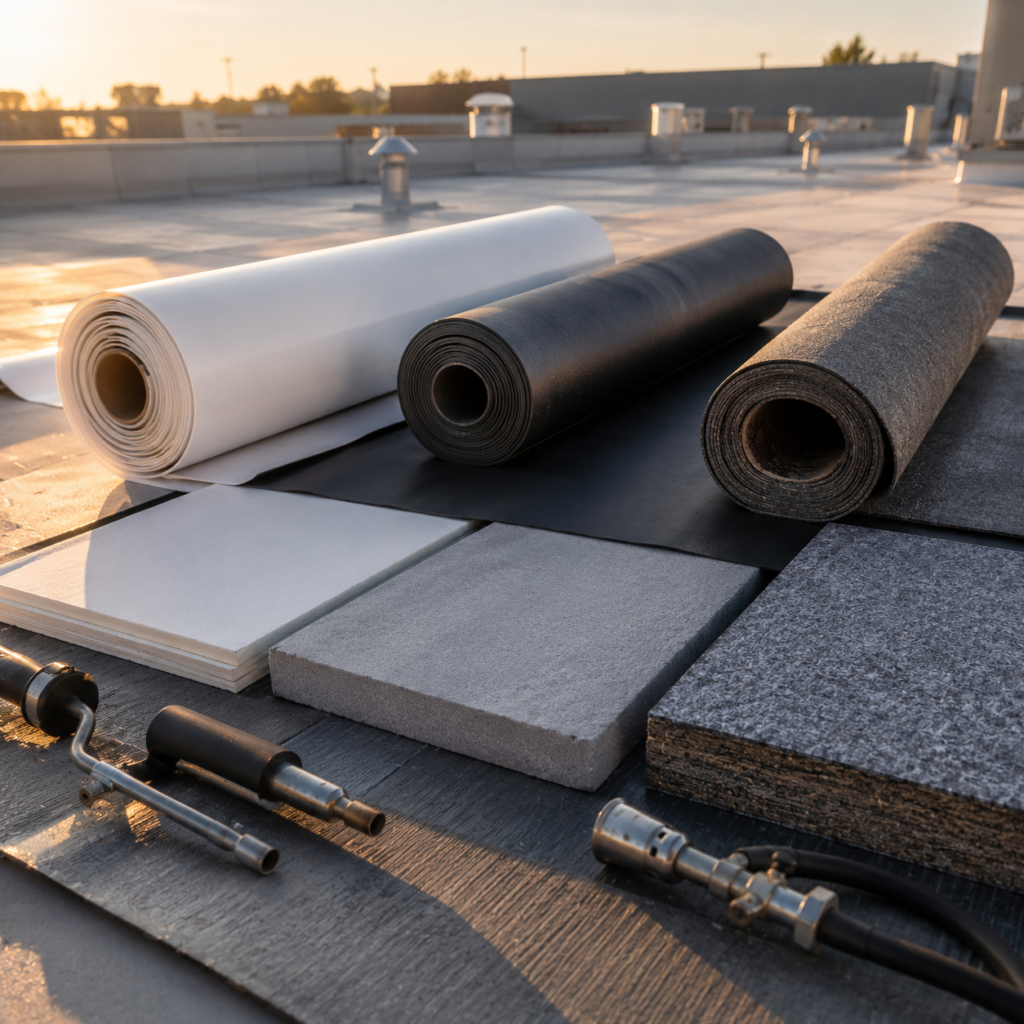
TPO, PVC, EPDM, and modified bitumen represent common options for commercial low slope roofing. Each material uses a different membrane composition and installation method, and the best choice depends on building conditions rather than one material ranking first for every property.
TPO Commercial Flat Roofing
A single ply thermoplastic roofing membrane joined with heat welded seams, using mechanically attached or adhered configurations according to the selected system. TPO also uses compatible flashing materials around walls, drains, HVAC curbs, pipes, and other roof penetrations.
PVC Commercial Flat Roofing
Another thermoplastic single ply membrane joined with heat welded seams. PVC and TPO share a thermoplastic installation approach, but material chemistry and individual product requirements differ, so complete roofing systems should be compared rather than assuming every thermoplastic membrane is identical.
EPDM Commercial Flat Roofing
A thermoset roofing membrane used on low slope commercial buildings that uses manufacturer specified seam and flashing methods rather than the heat welding process associated with TPO and PVC. Different systems can use adhered, mechanically attached, or other approved configurations.
Modified Bitumen Commercial Roofing
Uses asphalt based membrane materials modified with polymers, with different systems using different membrane layers and application methods. The selected configuration must integrate with drains, walls, curbs, pipes, and roof edges.
Metal roofing can also serve some commercial properties with suitable roof geometry; see commercial metal roofing for alternative roofing system information.
Commercial Flat Roof Drainage
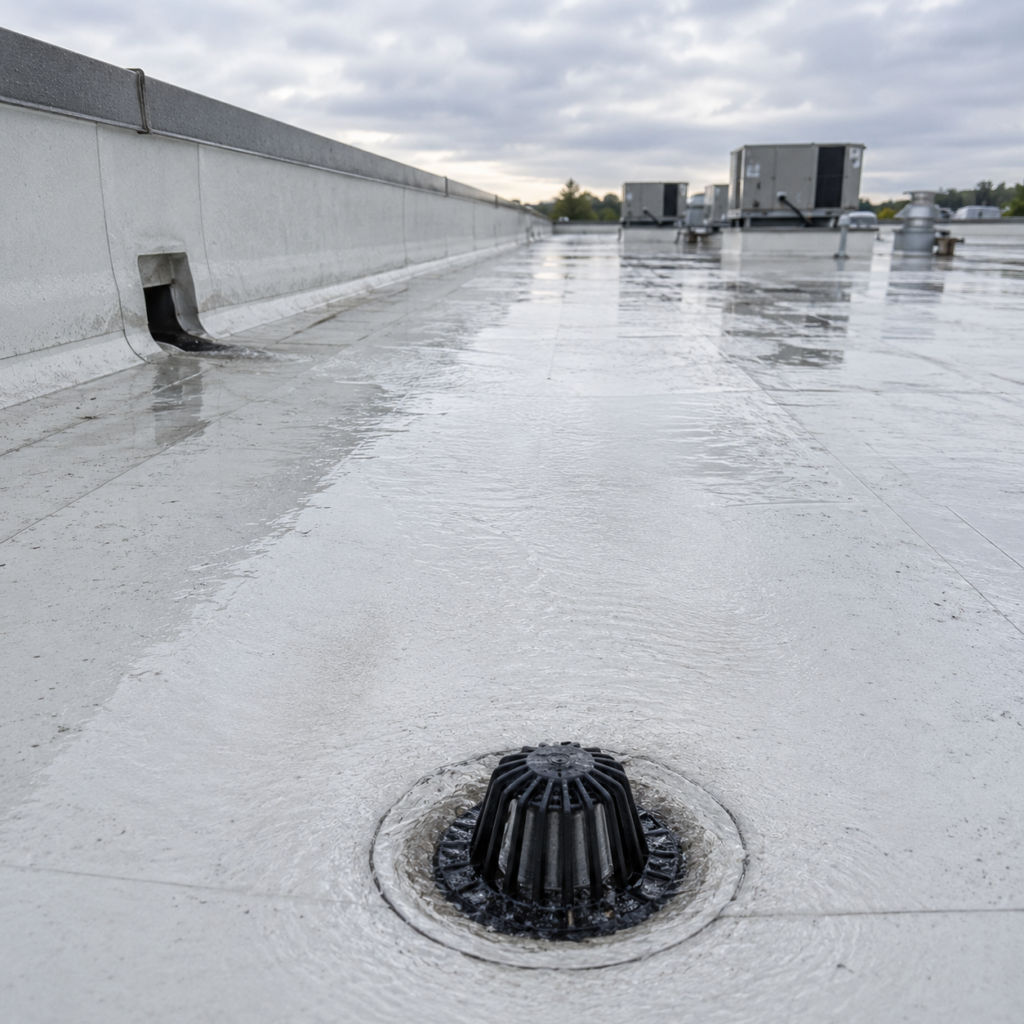
Drainage plays a central role in flat roof performance. A slope of 1/4 inch per foot equals approximately 2 percent and provides a measurable drainage target for many applicable low slope roof assemblies. Internal drains collect runoff and direct water through piping inside the building, scuppers move water through openings in parapet walls, and gutters collect runoff along qualifying roof edges. Low areas can develop from deck deflection, compressed insulation, inadequate slope, blocked drains, or previous roofing alterations. A contractor should identify the cause of standing water rather than repeatedly repairing membrane surfaces beneath the same ponding area.
Ponding Water on a Commercial Flat Roof
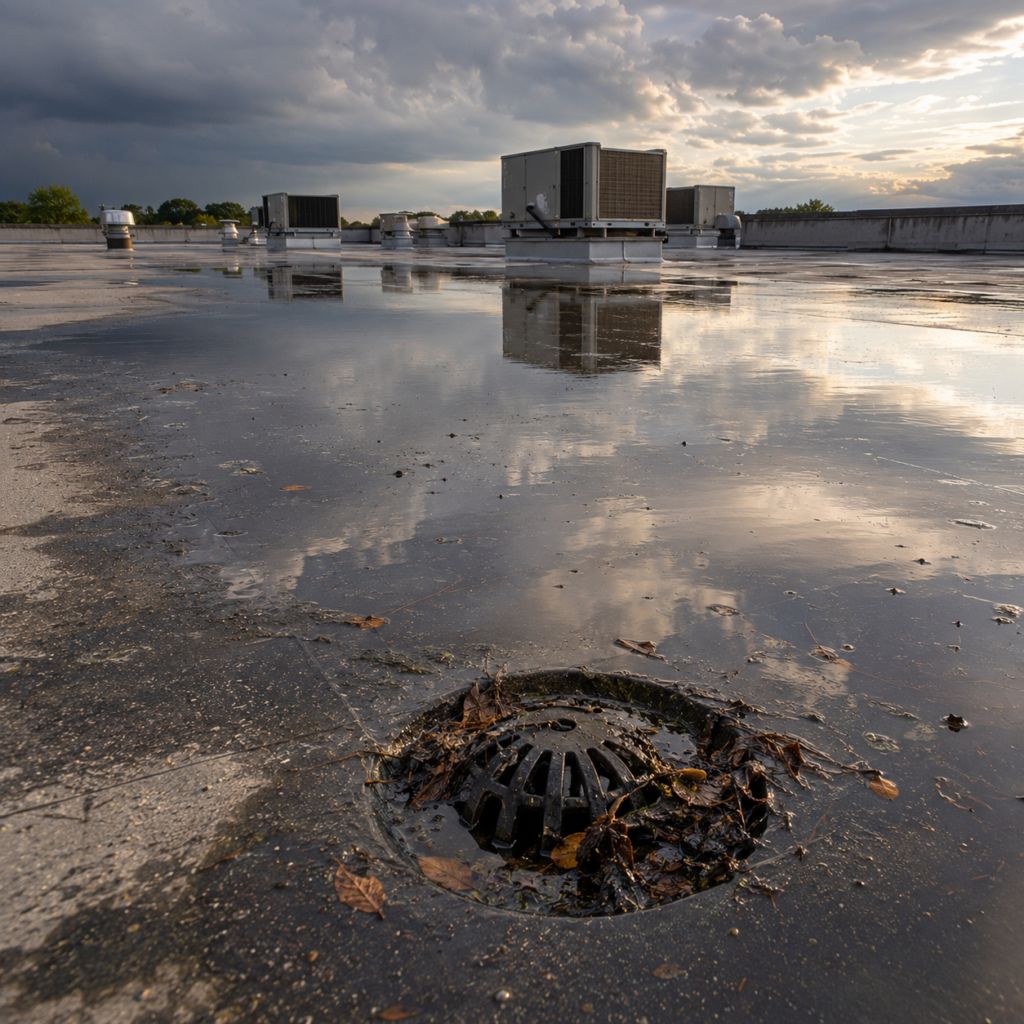
Water that repeatedly remains in the same roof areas deserves inspection. Blocked drains can prevent an otherwise functional roof from removing rainfall, and low insulation areas can also create depressions that collect water. Tapered insulation can improve drainage when project conditions support the change, with different insulation thicknesses creating slope toward drains or scuppers, and crickets can redirect water around HVAC curbs and other large obstructions. Persistent ponding combined with open seams, deteriorated membrane, or wet insulation can indicate a larger roofing problem.
Common Commercial Flat Roof Problems
Commercial flat roofs can develop problems at membranes, seams, drains, flashing, penetrations, and roof edges.
Open or Damaged Seams
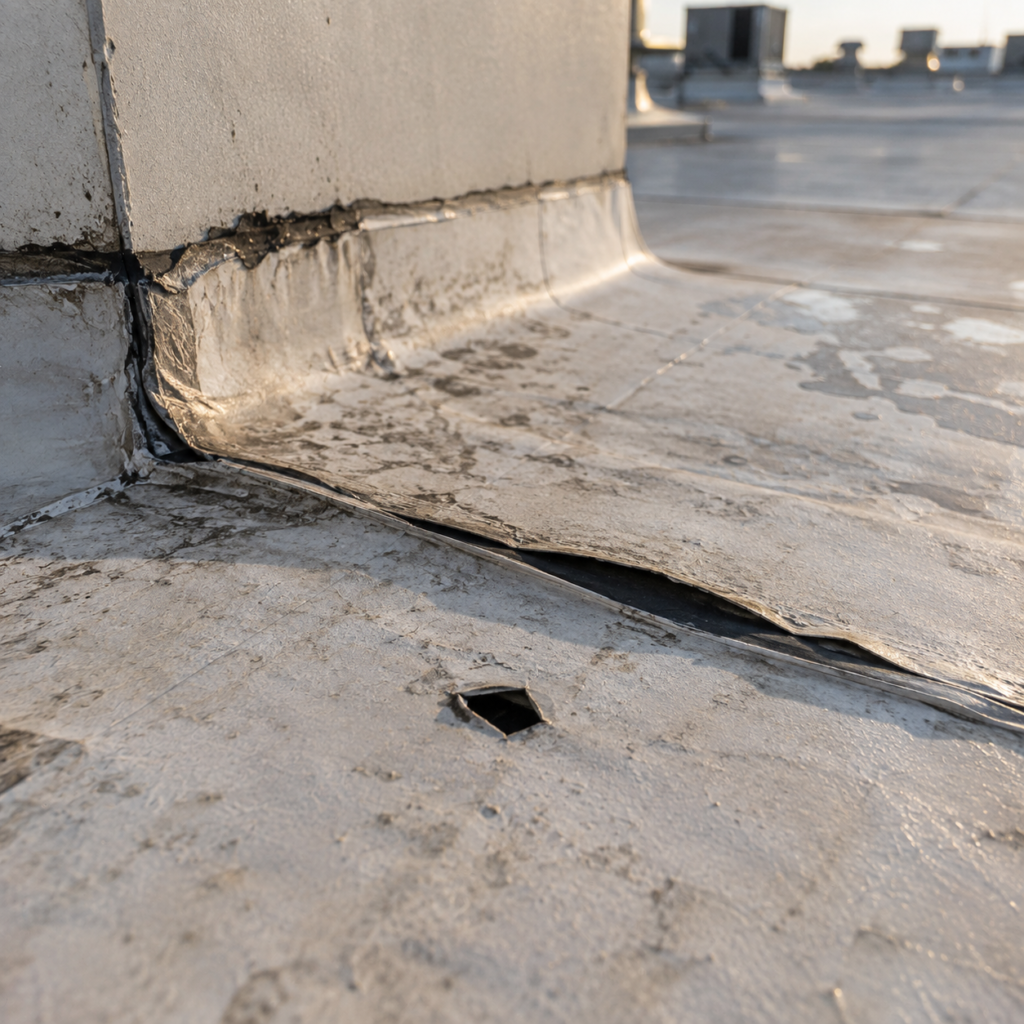
Membrane seams connect adjoining roofing sheets, and separation or physical damage can create a water entry point. One isolated seam problem can support repair when surrounding membrane remains serviceable.
Membrane Punctures
Tools, dropped equipment, debris, and rooftop service traffic can puncture membrane surfaces. A localized puncture can often receive targeted repair after the contractor checks surrounding roofing and underlying materials.
Damaged Flashing
HVAC curbs, walls, vents, pipes, skylights, and drains require compatible flashing. Failure at one transition can create a leak even when the main field membrane remains serviceable.
Wet Insulation
Water entering through a membrane or flashing defect can reach insulation beneath the visible roof surface. Moisture can spread beyond the original leak location, so the affected area should be identified before defining the repair scope.
HVAC Equipment and Roof Penetrations
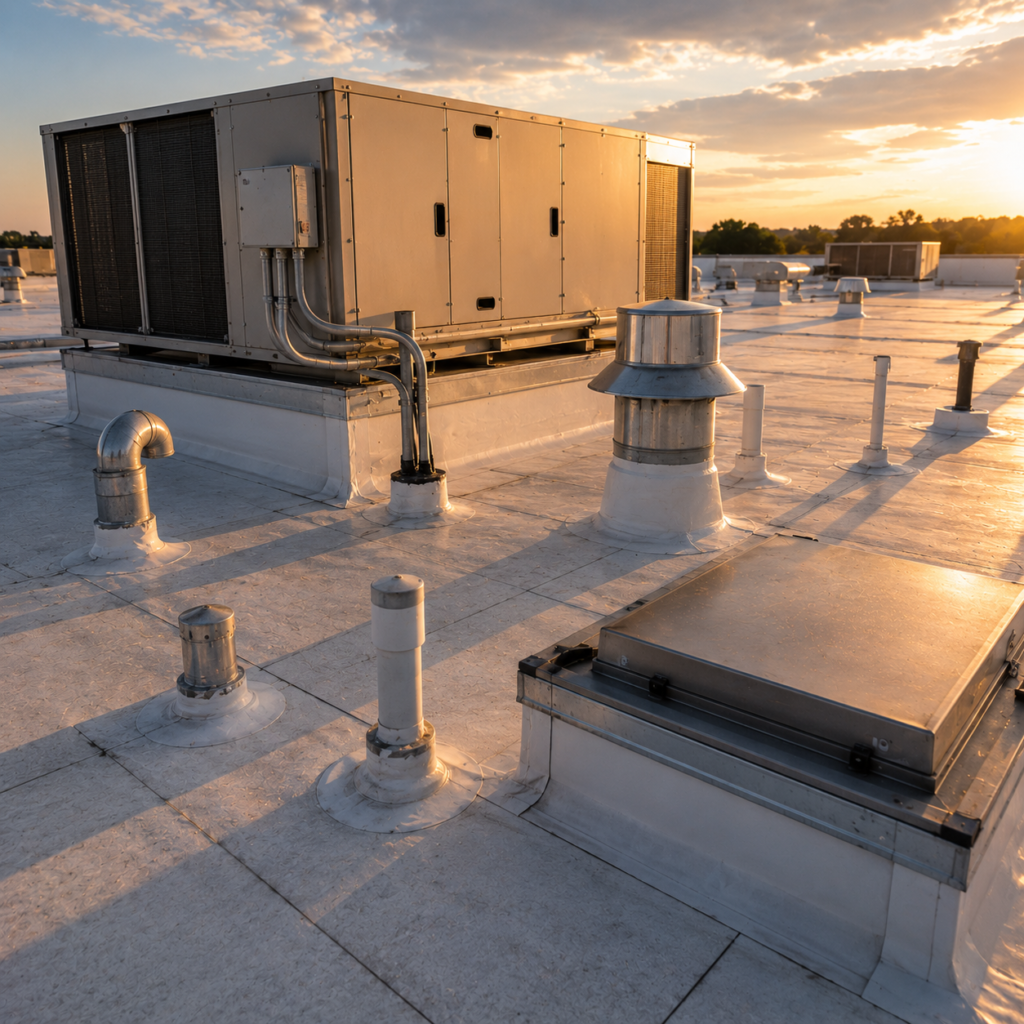
Commercial roofs commonly contain more penetrations than residential roofing surfaces. HVAC curbs, exhaust systems, plumbing vents, electrical conduits, roof hatches, skylights, and pipes interrupt the field membrane, and a roof containing 20 penetrations creates 20 separate locations where the roofing membrane must transition around another building component. Each location requires compatible flashing. Frequently serviced equipment also creates foot traffic, and designated walkway materials can identify intended travel paths and reduce unnecessary traffic across other membrane areas. Roofing work around mechanical equipment can require coordination when curb modifications or equipment movement become necessary.
Insulation and the Commercial Flat Roof Assembly
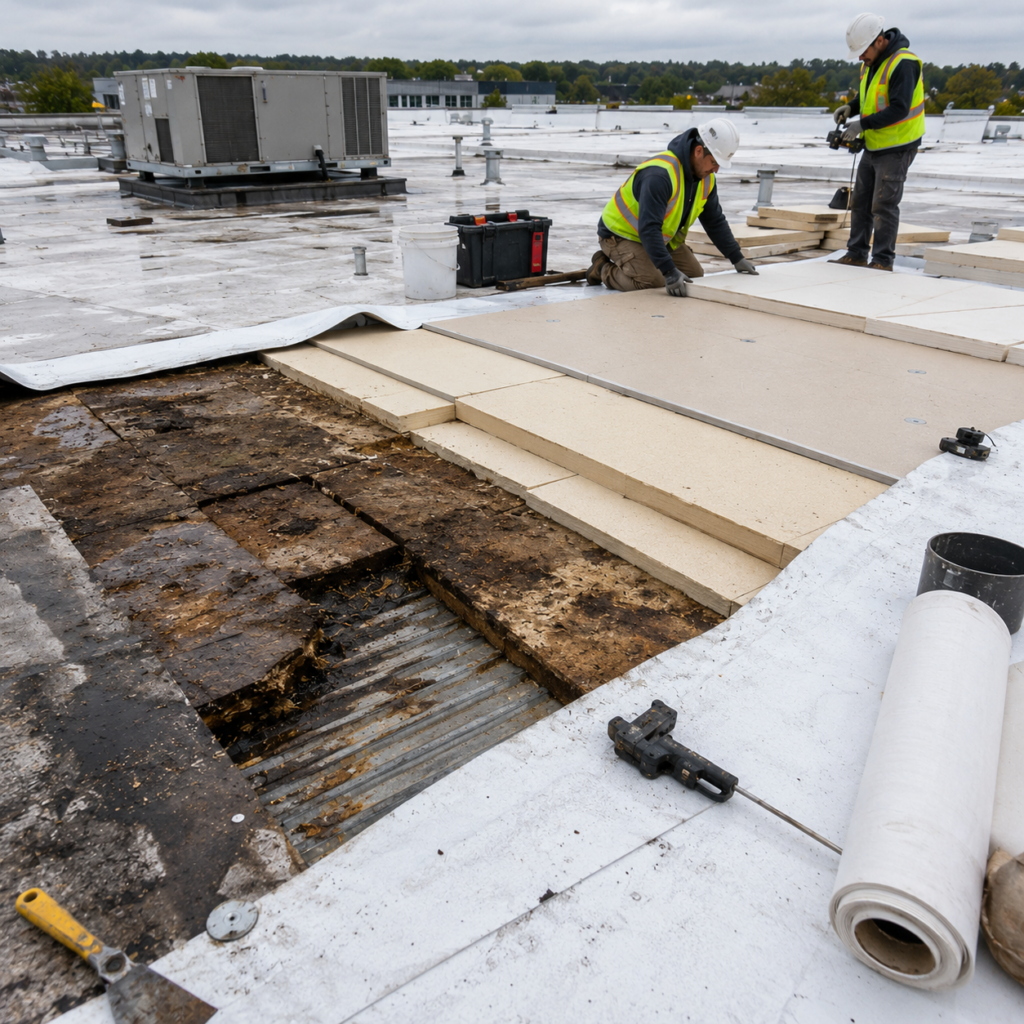
Commercial flat roofing involves more than the visible membrane. Insulation contributes thermal resistance and can help create drainage slope when tapered materials form part of the roof design. A cover board can provide a stable surface between insulation and membrane in qualifying assemblies, and cover boards can also provide additional protection for underlying insulation. Wet insulation requires evaluation during repair or replacement because trapped moisture can affect roofing performance beyond the visible leak area, so insulation, membrane, and drainage should be coordinated instead of treated as separate projects.
When Does a Commercial Flat Roof Need Repair?
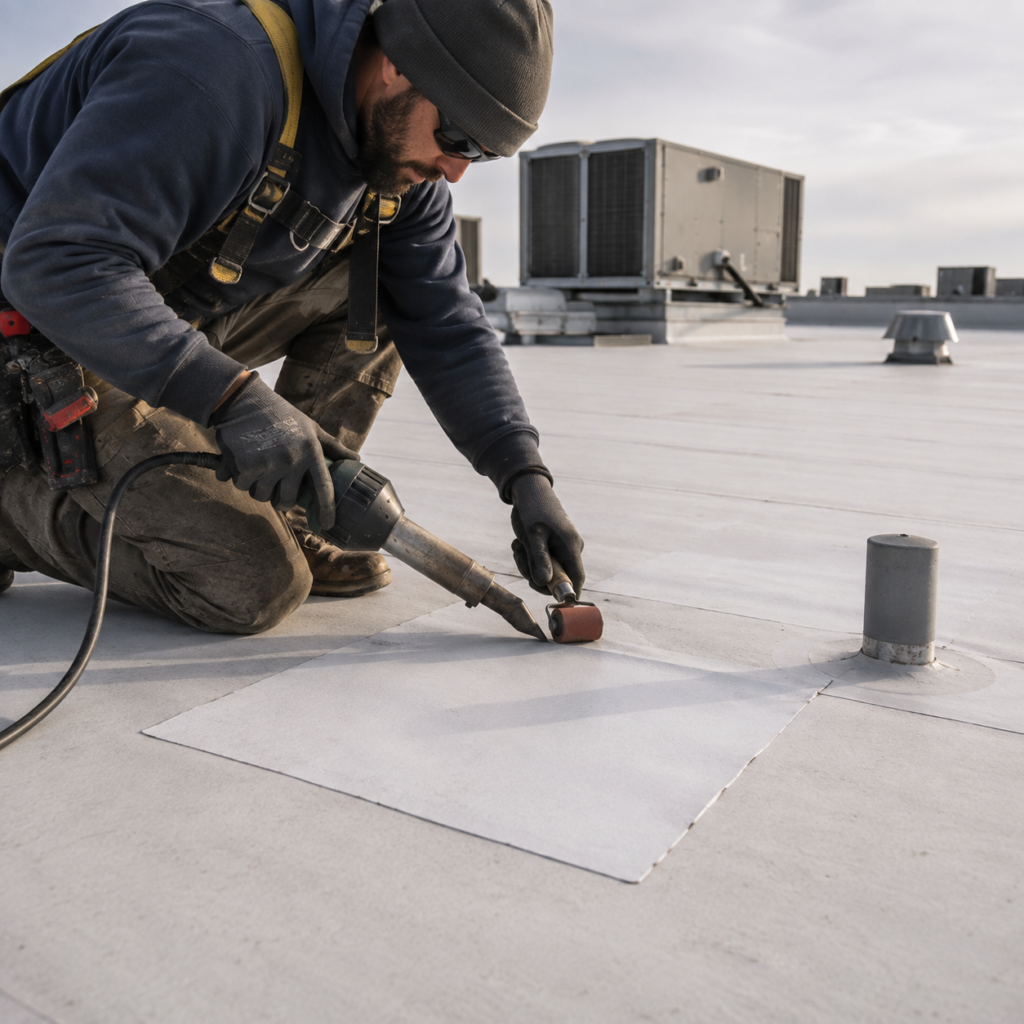
Repair can make sense when damage remains localized. One membrane puncture, isolated seam defect, damaged pipe flashing, or small affected area can support targeted repair when surrounding roofing remains serviceable; for example, a contractor may repair one damaged TPO seam without replacing thousands of square feet of functional membrane. Repair should address the failure source and any affected material beneath the membrane, since repeatedly applying surface patches without investigating recurring leaks can leave wet insulation, flashing defects, or drainage problems unresolved. See commercial roof repair for repair specific information.
When Does a Commercial Flat Roof Need Replacement?
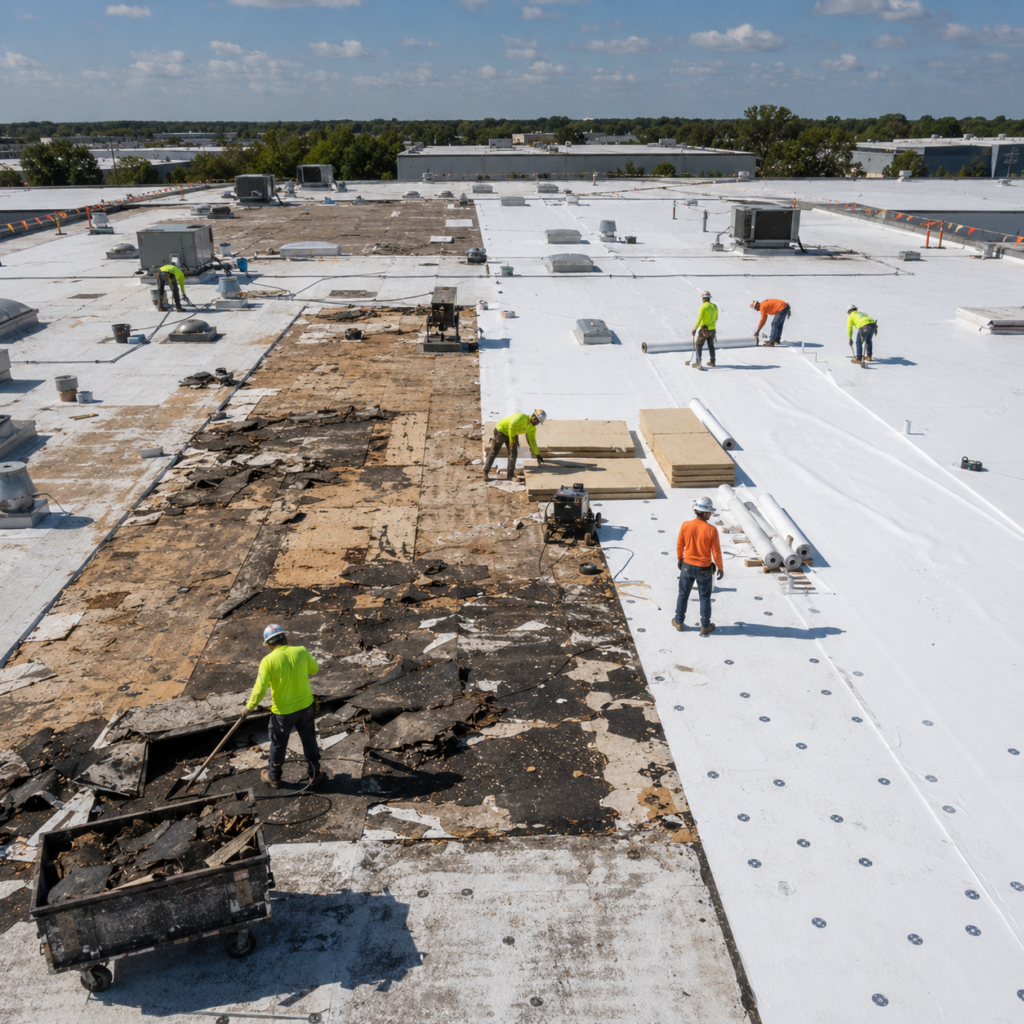
Replacement becomes more relevant when deterioration affects broad roof areas. Recurring leaks at separate locations can indicate more than one isolated failure, and widespread seam deterioration, extensive membrane damage, moisture affected insulation across large areas, and persistent drainage problems can also increase the replacement scope. A building with one puncture can remain a repair candidate, while a building with repeated leaks around multiple drains, curbs, and membrane sections requires a broader assessment. Property owners facing widespread deterioration can review commercial roof replacement or flat roof replacement for additional planning information.
Commercial Flat Roof Service Process
Roof Assessment
The contractor measures the roof and evaluates membrane condition, drainage, penetrations, flashing, and visible moisture concerns.
Service Recommendation
Inspection findings determine whether localized repair, partial work, or complete replacement fits the roof condition.
Material and Scope Selection
The contractor identifies the membrane, insulation, drainage corrections, flashing, and other components required for the project.
Roofing Work
The roofing crew completes removal where required, corrects affected underlying materials, and installs the specified roofing components.
Flashing and Drainage Work
The crew completes drains, curbs, pipes, walls, roof edges, and other transitions included within the scope.
Final Inspection
The contractor checks completed membrane areas, seams, flashing, penetrations, drainage points, and work areas.
Reducing Disruption to Commercial Operations
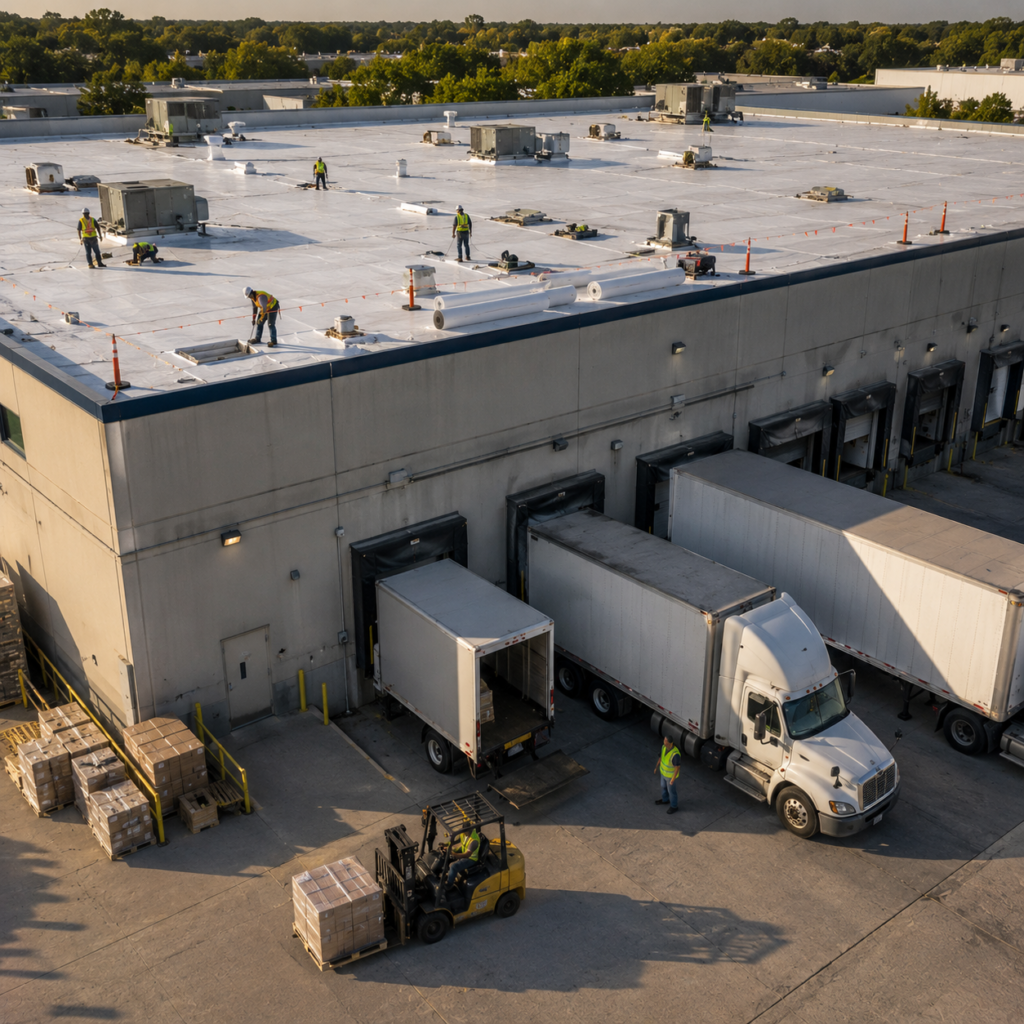
Roofing work should account for normal building operations. Material deliveries, waste containers, roof access, pedestrian routes, employee parking, customer access, and loading areas can affect project planning. Roofing activity around HVAC equipment can also require coordination with building maintenance or mechanical contractors, and a warehouse can have different access requirements from a restaurant or retail property operating throughout the day. The contractor should identify restricted work areas and material staging locations before roofing work begins, and clear scheduling helps property managers prepare tenants, employees, and service providers for the project.
Real World Commercial Flat Roof Example
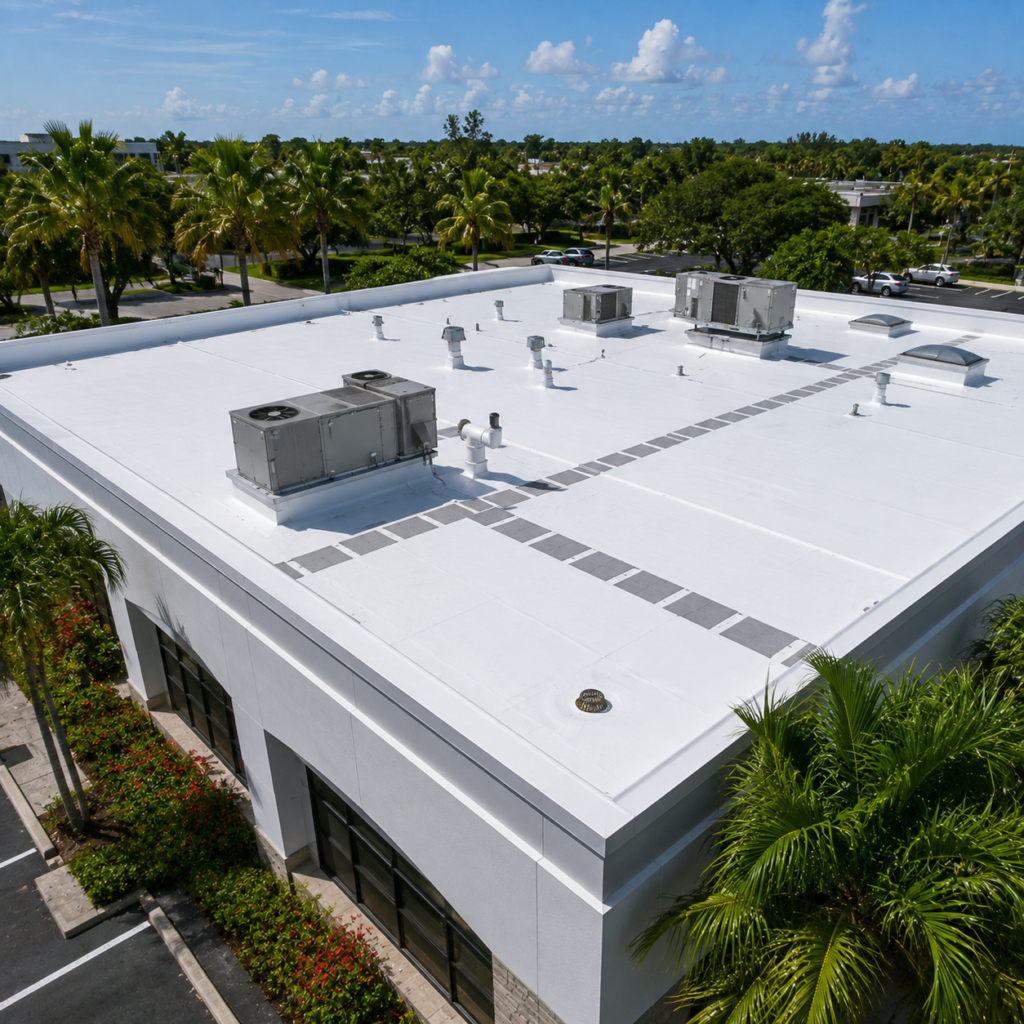
Consider an 18,000 square foot single story office building in Florida with an existing low slope membrane roof. Inspection identifies recurring leakage around two HVAC curbs, ponding near one internal drain, open seams in two areas, and approximately 1,400 square feet of moisture affected insulation.
The project removes deteriorated membrane and affected insulation within the defined work areas. The roofing crew corrects localized substrate damage and uses tapered insulation to improve drainage toward the existing drain. The replacement assembly uses TPO membrane with heat welded seams, compatible HVAC curb flashing, new drain details, and designated walkways around frequently serviced equipment. The project addresses four connected problems: membrane deterioration, wet insulation, drainage, and equipment transitions.
What Affects a Commercial Flat Roofing Project?
Roof size directly affects material and labor requirements. One roofing square equals 100 square feet, so a 150 square commercial roof contains approximately 15,000 square feet of roofing surface. Review the roof replacement cost guide for budgeting information and the roof replacement timeline guide for project planning.
- Roof condition: a membrane repair requires different work from removal of membrane, wet insulation, and damaged substrate
- Penetration count: a roof containing 20 HVAC curbs requires more transition work than an open roof containing only two plumbing vents
- Membrane choice, drainage corrections, and roof access
- Building height, material staging, weather, permits, and normal business operations
Commercial Flat Roof Repair Versus Replacement
Roof Repair
Repair generally fits isolated damage when surrounding membrane and underlying materials remain serviceable. One puncture, seam defect, or flashing failure can support a targeted repair.
Roof Replacement
Replacement becomes more relevant when deterioration extends across large areas, leaks continue at several locations, or moisture affects substantial portions of the underlying assembly. Drainage can also influence the decision, since repeated membrane repairs cannot solve a low area created by an underlying slope problem.
A contractor should document roof conditions, typically starting with a roof inspection and maintenance assessment, before recommending either option.
Frequently Asked Questions About Commercial Flat Roofing
What roofing materials can be used on a commercial flat roof?
TPO, PVC, EPDM, and modified bitumen represent common commercial low slope options. Building use, roof condition, drainage, existing substrate, penetrations, and project requirements should guide material selection.
Is a commercial flat roof completely flat?
No. Commercial low slope roofs require drainage. Most applicable membrane systems use a minimum new construction design slope of 1/4 inch per foot, equal to approximately 2 percent.
What is the difference between TPO and EPDM?
TPO is a thermoplastic membrane that uses heat welded seams. EPDM is a thermoset membrane that uses manufacturer specified seam materials and methods.
Why does water pond on a commercial flat roof?
Blocked drains, compressed insulation, deck deflection, insufficient slope, or previous roofing alterations can create low areas. The contractor should identify the cause before recommending drainage corrections.
Can a commercial flat roof leak be repaired?
Yes. Localized punctures, seam problems, and flashing defects can often receive repair when surrounding membrane and insulation remain serviceable.
When should a commercial flat roof be replaced?
Replacement becomes more relevant when membrane deterioration affects broad areas, leaks occur at several locations, wet insulation extends across large sections, or recurring drainage problems require reconstruction.
Can roofing work continue while a commercial property remains open?
Many commercial roofing projects can proceed while the building remains operational. Material staging, roof access, pedestrian routes, noise, rooftop equipment, and business hours require project specific coordination.
Schedule Commercial Flat Roofing With Roofing Relief Pros
Open membrane seams, recurring leaks, wet insulation, damaged flashing, and ponding water can affect both roofing performance and commercial operations. Roofing Relief Pros helps property owners and facility managers evaluate commercial flat roofs and plan repair or replacement around roof condition, membrane type, drainage, penetrations, and building requirements.
- Free estimate
- TPO, PVC, EPDM & modified bitumen options
- Business operations coordination
- Licensed & insured crews
Get a Free Commercial Flat Roofing Estimate
Fast response. No spam. No obligation.