
- Licensed & Insured
- Free Estimate
Commercial Roof Repair Services
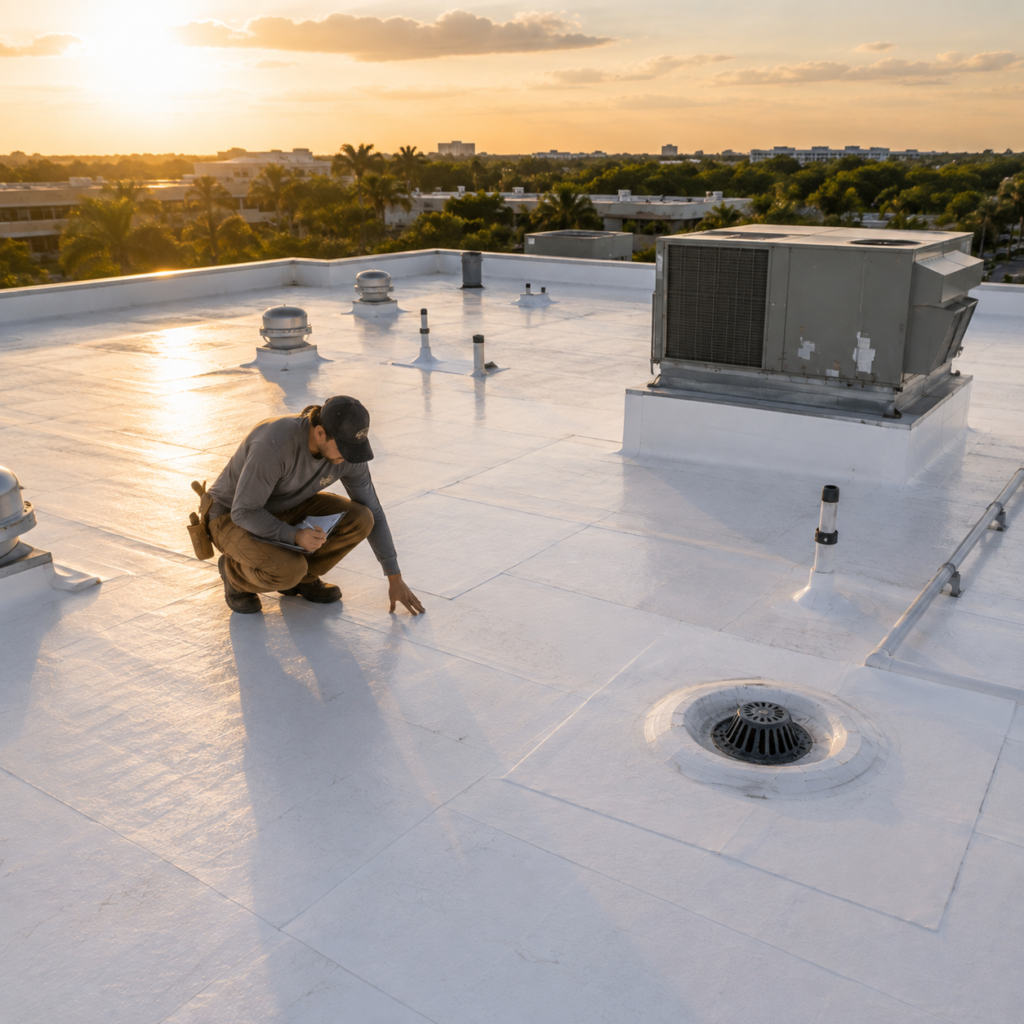
Roof leaks, open membrane seams, damaged flashing, loose metal fasteners, punctures, and drainage problems can expose inventory, equipment, ceilings, and occupied spaces to water. Commercial roof repair targets documented damage while preserving roofing materials that remain serviceable. Roofing Relief Pros helps property owners and facility managers locate roof problems, evaluate surrounding materials, and determine the repair scope for flat roofs, metal roofs, and other commercial roofing systems.
- Free estimate
- Leak source identified before repair
- Flat, TPO, PVC, EPDM & metal systems
- Licensed & insured crews
Get a Free Commercial Roof Repair Estimate
Fast response. No spam. No obligation.
What Does Commercial Roof Repair Include?
Commercial roof repair corrects localized defects within an existing roofing system. A repair can address membrane punctures, open seams, damaged flashing, leaking drains, deteriorated penetration details, loose metal fasteners, limited corrosion, or damaged roof panels. The contractor should inspect surrounding roofing before defining the repair area, since water can travel beneath a membrane or along structural components before entering the building, and a ceiling stain does not always identify the exterior leak location. Effective repair corrects the failure source and affected roofing components instead of covering the visible symptom with another surface patch. See the full range of commercial roofing services for related work.
When Does a Commercial Roof Need Repair?
Commercial roof repair makes sense when damage remains limited and surrounding roofing continues to perform. One membrane puncture, an isolated open seam, one damaged HVAC curb, or several loose metal roof fasteners can support targeted repair. Recurring leaks require closer evaluation, since separate leaks across multiple roof areas can indicate deterioration beyond one repair location. Wet insulation, damaged substrate, widespread membrane deterioration, and extensive metal corrosion can also increase the project scope, and the contractor should document the extent of damage before recommending repair or complete replacement.
Commercial Roof Leak Detection
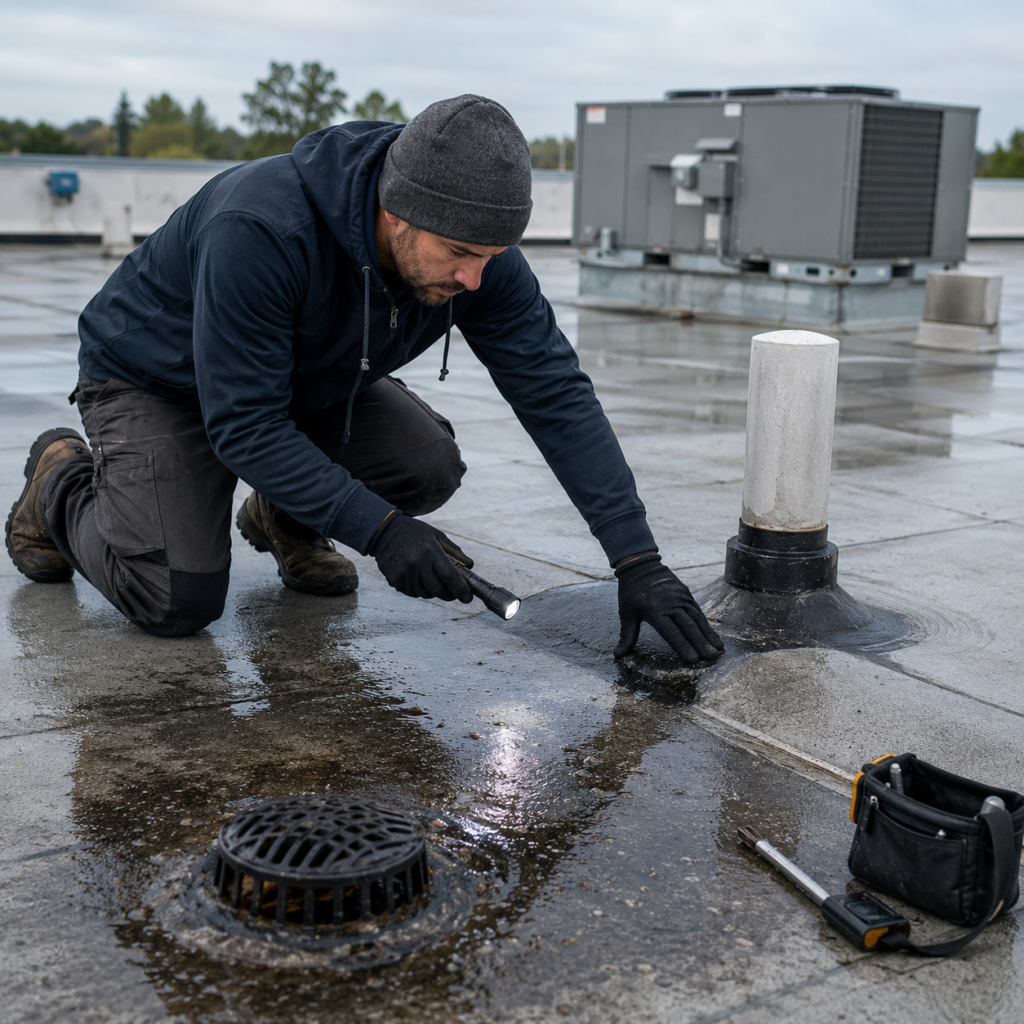
Finding the water entry point comes before selecting a repair method. The contractor should compare interior moisture evidence with exterior roof conditions, and inspection can include membrane surfaces, seams, drains, walls, flashing, penetrations, metal panels, fasteners, and previous repair areas. Water can enter through one location and move beneath roofing materials before reaching the ceiling; for example, water entering around an HVAC curb can travel along insulation or deck surfaces before appearing several feet away inside the building. The contractor should trace the likely water path rather than assume the roof defect sits directly above the interior stain.
Commercial Flat Roof Repair
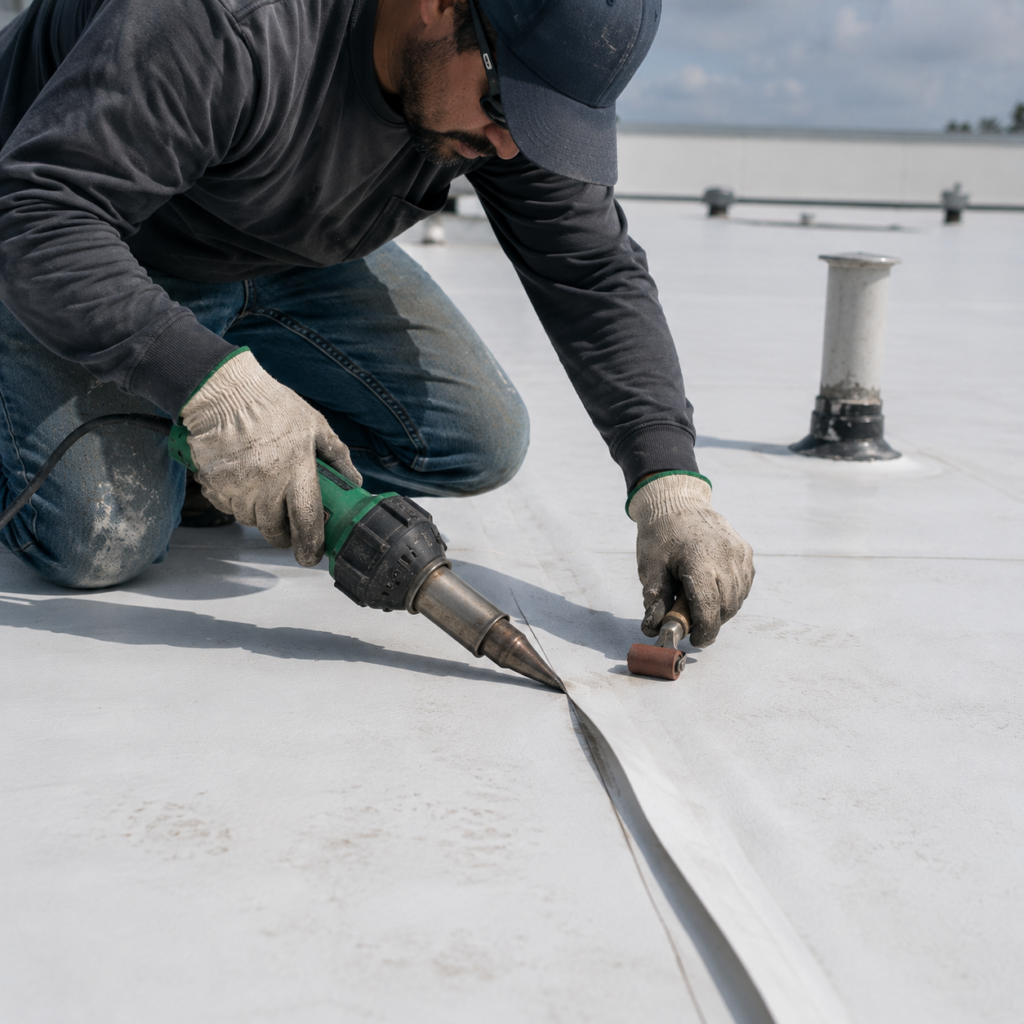
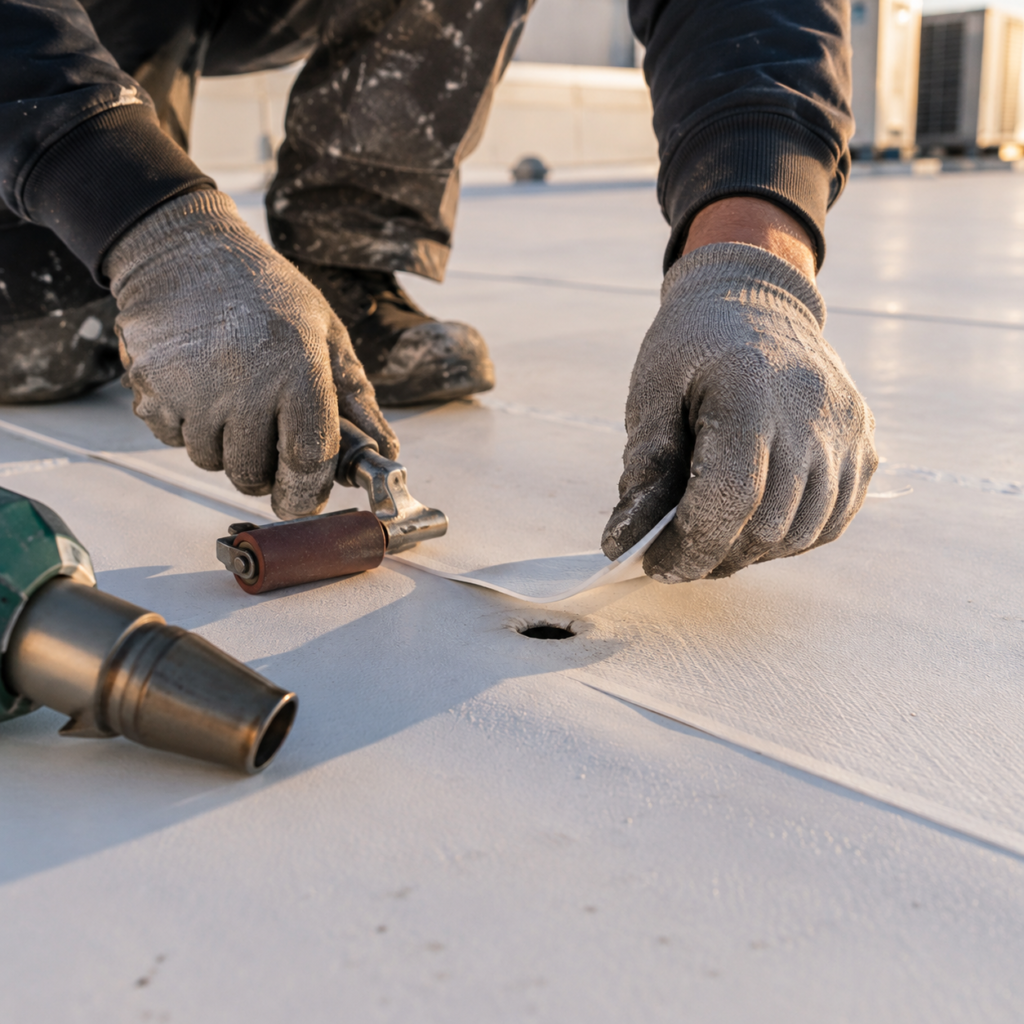
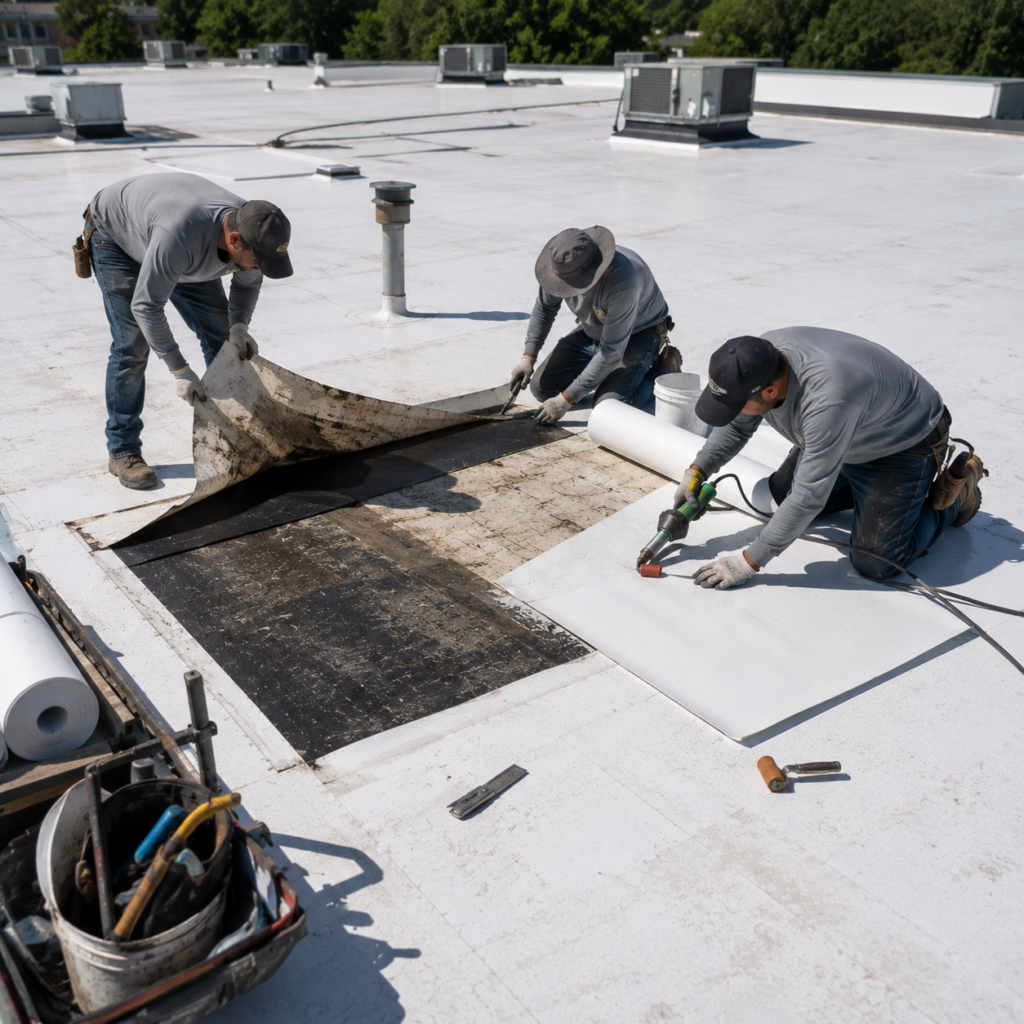
Low slope commercial roofs commonly use TPO, PVC, EPDM, or modified bitumen roofing systems, and repair methods depend on the existing membrane. TPO and PVC are thermoplastic membranes, and compatible repair materials can use heat welded connections according to the selected roofing system. EPDM is a thermoset membrane and uses manufacturer specified repair, seam, and flashing materials, while modified bitumen requires compatible asphalt based repair materials and application methods. The contractor should identify the existing membrane before selecting repair materials, since visually similar roofing products do not automatically use compatible repair methods. Property owners with low slope properties can review commercial flat roofing for additional system information.
Common Commercial Roof Repair Types
Membrane Puncture Repair
Commercial roof membranes can develop punctures from dropped tools, sharp debris, equipment movement, or service traffic. The contractor should inspect the membrane around the opening and check accessible underlying materials for moisture, and repair material must remain compatible with the existing roofing system.
Open Seam Repair
Open or damaged seams can create direct water entry paths. TPO and PVC systems commonly use heat welded seams between compatible thermoplastic materials, while EPDM uses manufacturer specified seam materials and methods. The contractor should inspect beyond the visible opening.
Commercial Roof Flashing Repair
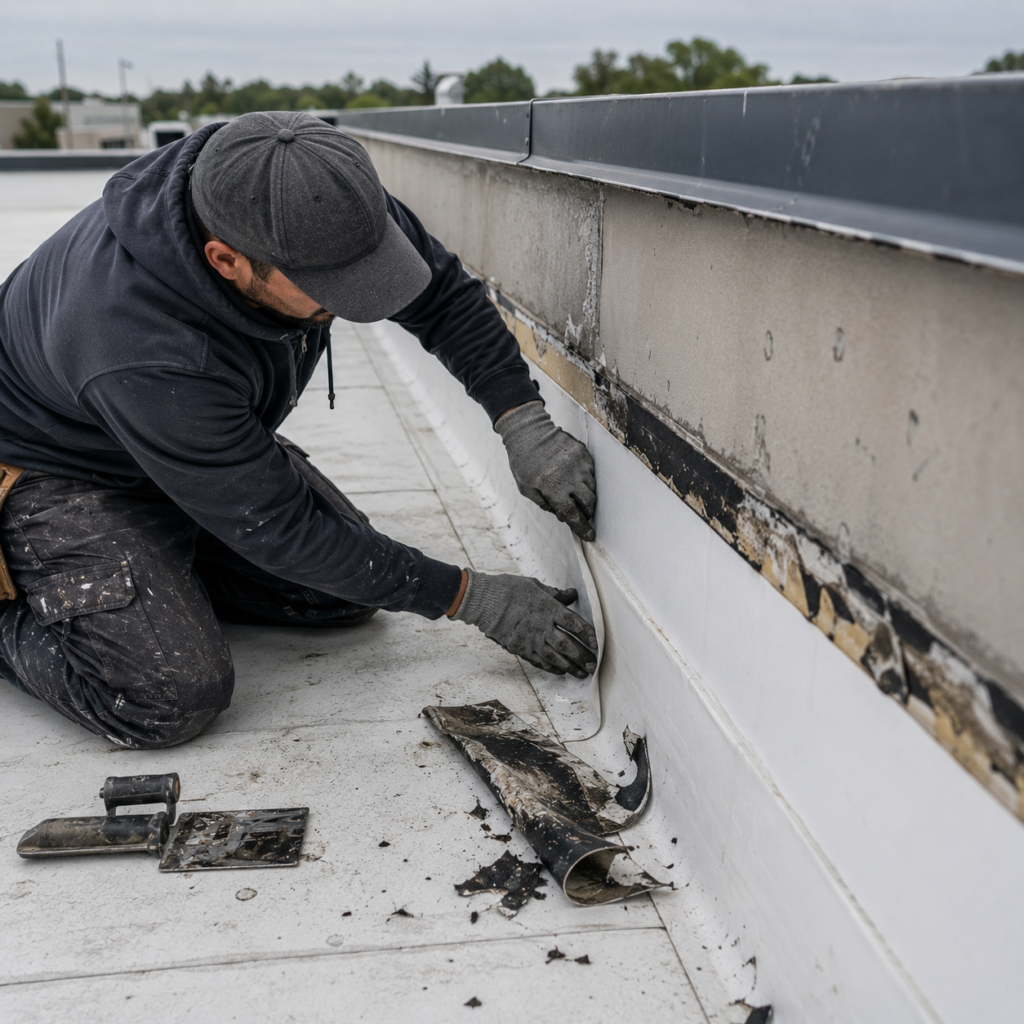
Protects transitions where the main roofing surface meets another component, including parapet walls, HVAC curbs, roof drains, pipes, skylights, roof hatches, sidewalls, and roof edges. Complex transition problems can require dedicated roof flashing repair.
HVAC Curb and Penetration Repair
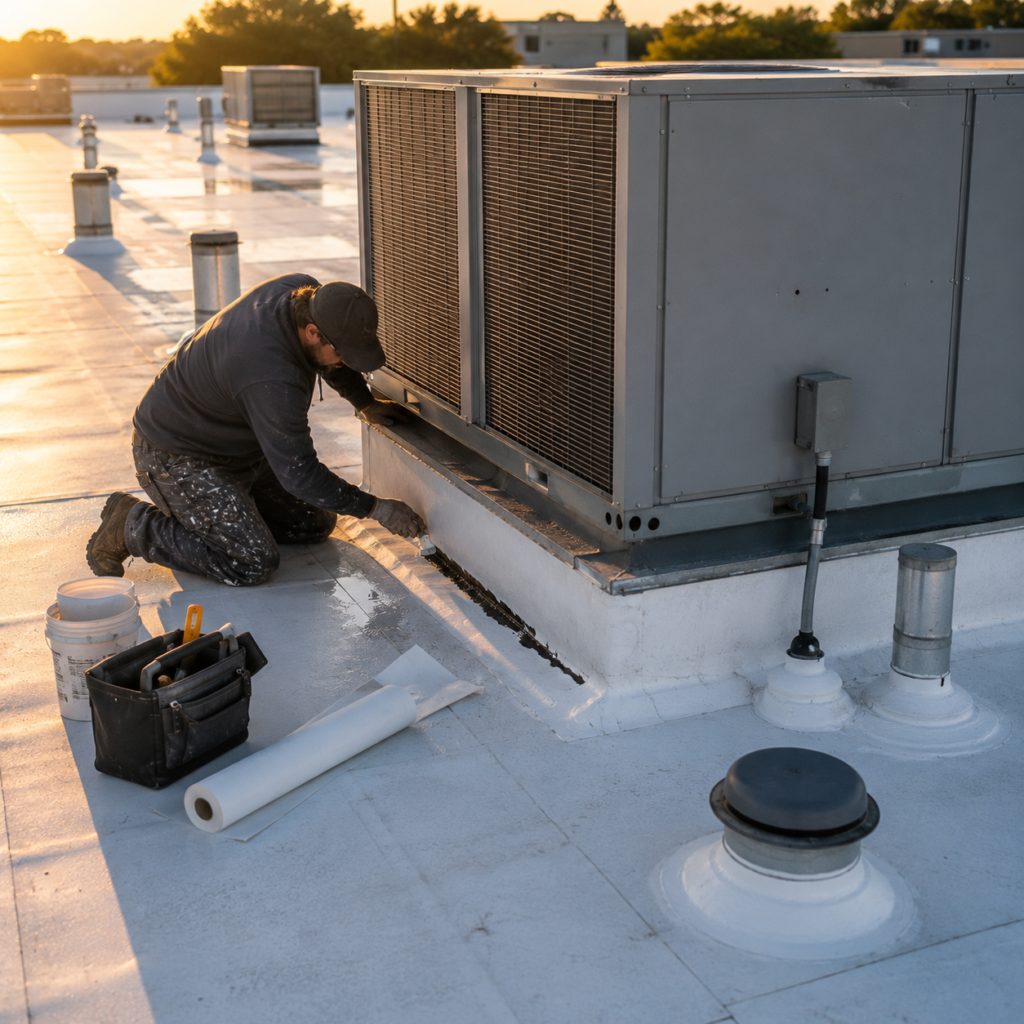
HVAC curbs create vertical transitions that require flashing around the full perimeter, and pipes and vents require compatible boots or membrane flashing according to the roofing system. Equipment replacement or modification can disturb flashing around a curb.
Commercial Roof Drain Repair
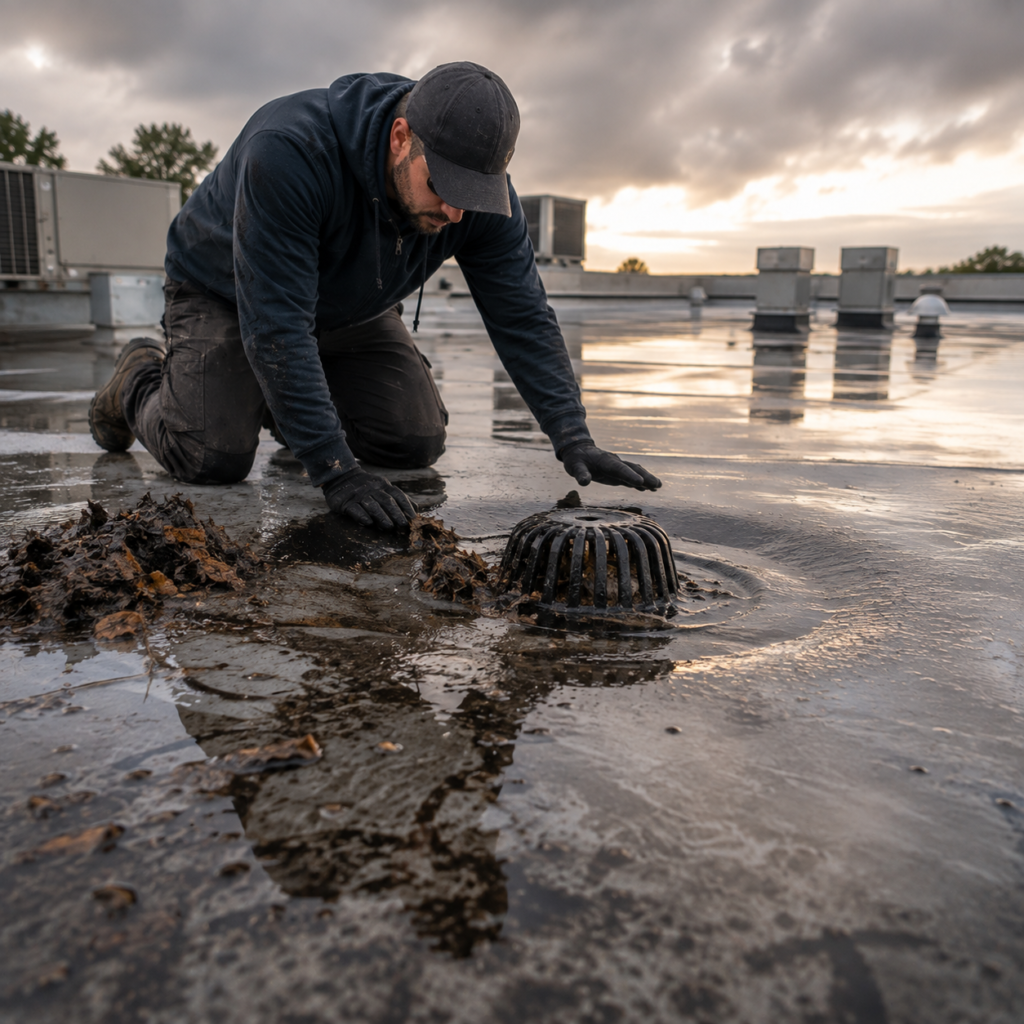
Blocked drainage can allow water to remain on the roof, and damaged membrane around a drain can also create a leak at one of the lowest roof locations. Removing debris can restore drainage when blockage causes the problem.
Ponding Water and Localized Repair
Ponding water can develop from blocked drains, low insulation areas, structural deflection, or insufficient roof slope. Most applicable low slope membrane roof systems use a minimum design slope of 1/4 inch per foot, equal to approximately 2 percent.
Commercial Metal Roof Repair
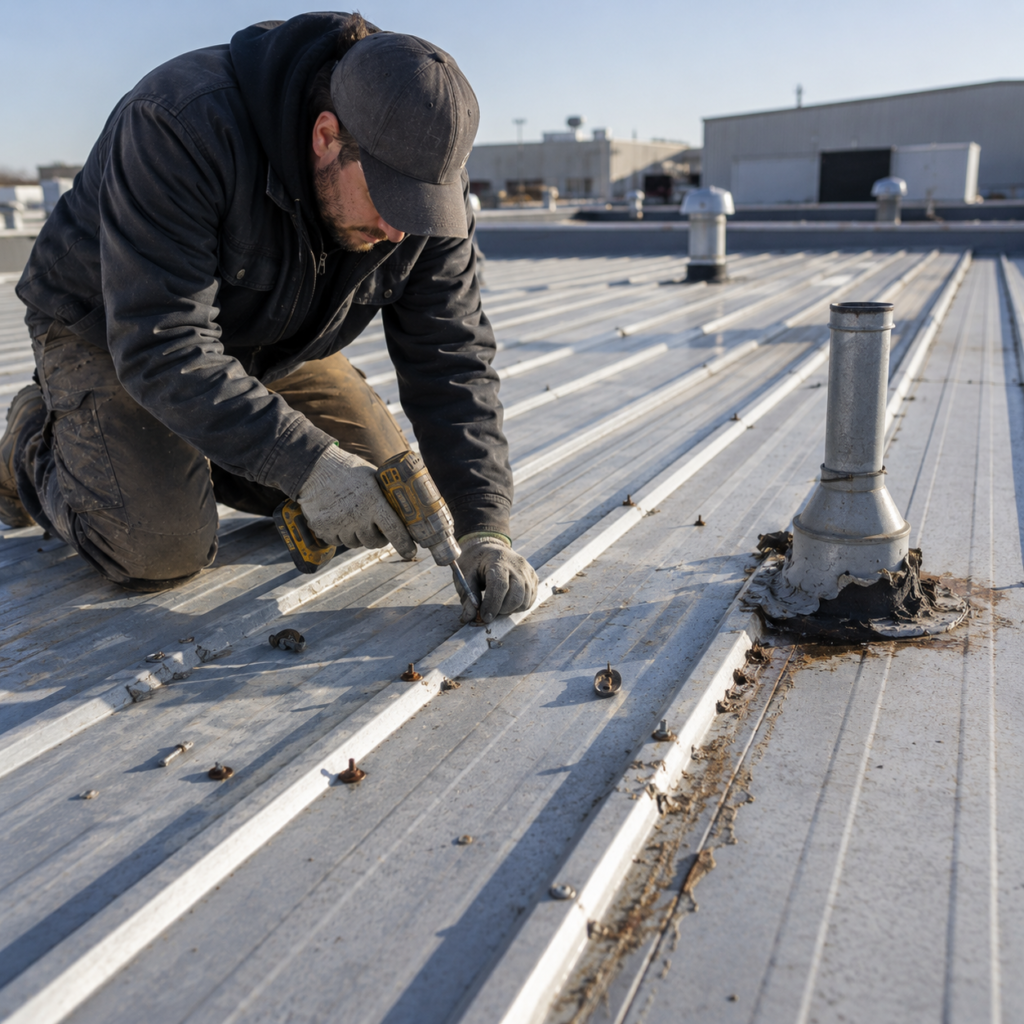
Commercial metal roofing can develop different problems from membrane systems. Common repair conditions include loose fasteners, damaged sealing washers, open seams, localized corrosion, punctured panels, and failed flashing. Exposed fastener systems require inspection of screws and sealing washers, while standing seam systems require attention to panel seams, clips, flashing, and movement details. Localized damage can support repair or individual panel replacement when surrounding roofing remains serviceable, but extensive corrosion or recurring failures across multiple roof areas require broader assessment. Property managers can review commercial metal roofing for additional information about metal roof systems.
- Loose fasteners: a loose or backed out screw can reduce washer compression, and cracked or displaced washers can also create potential water entry points
- Corrosion: the contractor should determine whether corrosion remains superficial or has produced pitting, holes, or section loss before recommending repair or panel replacement
Storm Damage to Commercial Roofs
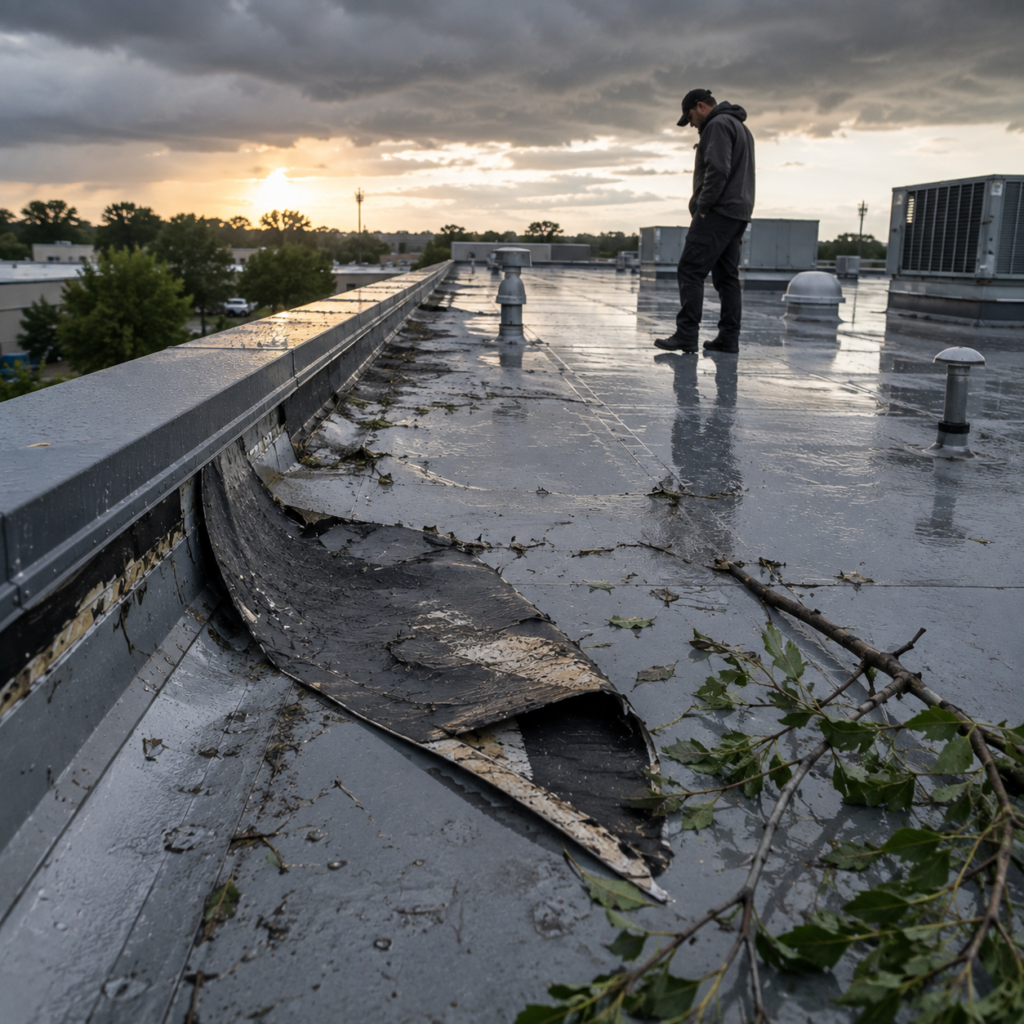
Wind, hail, falling debris, and severe weather can damage both membrane and metal commercial roofs. Wind can affect perimeter materials, flashing, membrane attachment, metal panels, and rooftop components, while hail or falling objects can puncture membranes and damage metal surfaces, and debris can also block drains after a storm. A post storm inspection should cover more than the area containing an active leak, examining roof surfaces, penetrations, drains, edges, flashing, rooftop equipment transitions, and visible attachment points. Documented localized damage can support repair, while damage distributed across broad roof areas requires a larger assessment.
Previous Commercial Roof Repairs
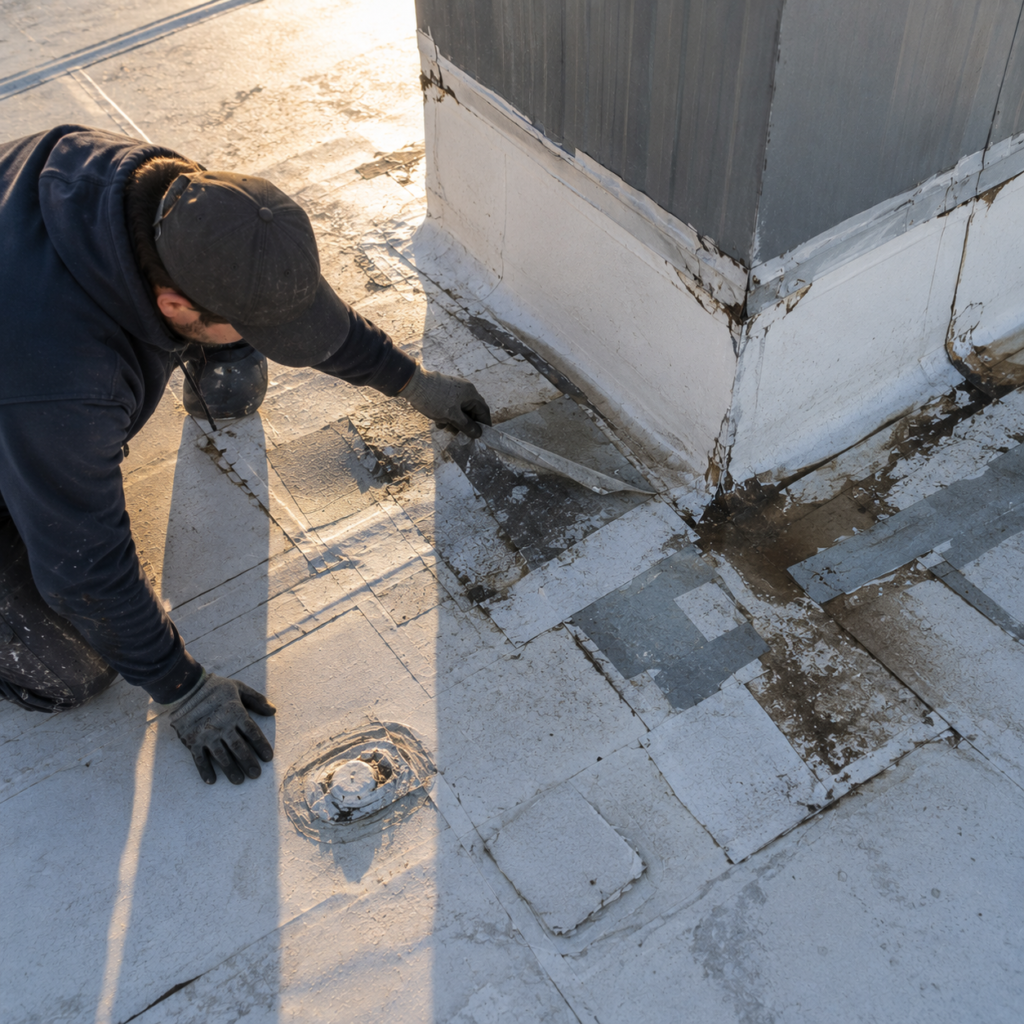
Older commercial roofs can contain several generations of repair materials. Previous patches do not automatically create a problem, since compatible repairs can remain functional when installation addresses the original defect. Repeated patches in the same area deserve closer inspection: a cluster of repairs around one drain can indicate recurring drainage or flashing problems, and multiple patches around an HVAC curb can point to a transition that needs rebuilding rather than another surface application. Repair history helps the contractor identify recurring failure locations and determine why the area continues to leak before adding another repair layer.
Wet Insulation Beneath a Commercial Roof
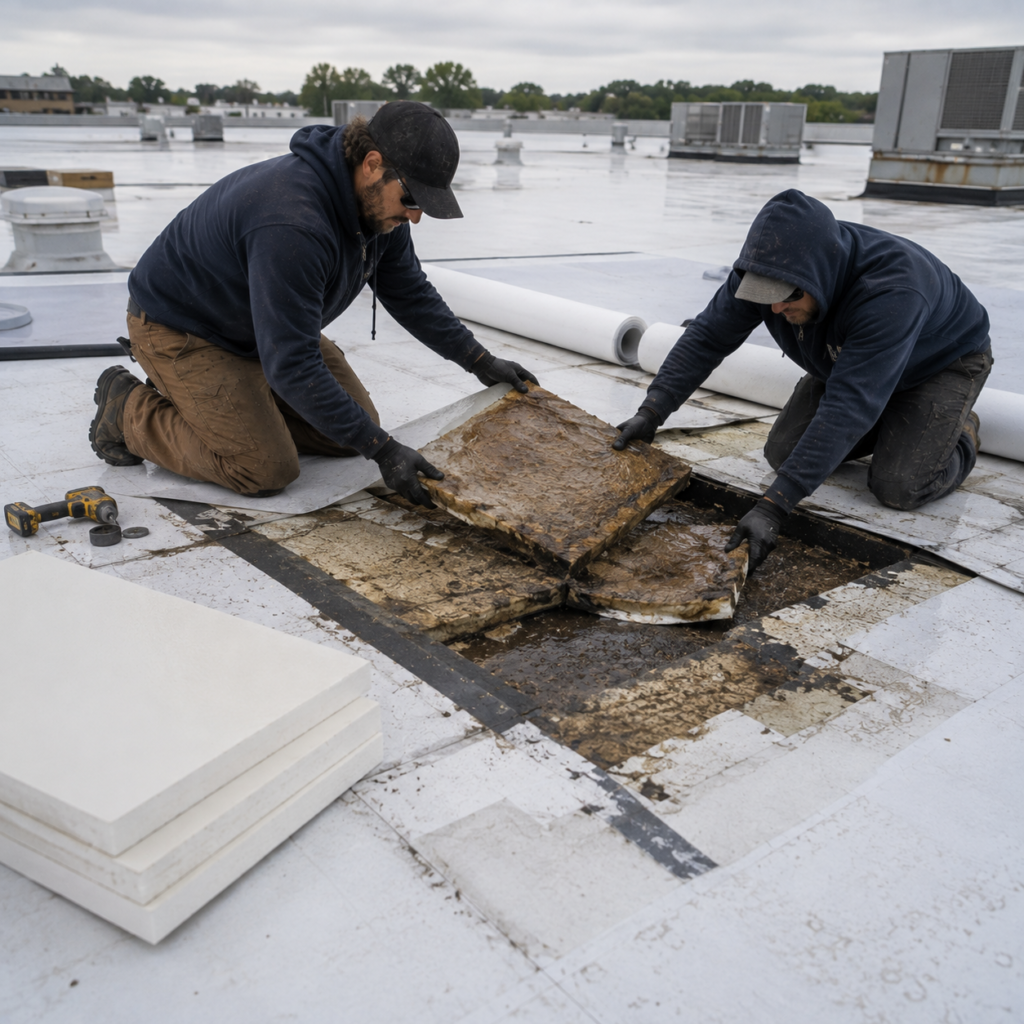
Water can move beneath the visible roofing surface and affect insulation, and the visible leak location does not define the complete moisture affected area since moisture can spread laterally within portions of the roofing assembly. A repair project should identify affected materials before installing new membrane over the area. Localized wet insulation can require removal and replacement within the repair zone, while broader moisture conditions can increase the project from a small repair to partial or complete replacement, since roof surface repair alone cannot restore insulation that has already experienced moisture damage.
Commercial Roof Repair Process
Interior and Exterior Inspection
The contractor reviews reported leak locations and examines corresponding roof areas.
Problem Identification
The contractor identifies membrane, flashing, drainage, penetration, fastener, panel, or other defects that contribute to the problem.
Repair Scope
The contractor determines how much roofing material requires removal and whether underlying materials need correction.
Damaged Material Removal
The roofing crew removes affected membrane, flashing, insulation, panels, or other materials included within the repair scope.
Roof Repair
The crew installs compatible repair materials and restores the affected roofing details.
Drainage and Transition Check
The crew checks nearby drains, curbs, walls, penetrations, and roof edges when those components affect the repair.
Final Inspection
The contractor reviews completed work and surrounding roofing before cleanup.
Reducing Business Disruption During Commercial Roof Repair
Commercial repair often takes place while a building remains occupied. The contractor should plan roof access, material staging, restricted areas, and work locations around normal operations. Retail properties need clear customer entrances and pedestrian routes, warehouses need loading areas and vehicle access, and offices can require coordination around occupied rooms beneath the repair area. Repairs near rooftop HVAC equipment can also require coordination with maintenance personnel, and defined repair zones help building staff understand where roofing activity will occur.
Real World Commercial Roof Repair Example
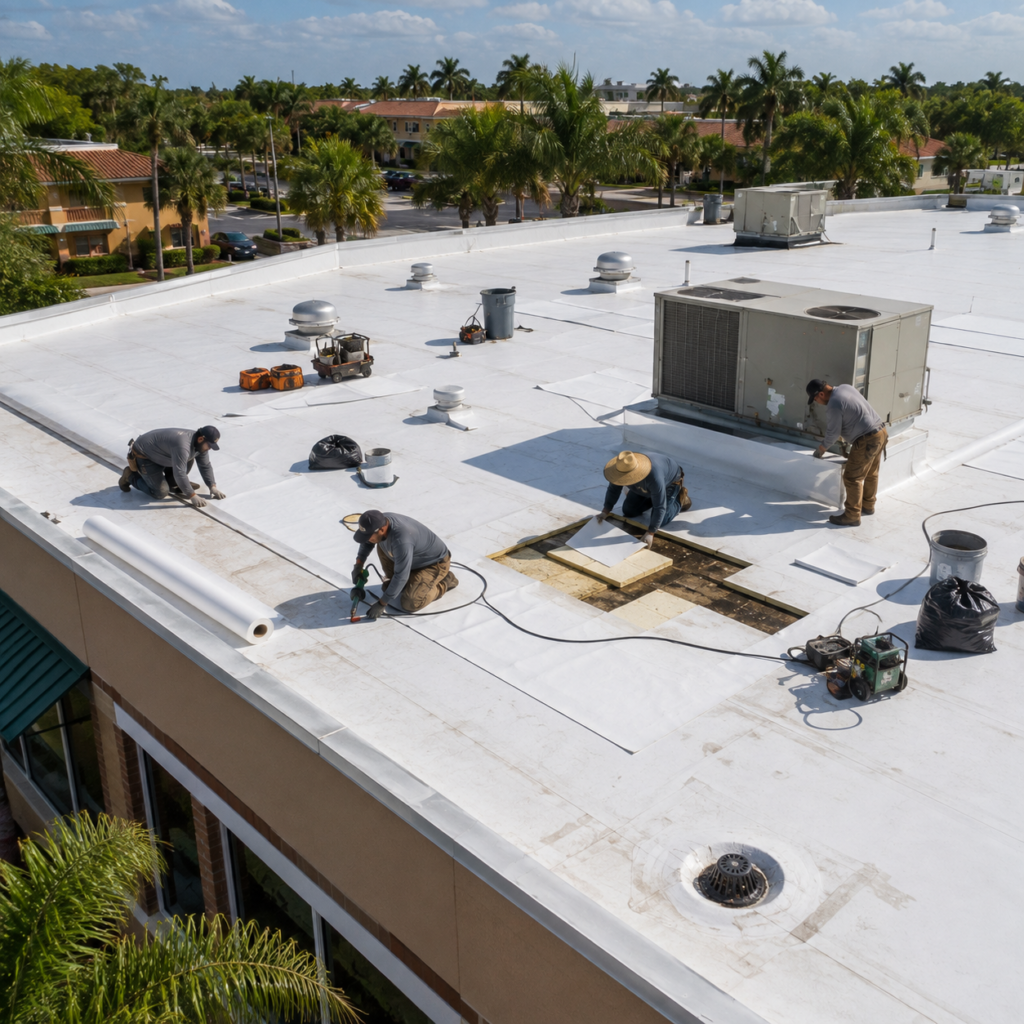
Consider a 16,000 square foot retail building in Florida with an existing TPO roof and six rooftop HVAC units. Building staff report water staining near one stockroom after heavy rainfall. Roof inspection identifies an open membrane seam approximately 18 feet from the interior stain and deteriorated flashing around one nearby HVAC curb. Moisture investigation identifies approximately 240 square feet of affected insulation around the leak path.
The roofing crew opens the defined repair area, removes affected insulation, restores the underlying assembly, and installs compatible replacement materials. The crew repairs the TPO seam and rebuilds the affected HVAC curb flashing using compatible membrane. Inspection finds serviceable membrane across the remaining roof, so targeted repair addresses the seam, wet insulation, and flashing without replacing the complete 16,000 square foot roofing system.
What Affects a Commercial Roof Repair Project?
The size of the damaged area directly affects the repair scope, and a 200 square foot membrane repair requires a different amount of work from deterioration extending across 5,000 square feet.
- Roof material: TPO, PVC, EPDM, modified bitumen, standing seam metal, and exposed fastener metal use different materials and repair methods
- Penetrations: a membrane puncture on an open roof area requires less transition work than damage surrounding a large HVAC curb
- Wet insulation, substrate damage, and drainage problems
- Building height, access, rooftop equipment, material compatibility, weather, and operating schedules
Commercial Roof Repair Versus Replacement
Roof Repair
Makes sense when deterioration remains localized and surrounding roofing continues to perform. One puncture, isolated seam failure, damaged flashing detail, or several loose metal fasteners can support targeted repair.
Roof Replacement
Becomes more relevant when leaks develop across separate roof areas, membrane deterioration becomes widespread, corrosion affects numerous metal panels, or moisture spreads across large sections of insulation. See flat roof replacement and metal roof replacement for widespread deterioration.
Repair frequency alone does not determine the decision: five repairs caused by separate storm impacts create a different condition from five repairs at the same failing roof transition. The contractor should evaluate the location, cause, extent, and recurrence of damage before recommending replacement.
When Repeated Repairs Stop Making Sense
Repeated repairs deserve broader investigation when the same areas continue to fail. A roof that develops one isolated leak every several years can remain a repair candidate when the surrounding assembly stays serviceable, but a roof that develops new leaks across multiple areas within a short period can indicate broader deterioration. Repeated seam separation, recurring wet insulation, widespread corrosion, and continuing drainage problems can increase maintenance demands without correcting the underlying roof condition. At that point, property owners can compare continued repairs with complete replacement, relying on documented conditions rather than an arbitrary number of previous service calls.
Commercial Roof Maintenance After Repair
A completed repair addresses documented damage, but continued inspection can help identify new problems. Commercial roofs receive exposure from weather, rooftop equipment servicing, debris, drainage conditions, and building modifications. Maintenance inspections can check repaired areas, membrane seams, metal fasteners, flashing, drains, roof edges, and penetrations, and drain and scupper areas should remain clear enough to move water away from the roof. See roof inspection and maintenance for more on keeping a consistent maintenance record for future repair or replacement decisions.
Frequently Asked Questions About Commercial Roof Repair
Can a leaking commercial roof be repaired?
Yes. Localized membrane damage, open seams, flashing defects, drainage problems, and metal roof defects can often receive targeted repair when surrounding roofing remains serviceable.
How do contractors find leaks on commercial roofs?
Contractors compare interior moisture evidence with exterior seams, membranes, flashing, drains, penetrations, panels, and previous repair areas. Water can travel beneath roofing materials, so the exterior defect may not sit directly above the interior stain.
Can TPO commercial roofing be repaired?
Yes. Localized TPO punctures, seam problems, and flashing defects can receive compatible repairs when surrounding membrane remains suitable. TPO repair methods can use heat welded compatible thermoplastic materials where the selected system requires that method.
Can a commercial metal roof be repaired?
Yes. Loose fasteners, damaged washers, isolated corrosion, flashing defects, and limited panel damage can support repair. Widespread corrosion or recurring failures across multiple areas require broader evaluation.
Does ponding water mean a commercial roof needs replacement?
Not automatically. Blocked drains, localized low areas, insulation conditions, or drainage design can cause ponding. The contractor should identify the cause before recommending repair or replacement.
Can wet insulation be repaired during commercial roof work?
Affected insulation can require removal and replacement within a defined repair area. The contractor should determine the moisture affected extent instead of installing new roofing directly over documented wet material.
When should a commercial roof be replaced instead of repaired?
Replacement becomes more relevant when deterioration affects broad roof areas, leaks recur at multiple locations, moisture affects large insulation sections, or metal corrosion and membrane failure continue across the roofing system.
Schedule Commercial Roof Repair With Roofing Relief Pros
Roof leaks, membrane punctures, open seams, damaged flashing, drainage problems, loose fasteners, and localized corrosion can affect commercial buildings without requiring immediate complete roof replacement. Roofing Relief Pros helps property owners and facility managers identify the source of commercial roof problems and determine whether targeted repair or broader roofing work fits documented conditions.
- Free estimate
- Leak source identified before repair
- Flat, TPO, PVC, EPDM & metal systems
- Licensed & insured crews
Get a Free Commercial Roof Repair Estimate
Fast response. No spam. No obligation.