
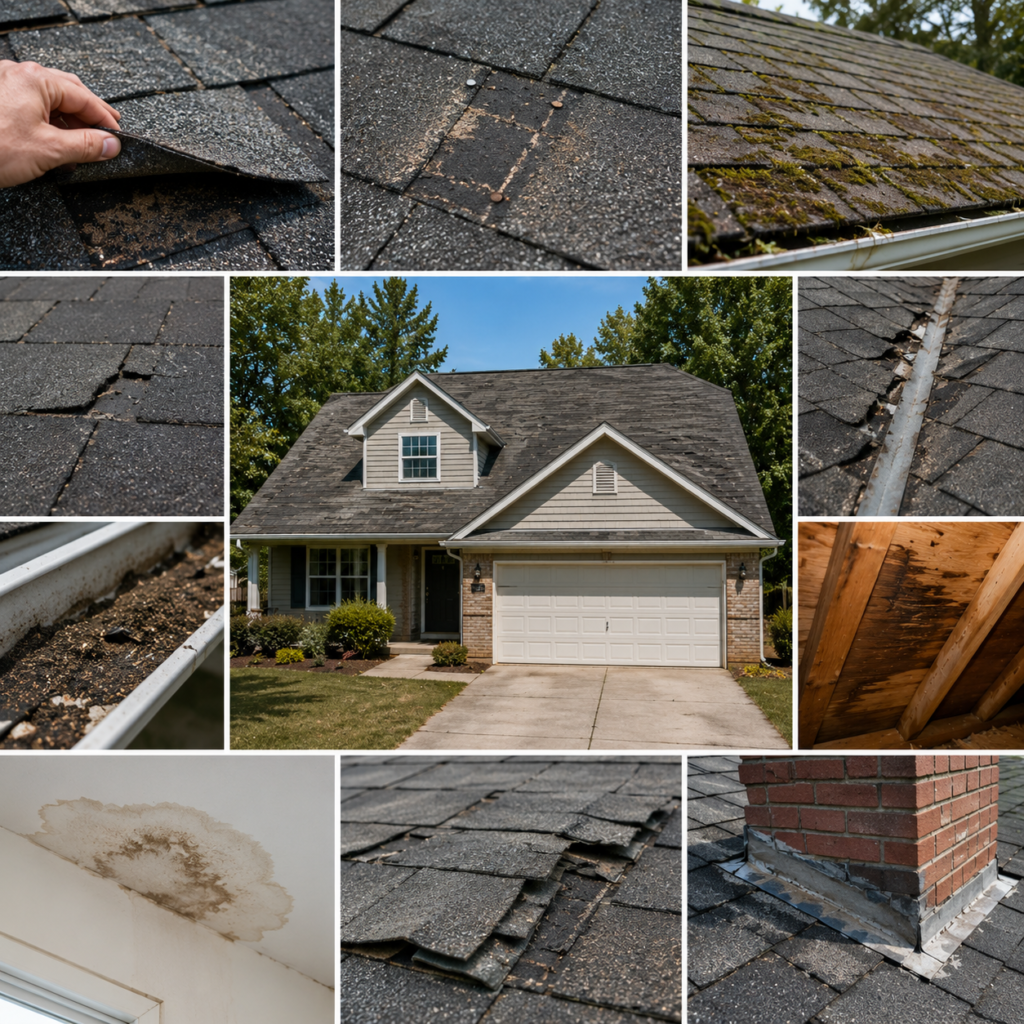
Signs You Need a Roof Replacement

admin

Recurring leaks, missing roofing materials, deteriorated flashing, soft roof decking, and damage across several roof areas can indicate that localized repairs no longer address the underlying problem. Continuing to repair isolated symptoms can leave deteriorated roofing components beneath the visible surface.

The signs you need a roof replacement depend on roofing material, deck condition, leak history, flashing performance, drainage, and the extent of deterioration. Asphalt shingles can crack or lose protective granules. Metal panels can develop corrosion or connection problems. Flat roof membranes can develop open seams, punctures, and areas of trapped moisture.

Roofing Relief Pros helps homeowners identify the source and extent of roofing problems before choosing between repair and complete replacement.

How Do You Know When a Roof Needs Replacement?

A roof may need replacement when deterioration affects multiple parts of the roofing assembly rather than one repairable location. One missing shingle does not automatically require replacement, and one damaged pipe boot can also support a targeted repair when surrounding roofing remains serviceable. The decision changes when problems spread across several roof planes or roofing components: repeated leaks, widespread material deterioration, damaged decking, failed flashing at several locations, or extensive storm damage can indicate broader roof failure. A roofing inspection should evaluate the roof covering, underlayment where accessible, decking, flashing, penetrations, drainage, and ventilation before determining the appropriate service.

14 Warning Signs

Signs You Need a Roof Replacement

1. Recurring Roof Leaks

One leak around a plumbing vent can result from failed flashing. Several leaks near valleys, walls, penetrations, and separate roof planes can indicate deterioration across a larger area. Water does not always enter directly above an interior stain, so a contractor should trace each leak to the source.

2. Missing or Broken Asphalt Shingles

Several shingles lost during one wind event can sometimes receive localized repair when surrounding shingles remain in suitable condition. Widespread missing, cracked, or broken shingles require broader evaluation and can support a shingle roof replacement assessment.

3. Widespread Shingle Granule Loss

Some loose granules can appear during normal handling and weathering, and granules in gutters alone do not establish the need for complete replacement. Widespread areas of exposed asphalt, cracking, curling, and uneven deterioration across multiple roof planes provide stronger evidence.

4. Cracked, Curled, or Deteriorated Shingles

Cracked tabs can create openings in the roof covering, and curled edges can interfere with proper overlap. Widespread cracking across multiple slopes deserves more attention than one damaged shingle caused by isolated impact.

5. Soft or Damaged Roof Decking

Plywood and oriented strand board can deteriorate after prolonged moisture exposure. Rot, delamination, broken panels, and soft areas can prevent the deck from providing a suitable fastening surface, and damage can remain hidden until removal exposes the substrate.

6. Multiple Roof Repairs in a Short Period

Replacing one damaged flashing component can solve one localized leak, but replacing shingles in several different areas and returning repeatedly for new leaks creates a different condition that can point toward replacement.

7. Damaged or Failed Roof Flashing

One deteriorated flashing detail can often receive localized repair. Failed flashing across several roof transitions can indicate a broader installation or deterioration problem, since new shingles cannot correct an improperly detailed water transition.

8. Sagging or Uneven Roof Areas

Roof decking should create a stable substrate for the roofing assembly. Moisture damaged sheathing, structural movement, framing problems, or previous installation defects can create uneven areas that require prompt evaluation.

9. Daylight Visible Through the Roof

Possible sources include damaged decking, gaps around penetrations, deteriorated flashing, or openings created by missing roofing materials. Multiple openings or associated water damage can indicate a broader problem.

10. Moisture or Water Stains in the Attic

Darkened decking, water marks on rafters, damp insulation, and staining around penetrations can identify previous or active moisture entry, sometimes before it creates visible ceiling damage.

11. Metal Roof Corrosion and Panel Damage

Corrosion can affect panels, seams, fasteners, and flashing. One damaged panel can support repair when compatible replacement material remains available, while corrosion across broad roof areas can support a metal roof replacement evaluation.

12. Open Seams and Ponding on Flat Roofs

Open seams can create direct paths for water beneath the membrane, and ponding water requires investigation because low areas can result from drainage design, deck deflection, or blocked drains. Recurring failures can indicate the need for a broader flat roof replacement assessment.

13. Storm Damage Across Multiple Roof Areas

Wind can remove shingles, loosen roof edges, or damage metal panels, and falling debris can puncture membranes. One damaged area can support targeted repair, while damage across multiple roof planes can require evaluation for complete replacement. See storm damage roof replacement for more.

14. Roof Age Combined With Visible Deterioration

Roof age provides context but should not serve as the only replacement criterion. Age becomes more useful when combined with visible evidence such as cracking, repeated leaks, corrosion, open seams, or widespread material failure.

Roof Repair Versus Roof Replacement

Roof Repair

Localized damage often supports repair when surrounding roofing materials and underlying components remain serviceable. Examples include several missing shingles, one damaged pipe boot, one isolated flashing defect, or a localized membrane puncture.

Roof Replacement

Becomes more relevant when deterioration affects multiple roof planes, leaks recur at separate locations, deck damage extends across several areas, or the existing roofing material can no longer provide a reliable water shedding surface.

The inspection should answer one central question: does the problem affect one repairable component or the broader roofing assembly? Review the roof replacement cost guide and the roof replacement timeline for budgeting and planning once a decision is made.

Roof Repair

Real World Roof Replacement Decision Example

Consider a 2,300 square foot single story home in Washington with approximately 2,800 square feet of asphalt shingle roof surface. The homeowner notices two ceiling stains after heavy rain. Exterior inspection identifies cracked shingles on three roof planes, deteriorated flashing around one plumbing vent, and widespread surface wear.

Attic inspection identifies moisture staining near two separate leak paths. Roof removal later exposes five deteriorated OSB panels near a valley and penetration. The roofing crew replaces the five damaged panels, installs specified water protection and underlayment, corrects the flashing details, and installs new architectural asphalt shingles with compatible ridge materials. The example shows why several connected warning signs provide stronger replacement evidence than roof age or one damaged shingle alone.

What a Roof Replacement Inspection Should Check

A replacement assessment should examine more than the visible roof covering. The contractor should evaluate roofing materials, valleys, flashing, penetrations, roof edges, drainage, ventilation components, and accessible decking. An attic inspection can add information about moisture staining and concealed leak paths. See roof inspection and maintenance for more on this stage. Roof measurements also establish project size: one roofing square equals 100 square feet of roof surface, so a 30 square roof contains approximately 3,000 square feet of roofing area. A condition based inspection gives homeowners specific reasons for the recommended service rather than relying on roof age alone.

Do Not Wait for Interior Water Damage

A roof can deteriorate before water reaches finished ceilings. Underlayment, roof decking, attic insulation, and framing can encounter moisture before an interior stain becomes visible, and flashing problems can also allow water to move along concealed surfaces. Missing roofing materials, open seams, visible deck deterioration, repeated repairs, and widespread corrosion provide reasons to schedule an inspection before interior damage develops. The objective should be to identify the failure source before moisture reaches additional building materials.

Frequently Asked Questions About Roof Replacement Signs

What is the clearest sign that a roof needs replacement?

No single symptom confirms replacement in every case. Multiple problems such as recurring leaks, widespread material deterioration, damaged decking, and failures across several roof areas provide stronger evidence that complete replacement may be appropriate.

Does one roof leak mean the entire roof needs replacement?

No. One leak caused by isolated flashing damage, a pipe boot, or several missing shingles can support repair when surrounding roofing remains serviceable. Multiple leak sources require broader evaluation.

Should a roof be replaced because of age alone?

No. Roof age provides context, but current condition should drive the decision. Roofing material, installation quality, climate, ventilation, storm exposure, flashing condition, and leak history can produce different outcomes on roofs of the same age.

Are missing shingles always a sign of roof replacement?

Several missing shingles can often receive localized repair when surrounding shingles remain in suitable condition. Widespread shingle loss or deterioration across multiple roof planes can make replacement evaluation more appropriate.

Does granule loss mean asphalt shingles have failed?

Granules in gutters alone do not prove roof failure. Widespread exposed asphalt combined with cracking, curling, leaks, or deterioration across broad roof areas provides more useful evidence of declining shingle condition.

Can a sagging roof be fixed without replacement?

The required work depends on the cause. Damaged decking, moisture deterioration, or framing problems can create uneven roof areas. A contractor should identify the structural and roofing conditions before determining the repair scope.

What signs indicate flat roof replacement?

Recurring membrane leaks, open seams, wet insulation, widespread membrane deterioration, and persistent drainage problems can support replacement evaluation. One puncture or isolated flashing problem can still support localized repair.

What signs indicate metal roof replacement?

Widespread panel corrosion, repeated seam problems, recurring leaks, extensive fastener failure, and deterioration across multiple roof areas can indicate replacement. Localized panel or flashing damage can support repair when surrounding materials remain serviceable.

Ready to Get Started?

Schedule a Roof Replacement Inspection With Roofing Relief Pros

Recurring leaks, missing shingles, damaged decking, failed flashing, metal corrosion, open membrane seams, and deterioration across several roof areas can indicate that a roof needs more than another isolated repair. Roofing Relief Pros helps homeowners evaluate roof condition and determine whether repair or replacement fits the documented roofing problems.

(866) 280-1324

Get a Free Roof Replacement Inspection

Fast response. No spam. No obligation.

Leave a Reply

Your email address will not be published. Required fields are marked *